MakarovSuites
English
EnglishDeutschРусскийУкраїнськаFrançaisEspañolItalianoPolski
Contact & licences

Astronomy

How many voices could share the Galaxy?

Change the assumptions in the Drake equation. Explore how communicative lifetimes and uncertain biological fractions change the expected number of contemporaries.
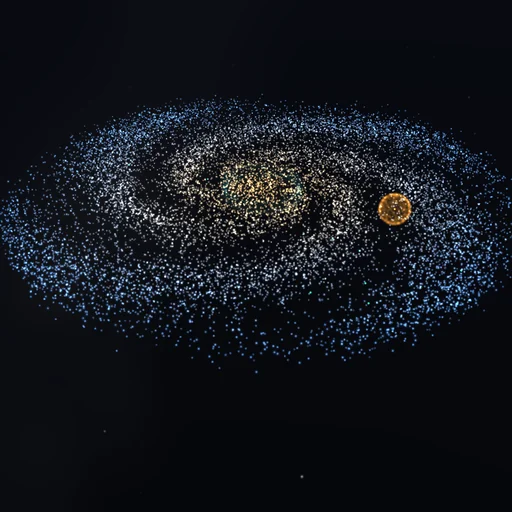
How many voices could share the Galaxy? — Actual application image
Actual application image

The model and its limits

A conditional steady-state Drake calculation, not a measurement of extraterrestrial life. The interval samples chosen log-uniform assumptions, not an observational posterior. P(at least one) additionally assumes Poisson counts. Beacons are illustrative and capped at 200; radio waves travel at light speed on the labelled galactic scale. Timeline covers the smaller of the communicative lifetime and 60,000 years.

Equations used in the module
Equations
N = R_* f_p n_e f_l f_i f_c L; P(at least one | assumptions) = 1−exp(−N).
Related experiments

Back to catalogue
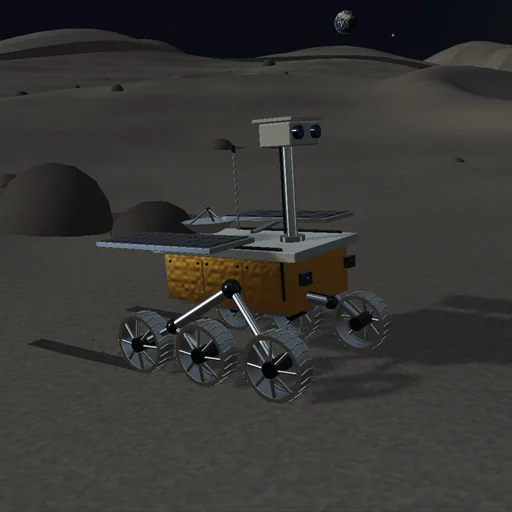
Lunar rover expedition — Actual application image

Astronomy / Engineering

Lunar rover expedition

Drive a six-wheel rover across a cratered lunar test field. Compare grip, suspension loads and the automatic survey route.

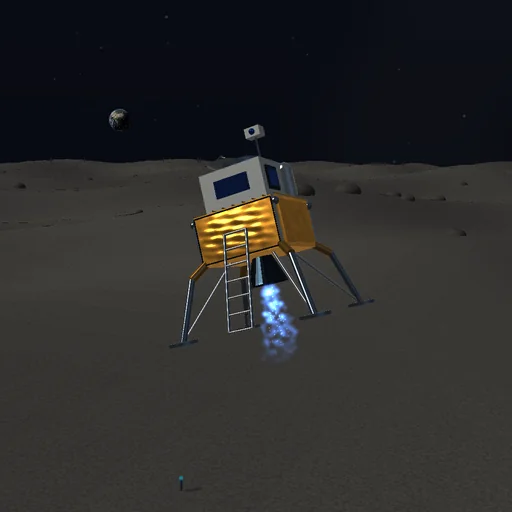
Touch down on the Moon — Actual application image

Astronomy / Engineering

Touch down on the Moon

Bring the lander onto the illuminated target. Try automatic guidance, then control thrust and lateral tilt yourself while watching fuel and touchdown speed.

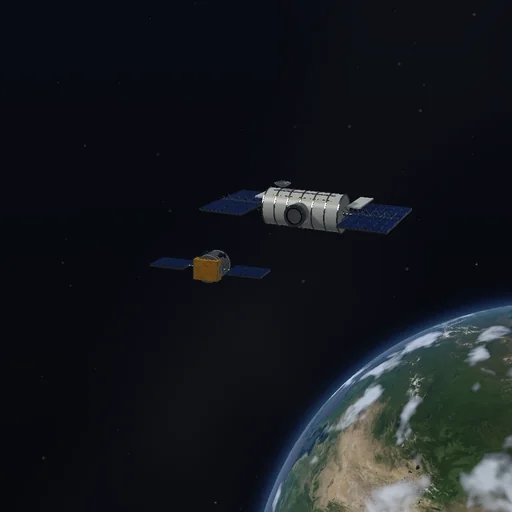
Docking a spacecraft — Actual application image

Astronomy / Engineering

Docking a spacecraft

Approach the station, match orientation and settle into the docking collar. Automatic guidance uses the same limited thrusters as your manual commands.