MakarovSuites
English
EnglishDeutschРусскийУкраїнськаFrançaisEspañolItalianoPolski
Contact & licences

Astronomy

Measuring the Solar System with Venus

Compare the same Venus transit from two observing sites. Their displaced tracks reveal solar parallax and the scale of the Solar System.
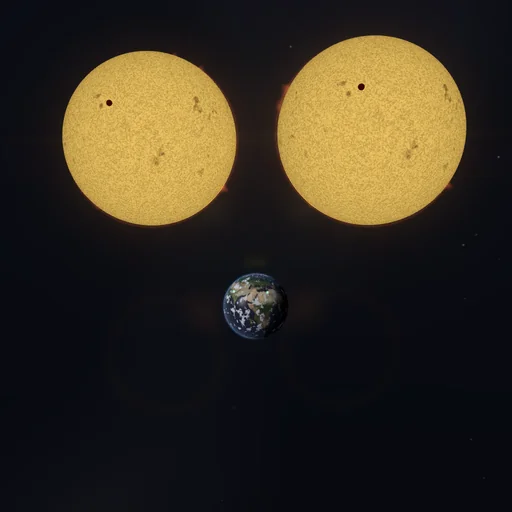
Measuring the Solar System with Venus — Actual application image
Actual application image

The model and its limits

Idealised parallel observer baseline and uniform solar discs; no limb darkening or terrestrial rotation. The astronomical unit is inferred from the two timed durations, so the black-drop effect enters as the clocks’ precision. The baseline is perpendicular to the tracks. Sun and observer views have separate scales.

Equations used in the module
Equations
Δθ = B/AU [1/(1−0.723)−1]; duration = chord/angular speed.
Related experiments

Back to catalogue
Reconstructing an unseen asteroid — Actual application image

Astronomy

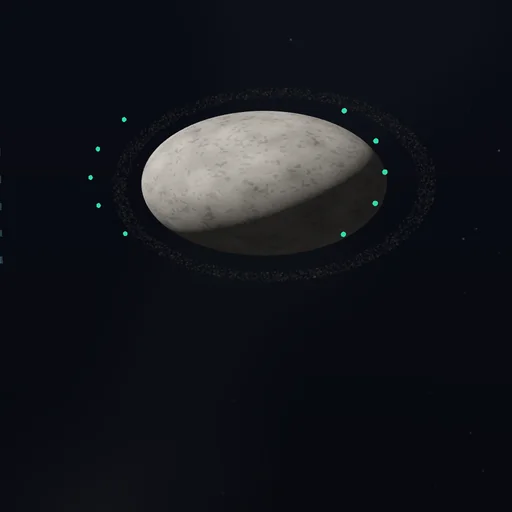
Reconstructing an unseen asteroid

Watch a star disappear behind an asteroid. Change the observing track and combine multiple chords to infer the object's size and shape.

Reading the light of two stars — Actual application image

Astronomy

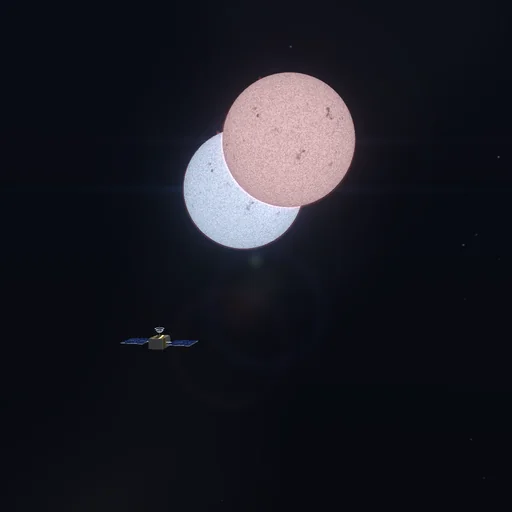
Reading the light of two stars

Tilt a binary orbit until eclipses appear. Unequal eclipse depths reveal different surface brightnesses; their widths constrain stellar radii.

A star's bow wave — Actual application image

Astronomy

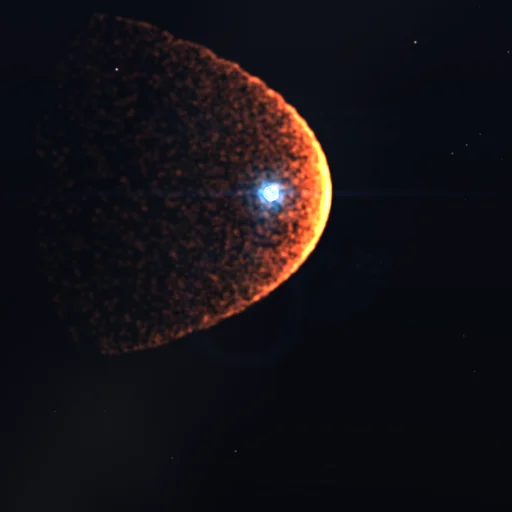
A star's bow wave

Balance an outward stellar wind against an incoming interstellar flow. Change density or speed and watch the stand-off distance respond.