MakarovSuites
English
EnglishDeutschРусскийУкраїнськаFrançaisEspañolItalianoPolski
Contact & licences

Astronomy

Reading the light of two stars

Tilt a binary orbit until eclipses appear. Unequal eclipse depths reveal different surface brightnesses; their widths constrain stellar radii.
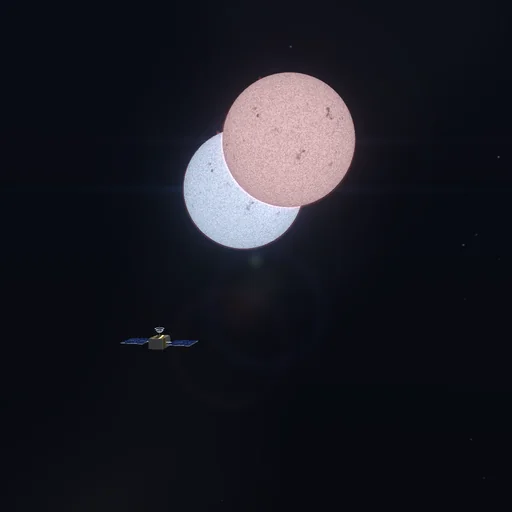
Reading the light of two stars — Actual application image
Actual application image

The model and its limits

Circular binary of adjustable separation and total mass, spherical stars with linear limb darkening and bolometric brightness proportional to T⁴. No tidal distortion or reflection. Photometry is measured along the fixed +Z observer axis.

Equations used in the module
Equations
F = 1 − blocked flux/total flux; surface brightness ∝ T⁴; P² = 4π²a³/(GM).
Related experiments

Back to catalogue
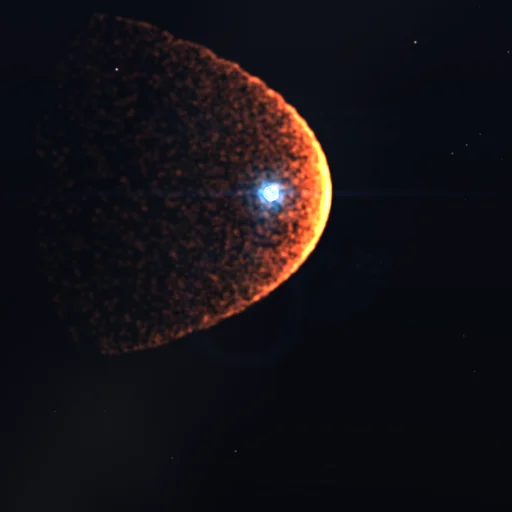
A star's bow wave — Actual application image

Astronomy

A star's bow wave

Balance an outward stellar wind against an incoming interstellar flow. Change density or speed and watch the stand-off distance respond.

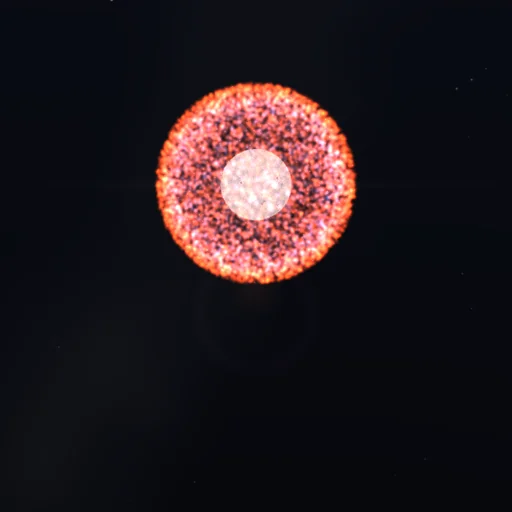
The radioactive light of a supernova — Actual application image

Astronomy

The radioactive light of a supernova

Follow an expanding Type Ia remnant through its first hundred days. Compare nickel mass, diffusion time and apparent brightness at different distances.

Between a planet and a star — Actual application image

Astronomy

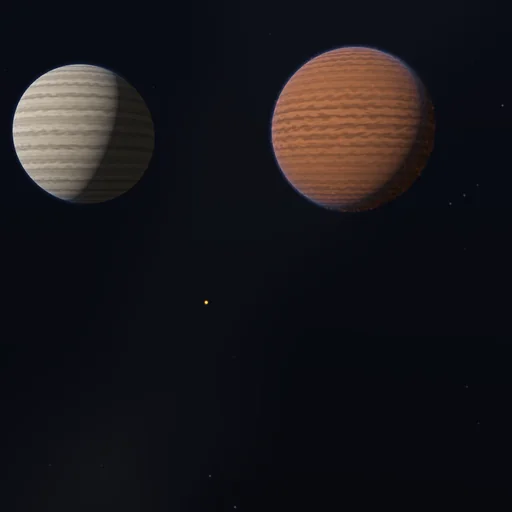
Between a planet and a star

Increase the mass while keeping a Jupiter-sized object in view. Compare cooling brown dwarfs with objects capable of sustained hydrogen fusion.