MakarovSuites
English
EnglishDeutschРусскийУкраїнськаFrançaisEspañolItalianoPolski
Contact & licences

Astronomy

The planet-building disk

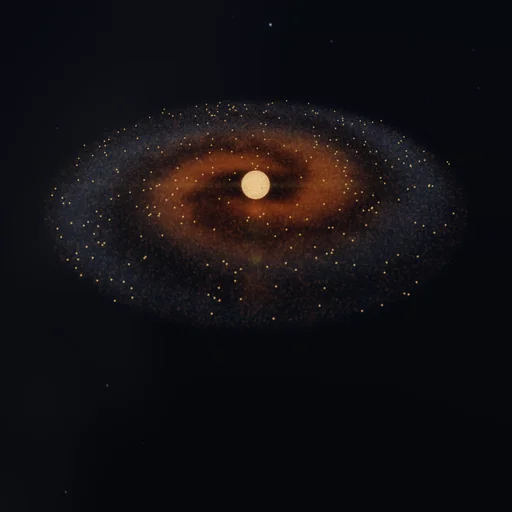
Compare dust and gas. Change the Stokes number and watch which grains drift fastest through a pressure-supported disk.
The planet-building disk — Actual application image
Actual application image

The model and its limits

Test grains in a prescribed gas disk; radial drift and Keplerian shear. No self-gravity, coagulation or planet formation is simulated. Distances are AU, displayed sizes enlarged.

Equations used in the module
Equations
v_r = -2ηv_K St/(1+St²); r(t)^(3/2) = r₀^(3/2) - 3η(2π)St t/(1+St²)
Related experiments

Back to catalogue
One face toward a star — Actual application image

Astronomy

One face toward a star

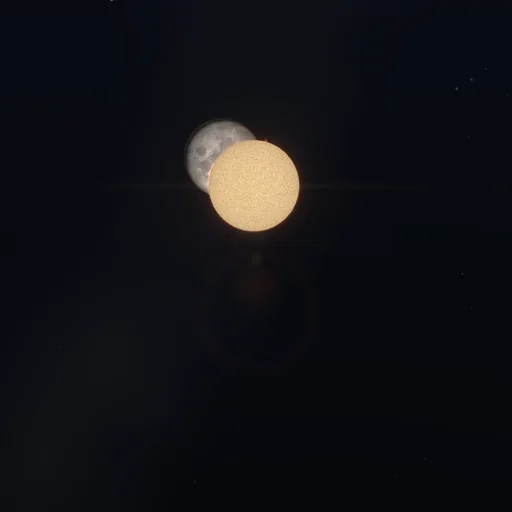
Dissipate a planet’s excess spin and follow a surface marker. Compare fast and weak tidal damping as the day approaches the orbital period.

Jets on a giant planet — Actual application image

Astronomy / Earth

Jets on a giant planet

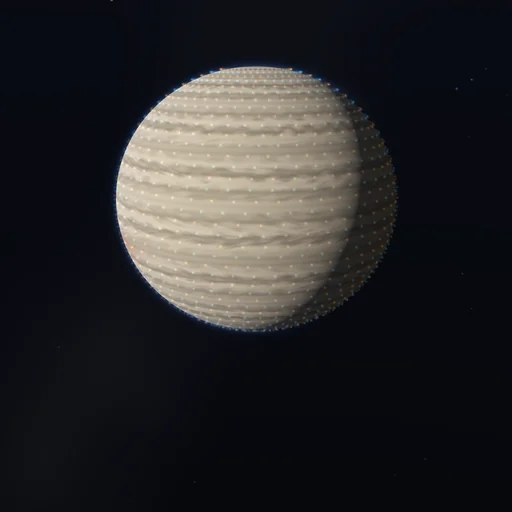
Change planetary rotation and wind speed. Compare the Rhines scale with the width of the coloured latitude bands and follow advected tracers.

Impact and the ejecta curtain — Actual application image

Astronomy / Earth

Impact and the ejecta curtain

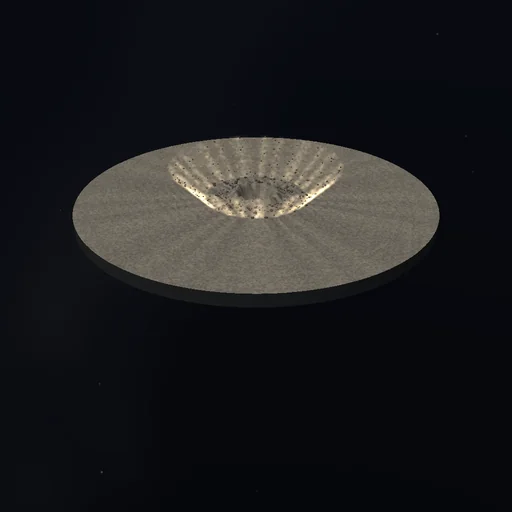
Choose the target body and the impactor. The atmosphere brakes, breaks or bursts it; the crater takes its scaled size and shape; the ejecta fly with the speeds of their launch positions, the fastest escaping small bodies.