MakarovSuites
English
EnglishDeutschРусскийУкраїнськаFrançaisEspañolItalianoPolski
Contact & licences

Earth

Urban heat: the thermal memory of a city

Compare streets and vegetation through a day-night cycle with sunlight, heat storage, wind exchange and anthropogenic heating.
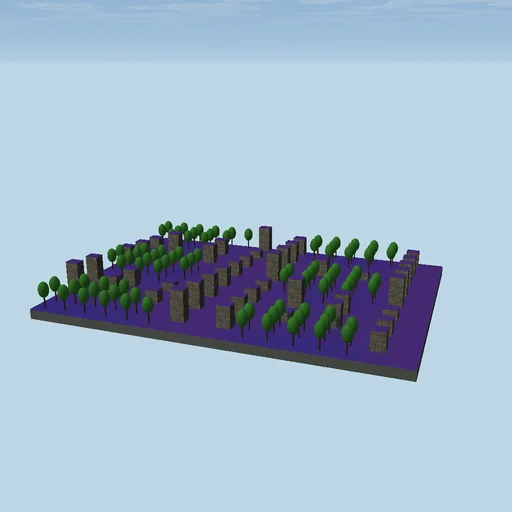
Urban heat: the thermal memory of a city — Actual application image
Actual application image

Try this

Run through noon and night. Compare vegetation, wind and anthropogenic heat while watching the temperature map.

The model and its limits

Surface energy grid with illustrative material capacities, evaporation and linear atmospheric exchange. Time is accelerated 300 times. This is surface temperature, not a calibrated air-temperature forecast.

Equations used in the module
Equations
C dT/dt = absorbed_solar + human_heat - evaporation - exchange + diffusion
Related experiments

Back to catalogue
Inside planets and the Sun — Actual application image

Astronomy / Earth

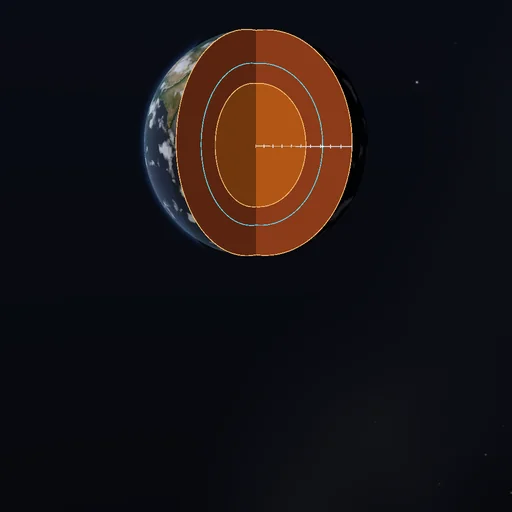
Inside planets and the Sun

Probe a calculated rocky planet, or explore reference cutaways of the Sun and the four giant planets.

Seasons and obliquity — Actual application image

Astronomy / Earth

Seasons and obliquity

Why summer is warm: not because the Earth is closer to the Sun (it is closer in January) but because the axis leans, and a leaning hemisphere gets a higher Sun for longer. The Earth on its orbit with its axis fixed in space, lit from where the Sun is; an observer at any latitude with the day's Sun arc over the horizon; day length, noon altitude and daily insolation from the geometry, and the two hemispheres through the year.