MakarovSuites
English
EnglishDeutschРусскийУкраїнськаFrançaisEspañolItalianoPolski
Contact & licences

Astronomy

Stellar parallax

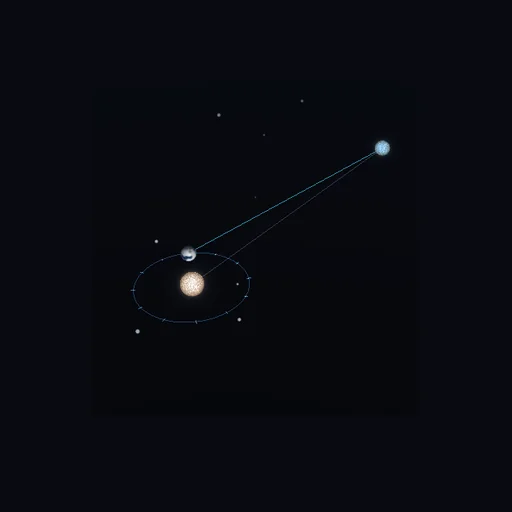
Two dates, one moving image, and a distance measured from completed exposures. Compare frames and separate parallax from proper motion.
Stellar parallax — Actual application image
Actual application image

What happens

Circular Earth orbit, fixed tangent plane, linear proper motion and independent Gaussian errors per coordinate. A synthetic teaching experiment, not a Gaia data reduction. The fit uses completed exposures only. Negative parallaxes are kept; weak positive estimates are not presented as reliable reciprocal distances. Quoted distance bounds invert p ±1σ and are not a distance posterior. Orbit distances, body sizes and luminous markers are schematic; the sky axes use the same mas scale. 1 mas = 0.001 arcsec. A six-month displacement depends on phase and need not equal 2p.

Equations used in the module
Equations
p(arcsec) = 1 / d(pc)
x = x₀ + μx t + p Px(t); y = y₀ + μy t + p Py(t)
Px = sin(λ − L); Py = sin β cos(λ − L)
Related experiments

Back to catalogue
Cepheid period-luminosity — Actual application image

Astronomy

Cepheid period-luminosity

A pulsating photosphere, measured nights and the cosmic distance ladder. Recover a period from a phase fold, distinguish mean flux from mean magnitude, and see how dust biases distance.

Speed of light from Io — Actual application image

Physics / Astronomy

Speed of light from Io

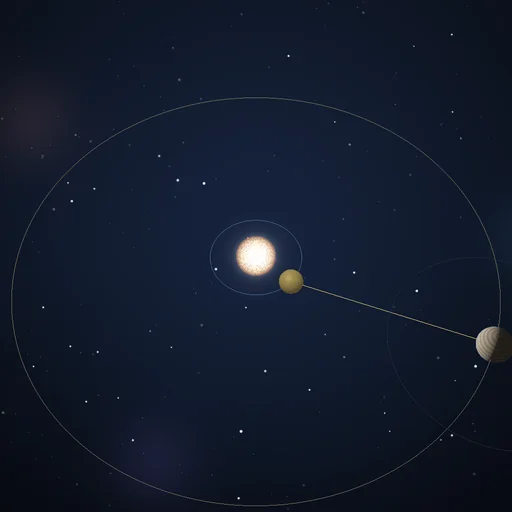
Roemer 1676: Io's eclipses arrive late when Earth is far from Jupiter, and the residuals of the fit measure the speed of light.

The Sun’s boiling surface — Actual application image

Astronomy

The Sun’s boiling surface

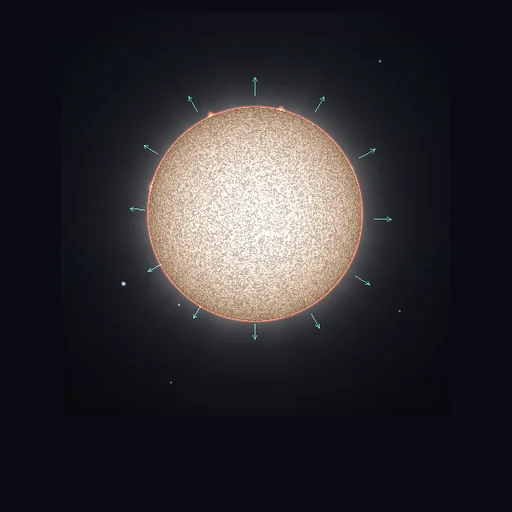
Explore a magnified patch of the photosphere. Follow warm upflows and cool lanes, and compare overturn time with the radiated energy flux.