MakarovSuites
English
EnglishDeutschРусскийУкраїнськаFrançaisEspañolItalianoPolski
Contact & licences

Astronomy

Surviving atmospheric entry

Guide a capsule into the atmosphere. Change bank angle and lift-to-drag ratio while watching heating, deceleration and the remaining heat shield.
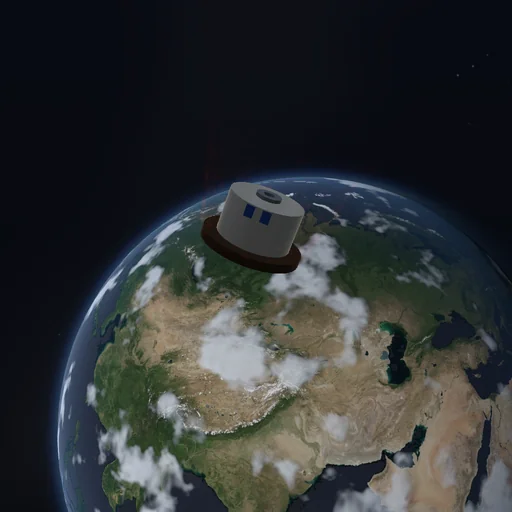
Surviving atmospheric entry — Actual application image
Actual application image

The model and its limits

Planar lifting entry, exponential atmosphere, Sutton-Graves heating proxy and lumped-temperature ablation. Time runs 6 times faster. No parachute or landing system: reaching the surface does not mean a safe crew landing.

Equations used in the module
Equations
rho = rho0 exp(-h/H); D = rho v² C_D A/2; q_dot = k sqrt(rho/R_n) v³; q_rad = epsilon sigma (T^4-T_bg^4)
Related experiments

Back to catalogue
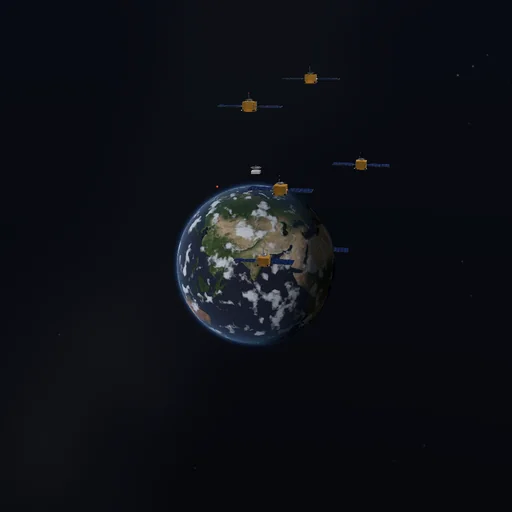
Finding your position from orbit — Actual application image

Astronomy

Finding your position from orbit

Locate a receiver using six satellite pseudoranges. Add clock error and range noise, then compare a spread-out constellation with poor geometry.

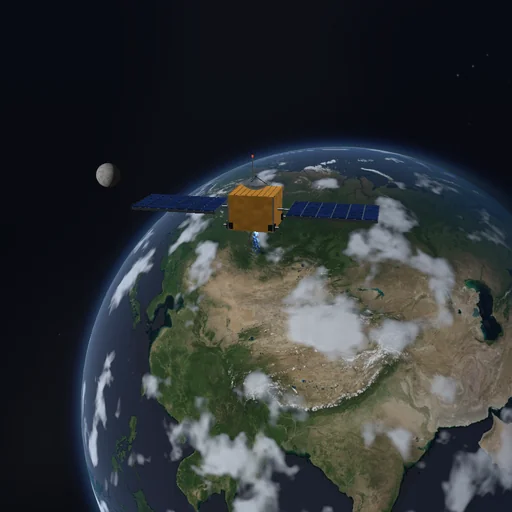
Avoiding an orbital collision — Actual application image

Astronomy

Avoiding an orbital collision

Watch a predicted conjunction and make an avoidance burn. Measure the actual closest approach and compare it with an unpowered pass.

Two spacecraft on a tether — Actual application image

Astronomy

Two spacecraft on a tether

Deploy a tether between two spacecraft. Watch gravity-gradient libration and see how reeling changes the angular motion and tension.