MakarovSuites
English
EnglishDeutschРусскийУкраїнськаFrançaisEspañolItalianoPolski
Contact & licences

Astronomy

A planet's fingerprint in a lensing event

Move a background star behind a foreground lens. Add a planet and compare the magnification with the familiar single-lens light curve.
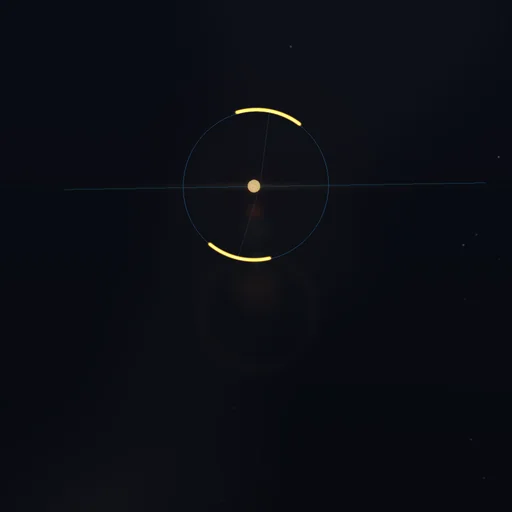
A planet's fingerprint in a lensing event — Actual application image
Actual application image

The model and its limits

Point-source geometric optics, the source at 8 kpc, the lens distance and transverse speed adjustable (the Einstein time follows). Binary-lens images are solved numerically; finite-source smoothing, parallax and orbital motion are omitted. Caustic peaks can be very sharp. Image separations are greatly magnified.

Equations used in the module
Equations
A(u) = (u²+2)/(u√(u²+4)); y = x − Σ m_i (x−x_i)/|x−x_i|²; A_i = 1/|det J_i|.
Related experiments

Back to catalogue
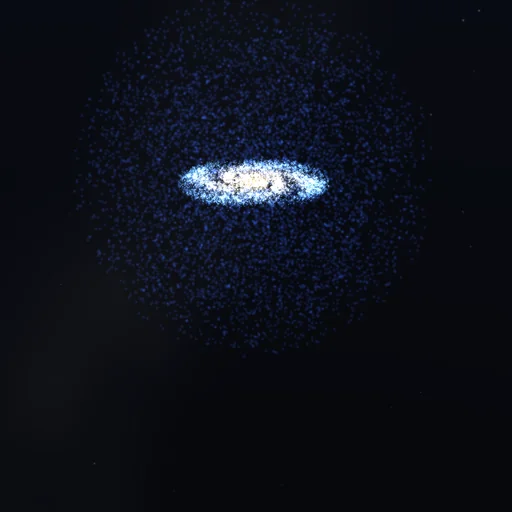
The invisible halo around a galaxy — Actual application image

Astronomy

The invisible halo around a galaxy

Build a Navarro–Frenk–White halo. Probe its enclosed mass, circular speed and light deflection at different galactic radii.

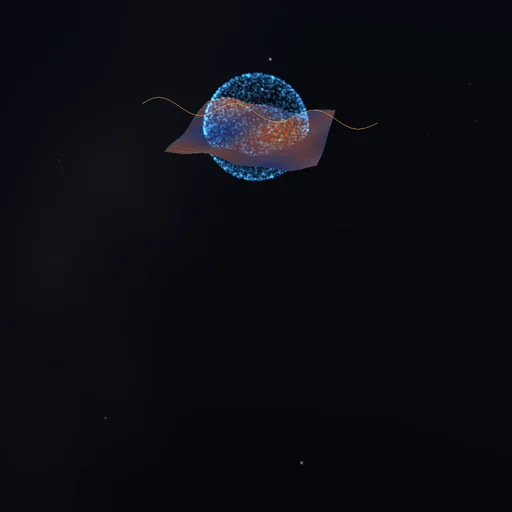
Stretching a tiny patch of the Universe — Actual application image

Astronomy

Stretching a tiny patch of the Universe

Increase the number of e-folds. Compare exponential expansion with a shrinking comoving Hubble radius and follow a perturbation as it crosses that scale.

How many voices could share the Galaxy? — Actual application image

Astronomy

How many voices could share the Galaxy?

Change the assumptions in the Drake equation. Explore how communicative lifetimes and uncertain biological fractions change the expected number of contemporaries.