Physics
Muon lifetime
Time dilation as a count rather than a claim: a factor of a billion between the muons that should reach sea level and the ones that do.
What happens
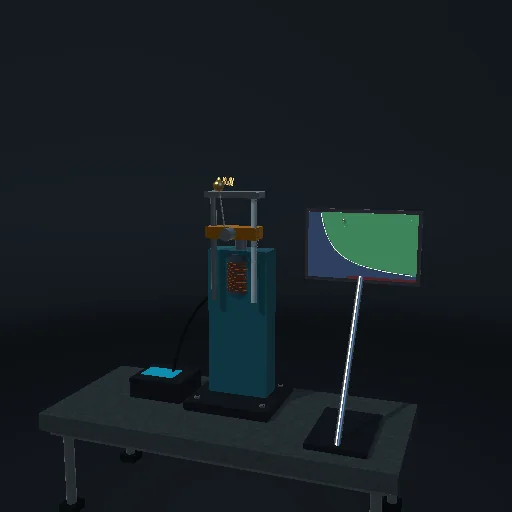
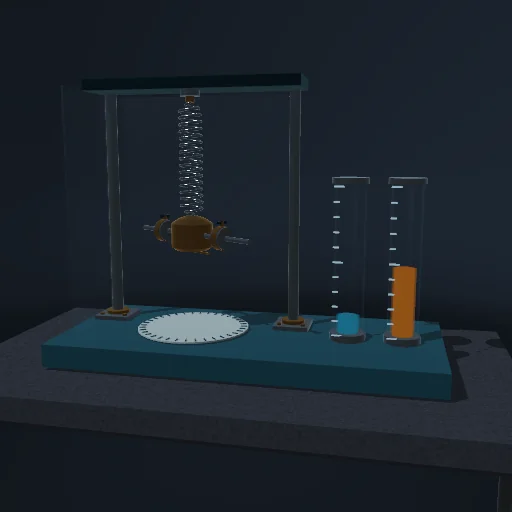
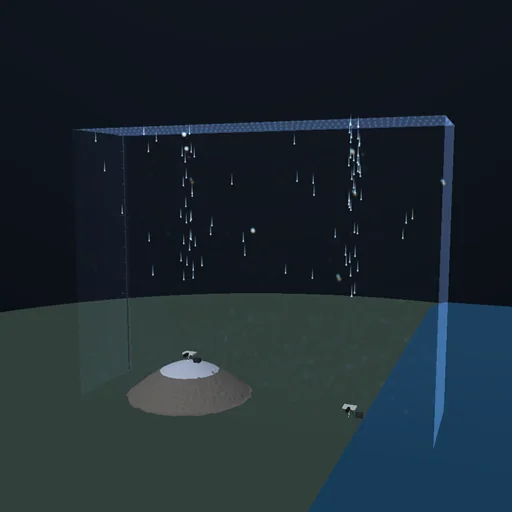
A muon lives 2.197 microseconds and light covers 659 metres in that time. Muons are made fifteen kilometres up - twenty-three lifetimes of travel - so essentially none should reach the ground. The classical answer is one in ten billion. They arrive anyway, in quantity, and that gap is not a correction needing statistics to see; it is a factor of 10^9 standing in a detector. The two columns show the same fact twice: on the left a clock running slow, on the right a sky squashed by gamma. Neither is more true, and their survival fractions stay equal to the last digit - adding both would double-count relativity, which is the classic way to get this wrong. Here the experiment stands outdoors: a counter on the summit, a counter at the sea, and a rain of muons from the layer where they are born, each dying where the decay length says. Turn dilation off and the rain dies a few hundred metres under the layer; switch to the muon's frame and the sky flattens by gamma while the same share arrives.
Equations used in the module
Equations
N/N₀ = exp(−L / (γβcτ))
γ = 1/√(1 − β²),   cτ = 658.64 m
L′ = L/γ   (the same number, seen from the muon)
the counters:  sea/summit → exp(−1907 m / L): 0.736 with dilation at 1 GeV/c, 0.054 without;  Frisch and Smith 408/563 = 0.725;  scatter σ = √(p(1 − p)/N): ± 0.044 at 100 summit counts