Earth
Sedimentary basin
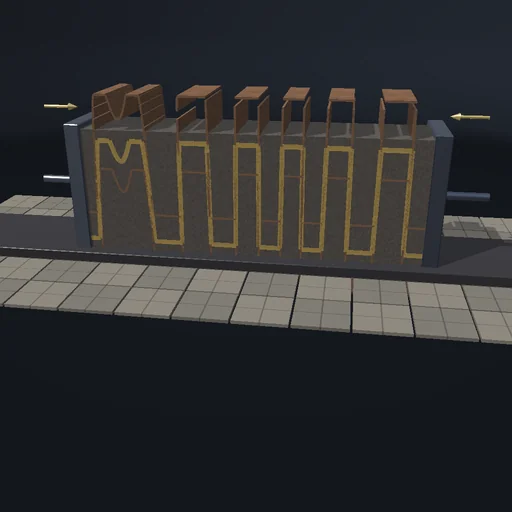
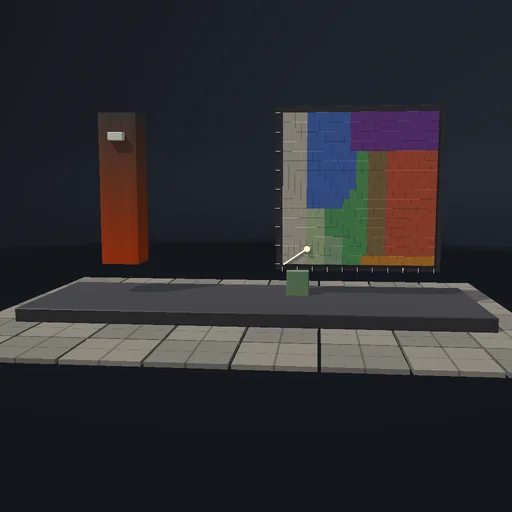
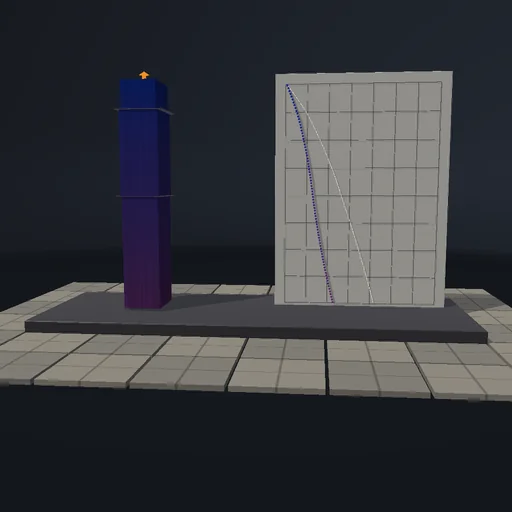
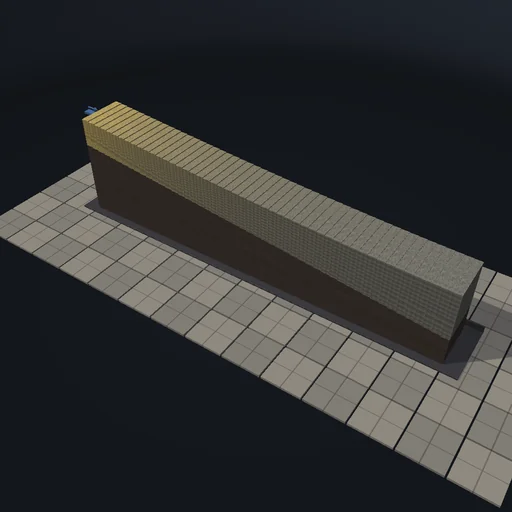
Watch a 100 km basin fill over ten million years: the basement sinks faster the farther from the hinge, sediment arrives at the hinge and spreads downslope by diffusion, faster on land than under water, and every quarter million years a marker bed is laid. Sand stays near the source and mud travels on; porosity squeezes out with depth so the compacted pile stands taller than the solid it holds. Raise the sea and the shoreline retreats; triple the supply and the basin overfills and spills past its far edge. Supplied, exported and held sediment balance to rounding, and a diffusing mound spreads its variance by exactly 2 K t.
What happens
A section through a basin of fifty 2 km columns: the basement subsides about a hinge at the left edge, 0.2 km/Myr at the far end; sediment enters at the hinge at 10 km² per Myr and spreads by diffusion of the surface elevation with 1000 km²/Myr on land and 300 under the sea; the far edge spills whatever stands above sea level. Solid thickness is conserved; the compacted thickness of each column follows from a porosity of 0.5 at the surface falling with a 2 km scale; a marker horizon is laid every 0.25 Myr, and the sand share of what is laid decays with distance from the source. Explicit stepping at 1 kyr with a column’s outgoing fluxes scaled together so it never gives more than it holds; one second of the experiment is one Myr.
Try this
Watch the beds pile up and the shoreline move; raise the sea and the shore retreats; raise the supply until the basin spills; read sand near the hinge against mud far out and the compacted pile against its solid.
The model and its limits
Diffusive transport with two constant diffusivities, a kinematic hinge instead of flexure or thermal subsidence, compaction from a fixed porosity law, no waves, channels or carbonate. A teaching section, not a basin model.
Equations used in the module
Equations
∂h/∂t = −∂q/∂x − s(x),  q = −K·∂h/∂x,  s = s_max·x/L
T − φ_0·λ·(1 − e^(−T/λ)) = S_solid,  φ(z) = φ_0·e^(−z/λ)
f_sand(x) = e^(−x/λ_s)
Σ S·Δx = Q_in·t − Q_out,  σ² = σ_0² + 2K·t