Physics
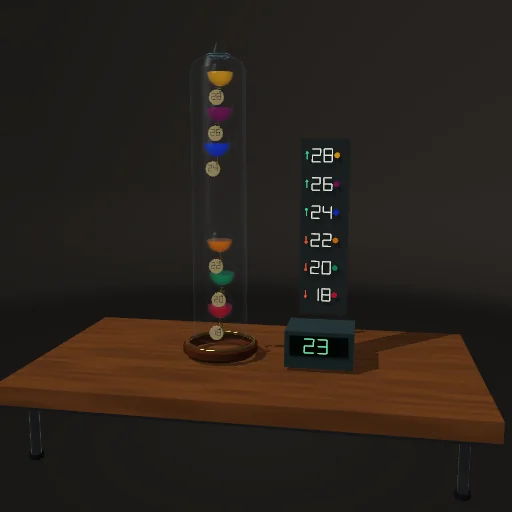
Galileo thermometer · 3D
Change the temperature and watch six numbered glass floats rise and sink as liquid density changes.
Available for Windows
200 interactive modules span mechanics, waves, optics, electromagnetism, quantum phenomena, fluids and thermodynamics. Work with physical objects, inspect detailed 3D apparatus and connect the motion to live measurements.
200 modules · Page 9 / 10
Physics
Change the temperature and watch six numbered glass floats rise and sink as liquid density changes.
Physics
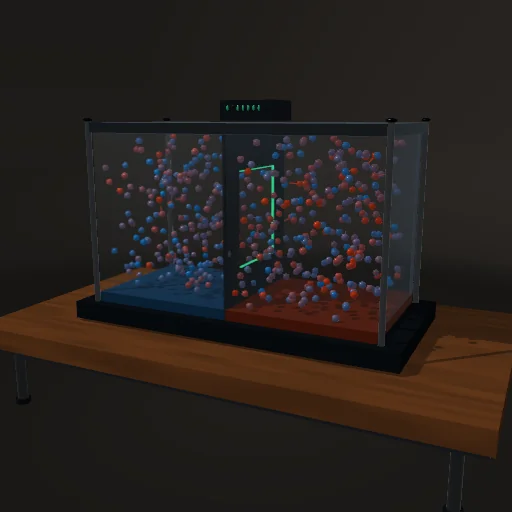
512 elastic spheres move in three dimensions. A selective aperture separates fast and slow particles; compare temperatures and the cost of erasing information.
Physics / Engineering
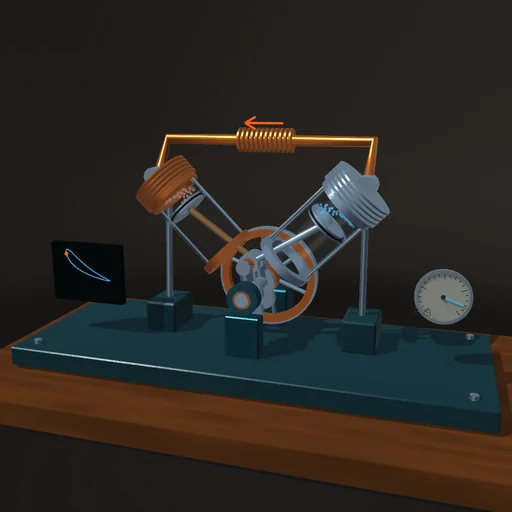
Two pistons share one crankpin in a 90° V. Inspect the rod bearings, compare reservoir temperatures and explore a separate adjustable-crank teaching mode.
Physics
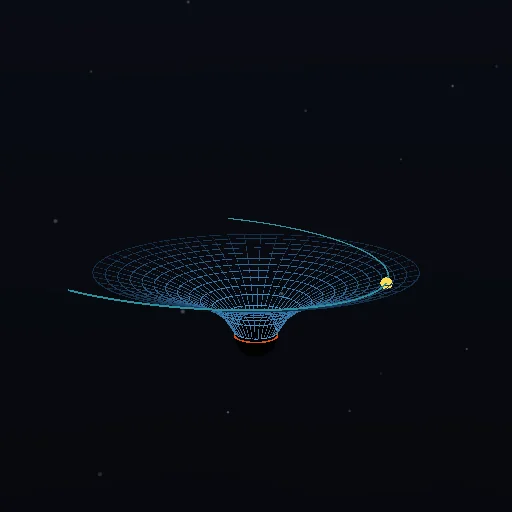
Compute massive and null geodesics in Schwarzschild spacetime. A Flamm embedding, orbital trail, static-clock redshift and conserved-energy residual connect geometry with measurable quantities.
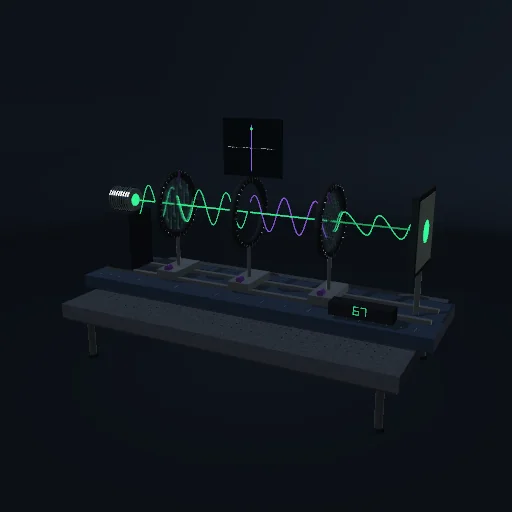
Physics
Use Jones-vector optics to compare Malus transmission, three polarizers, a quarter-wave retarder and an ideal twisted liquid-crystal cell.
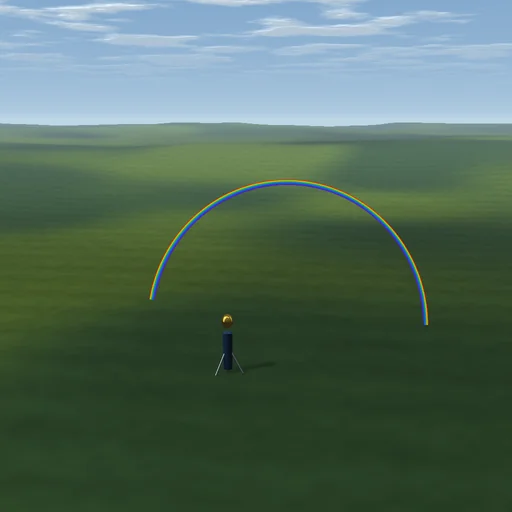
Physics / Earth
Trace refraction, dispersion and internal reflections through a spherical water drop. Compare primary and secondary rainbow angles and the reversal of colour order.
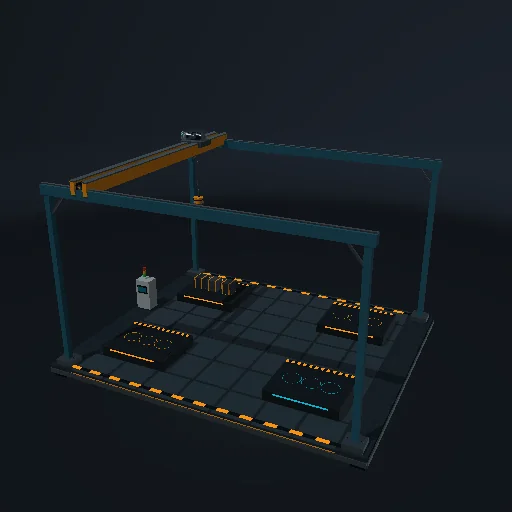
Physics / Engineering
Lift and transfer steel blocks with a bridge crane; compare motion with and without sway feedback.
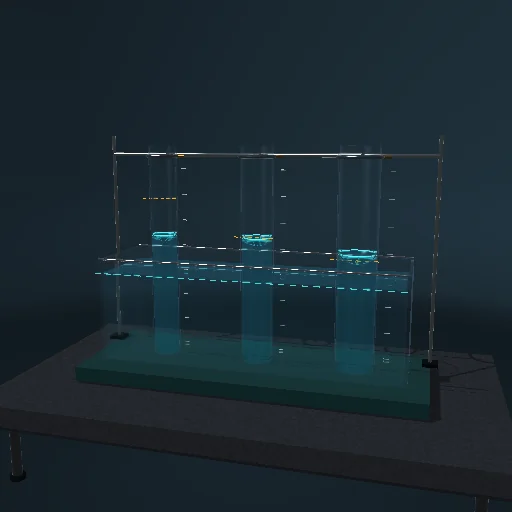
Physics
Explore capillary rise and depression by changing tube radius, contact angle and surface tension. Compare the viscous approach to equilibrium with Jurin height and capillary pressure.
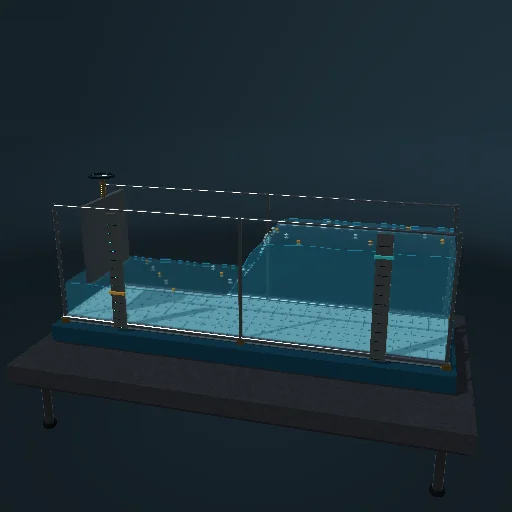
Physics
Use mass and momentum conservation to calculate a hydraulic jump. Change flow and incoming depth, then compare Froude number, conjugate depth and energy loss.
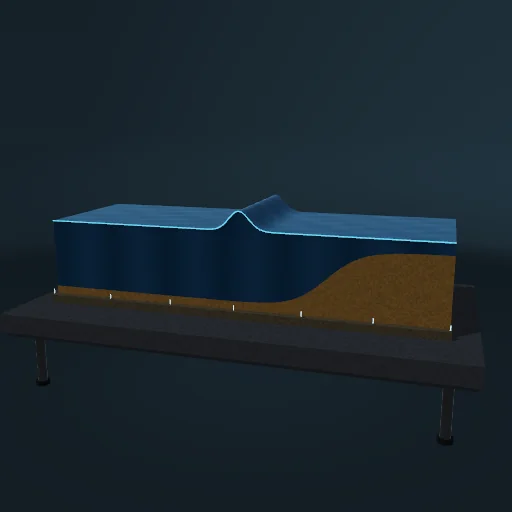
Physics
Propagate a long wave across variable ocean depth with a conservative shallow-water solver. Observe slowing, shoaling and reflection while checking water-volume conservation.
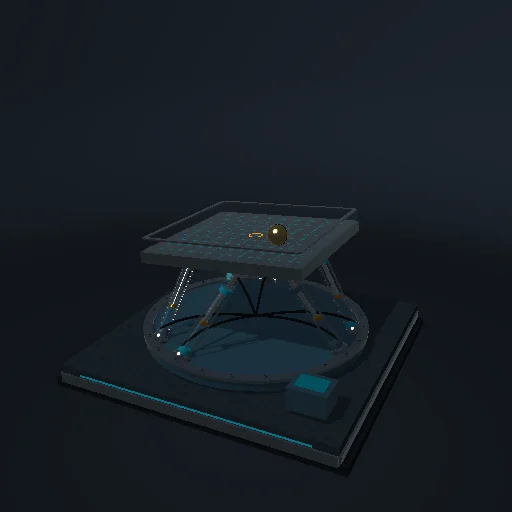
Physics / Engineering
Control a six-actuator parallel robot and balance a freely rolling ball on its moving platform.
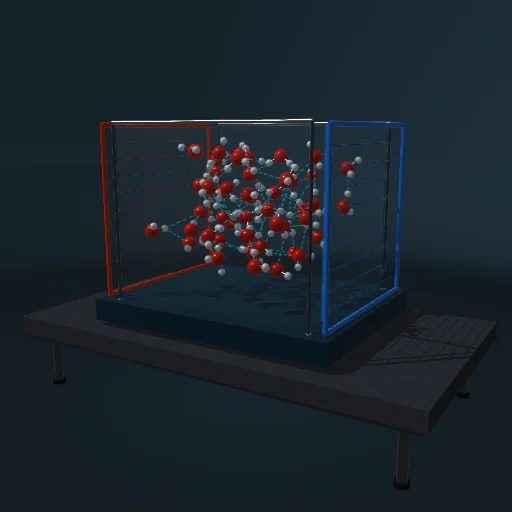
Physics
48 polar molecules move and rotate in three dimensions. Explore hydrogen-bond indicators, thermal motion and alignment in an electric field.
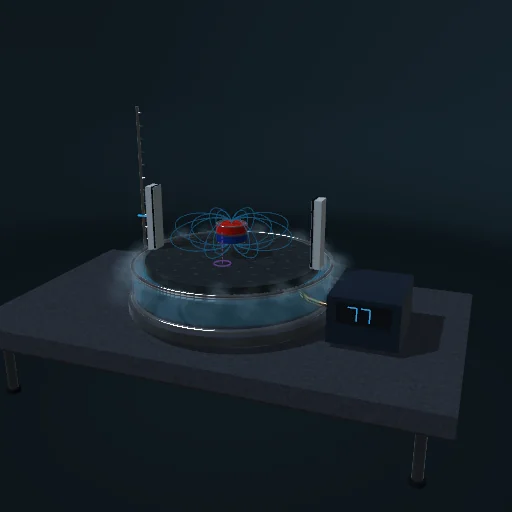
Physics
Compare ideal Meissner repulsion with an optional field-cooled pinning well. Disturb a levitating magnet and warm the sample through its critical temperature.
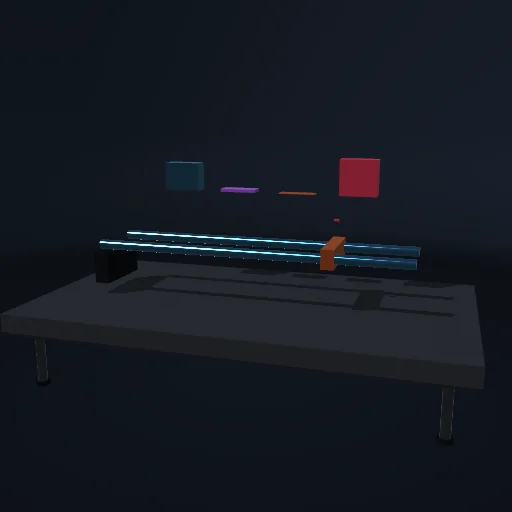
Physics
A capacitor-driven rail launcher couples current, changing inductance and armature motion. Inspect force, speed, Joule losses and the complete energy balance in slow motion.
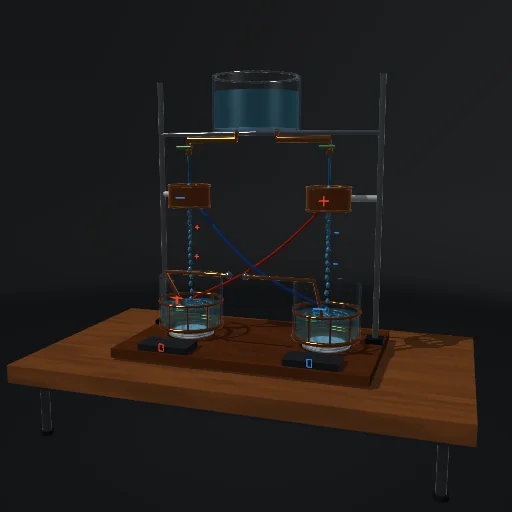
Physics
A reduced Kelvin water-dropper circuit amplifies charge through crossed induction. Explore growth, leakage, energy storage and repeated spark discharge powered by falling water.
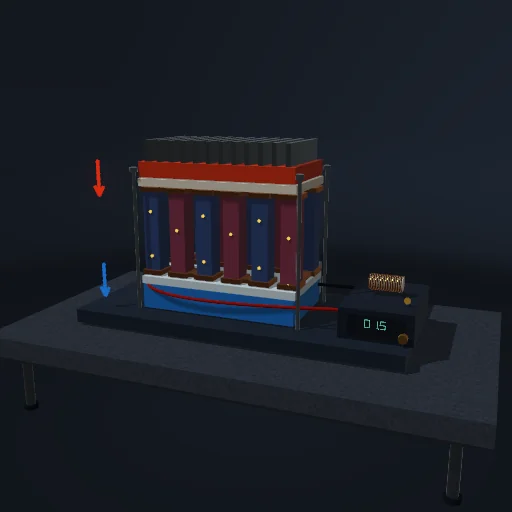
Physics
Compare Seebeck generation and Peltier cooling in a constant-property thermoelectric module. Examine load matching, heat flow, Joule loss, coefficient of performance and ZT.
Physics
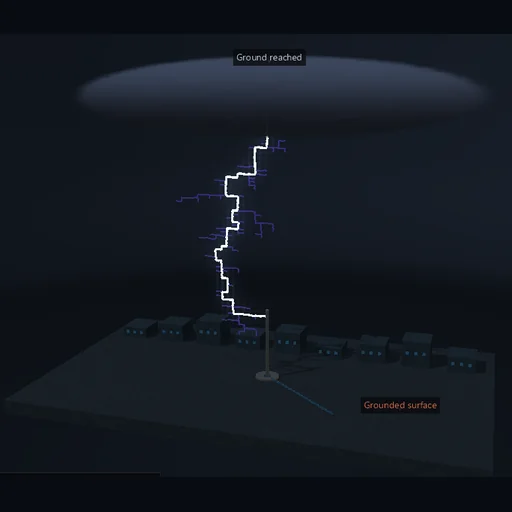
Grow a branching discharge from a repeatedly solved electric potential. Change field sensitivity and a grounded rod to see how the stochastic channel finds the ground.
Physics
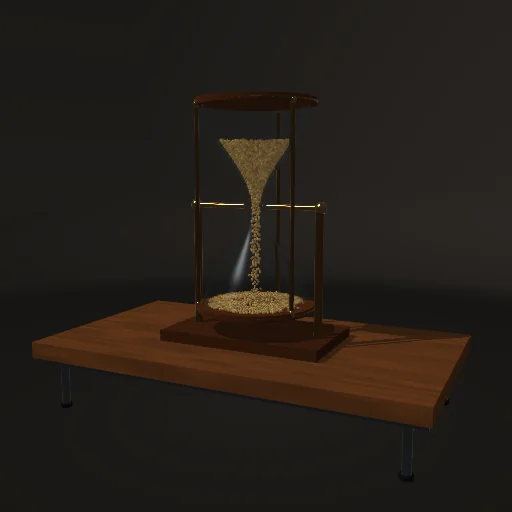
A 3D glass hourglass with thousands of colliding, rotating grains. Change the neck and friction, turn the vessel and measure the flow of sand.
Physics / Engineering
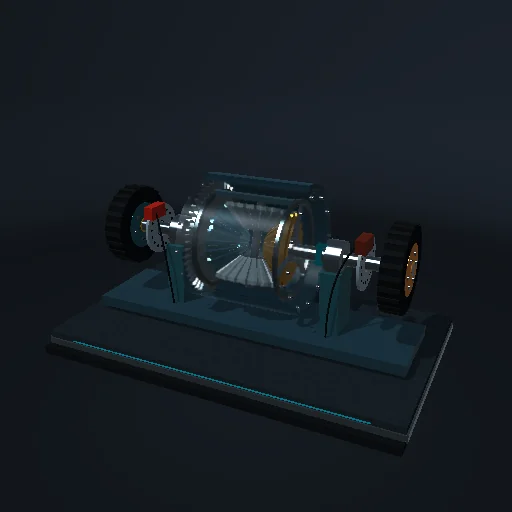
Look inside a bevel differential, brake either wheel and compare open and clutch-coupled operation.
Physics
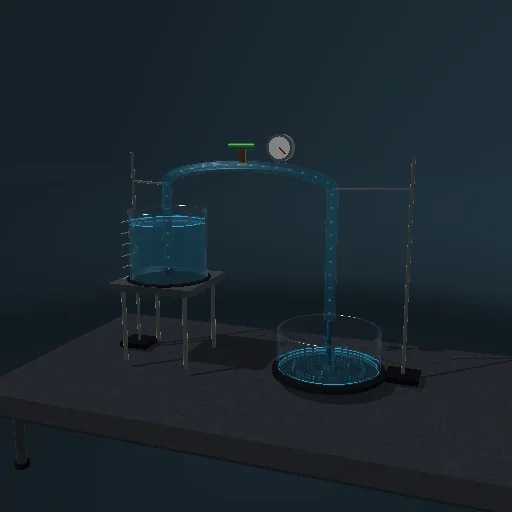
Explore a primed siphon with inertia, hydraulic losses and a draining reservoir. Crest pressure explains cavitation, the barometric height limit and why admitting air stops flow.
Some modules belong to more than one Suite. Shared experiments have one description here.