MakarovSuites
English
EnglishDeutschРусскийУкраїнськаFrançaisEspañolItalianoPolski
Contact & licences

Games

Durak

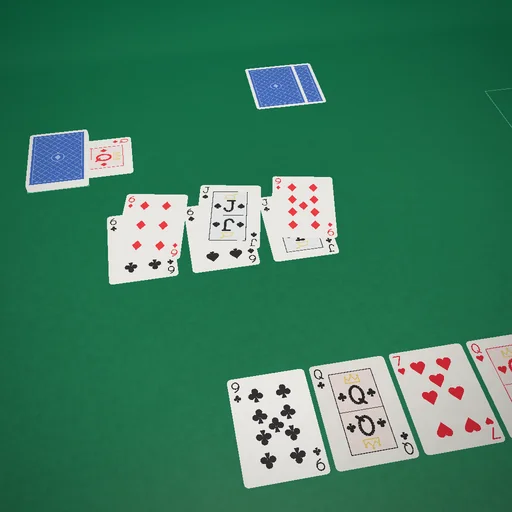
Durak with a deck of 36 cards, for two to four players: the attacker leads a card, the defender covers it with a higher card of the same suit or with a trump - or picks everything up - and the attackers throw in cards of the ranks on the table. The hands are filled from the deck after every bout, and whoever is left with cards at the end is the fool. Play the throw-in game or the passing game, where an attack can be handed on with a card of the same rank. The computer plays the other hands at five levels and sees only what a player sees; the strongest play the game out in their heads over many deals of the cards they have not seen. Or watch a demo game with open hands.
Durak — Actual application image
Actual application image

What happens

36 cards, six each; the bottom card of the deck shows the trump suit. The holder of the lowest trump leads first. The attacker lays a card; the defender, the next player to the left, covers it with a higher card of its suit or with any trump (a trump only with a higher trump). The attackers may throw in cards of ranks already on the table - six in all, and no more than the defender holds. A defender who cannot or will not cover picks up every card on the table. If everything is covered the cards are discarded and the defender leads next; if he picked up, the player after him leads. In the passing game a defender who has covered nothing may lay a card of the same rank instead, and the next player must defend against them all. After a bout the hands are filled to six from the deck. Players who run out of cards once the deck is gone are out; the last one holding cards is the fool.

Try this

Click a card of your hand to play it; to pick up or to stop throwing in, use the panel or Space. The right mouse button turns the view, the wheel zooms.
Related experiments

Back to catalogue
Solitaire — Actual application image

Games

Solitaire

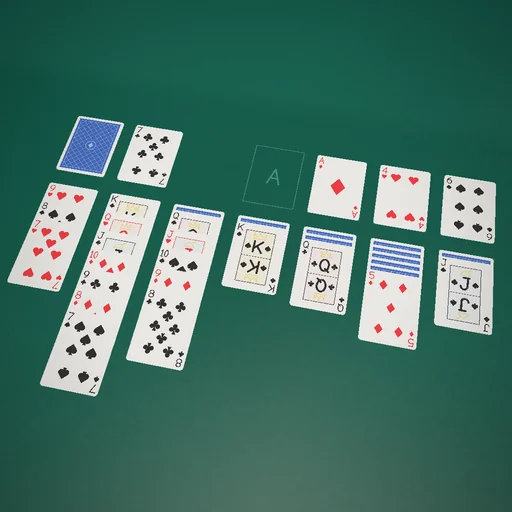
Three patience games on one table. Klondike: seven columns built down in alternating colours, a stock turned one or three cards at a time, and four foundations to build up by suit from the ace. Spider: two packs in ten columns, built down whatever the suit, though only cards of one suit move together; a run from king to ace leaves the table, and eight of them win - with one, two or four suits. FreeCell: every card in the open, four cells to park a card in, and nearly every deal can be won. Click a card and it goes where it can; if it has a choice, click the place. Take moves back, ask for a hint - in FreeCell it comes from a solver that plays the deal to the end - or watch the computer play.

Hearts — Actual application image

Games

Hearts

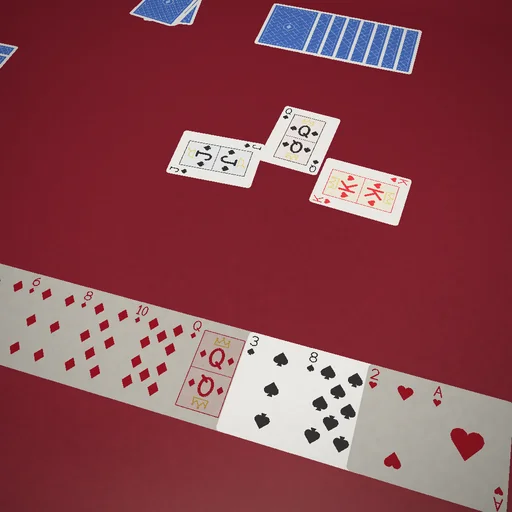
Hearts for four players: pass three cards, then play thirteen tricks, following suit when you can. Every heart you take costs a point and the queen of spades thirteen - unless you take all twenty-six, and then the others pay. Hearts cannot be led until one has been thrown, and the two of clubs opens every hand. The game runs to 50 or 100 points and the lowest score wins. The computer plays the other three hands at five levels and sees only what a player sees; the strongest play each hand out in their heads over many deals of the cards they have not seen. Or watch a demo game with open hands.

Poker — Actual application image

Games

Poker

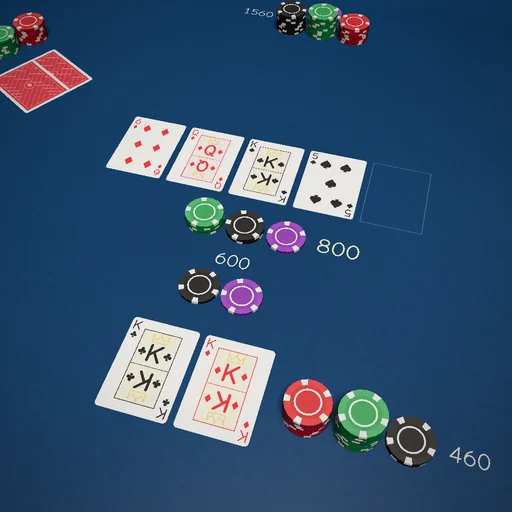
No-limit Texas hold'em as a tournament at one table, for two to six players. Everybody starts with 1500 in chips. Two cards each and a round of betting; then three cards on the board, a fourth and a fifth, with a round of betting after each - fold, check, call, bet or raise any amount up to all you have. The best five cards of seven win the pot; a player who is all-in can win from each of the others no more than he put in himself, and the rest goes to side pots. The blinds rise every eight hands, and the last player with chips wins. The computer plays the other seats at five levels and sees only what a player sees; the stronger ones count their chances over hundreds of random deals, take a raise for what it tells, bluff, and remember how each player has played. Or watch a demo game with open cards.