MakarovSuites
English
EnglishDeutschРусскийУкраїнськаFrançaisEspañolItalianoPolski
Contact & licences

Games

Go

The oldest board game still played: place stones to surround more of the board than your opponent, take the stones you enclose, and count the area at the end. Boards of 9, 13 and 19 lines, handicap stones, ko and superko, area scoring with komi. Play the computer at five levels, from a novice that plays out a few hundred random games before each move to a master that plays out up to two hundred thousand across the processor’s cores, play a friend at the same table, or watch the computer play itself.
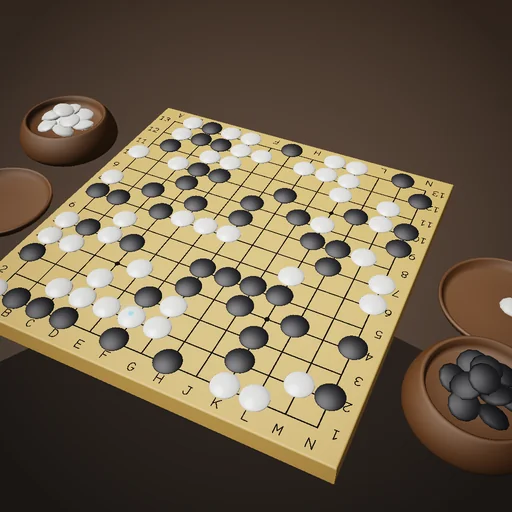
Go — Actual application image
Actual application image

What happens

Black and White take turns placing stones where the lines cross. Stones of one colour next to each other along the lines form a group; a group with no empty point beside it is captured, and its stones become the prisoners of the side that took them. A ko may not be retaken at once, no move may bring back an earlier position (positional superko), and a move that would leave its own group without liberties is not allowed. Two passes in a row end the game: the computer marks the stones that look dead, a click on a group corrects it, and each side counts its stones and the empty points it alone surrounds. White receives komi: 7.5 points, or 0.5 with a handicap. The computer is the 3D Go engine: Monte Carlo tree search with prior knowledge and all-moves-as-first statistics, playouts that answer ataris, take stones, follow 3×3 shapes and leave eyes alone, and independent trees on several threads.

Try this

Click where the lines cross to place a stone; after two passes, click a group to mark it dead or alive. Turn the table with the right mouse button, zoom with the wheel.
Related experiments

Back to catalogue
Backgammon and nardy — Actual application image

Games

Backgammon and nardy

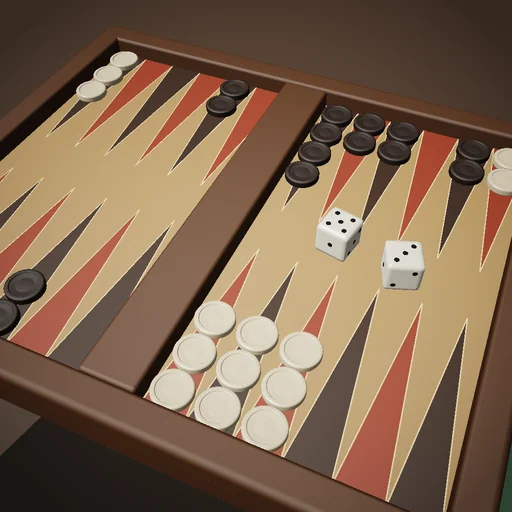
Long nardy, the game of the Caucasus and Central Asia, and short nardy, known in the West as backgammon, on a walnut board with ivory and ebony checkers and dice that tumble to rest. Every legal way to play a roll is offered step by step; the computer judges positions with the small neural networks of 3D Nardy, taught by playing itself, at five levels from a novice that misjudges on purpose to a master that looks a roll ahead. Play the computer, a friend at the same table, or watch a demo game.

Billiards — Actual application image

Games

Billiards

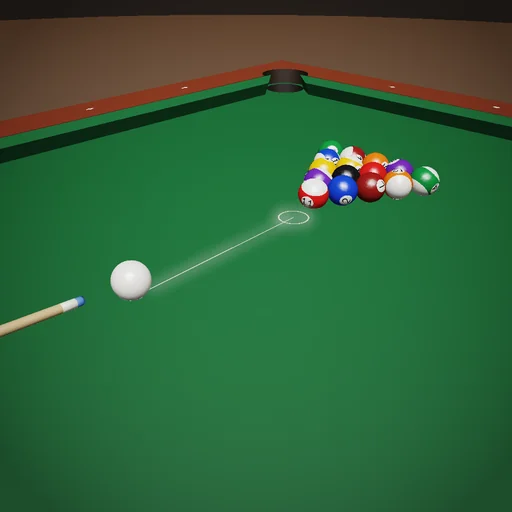
Pool and Russian billiards from 3D Billiards: eight-ball and nine-ball on a nine-foot pool table, and the free pyramid of Russian billiards on a twelve-foot table with pockets barely wider than the balls. The balls slide, roll and spin, throw each other off line and come off cushions struck above their middles in an exact event-driven simulation, and the aim lines show where they will go. Aim with the mouse, draw the cue back and let go. The computer plans its shots through the ghost ball, plays them out to see where the balls stop and plays safe when nothing will drop, at five levels. Play the computer or a friend, practise alone, or watch a demo game.

Renju and gomoku — Actual application image

Games

Renju and gomoku

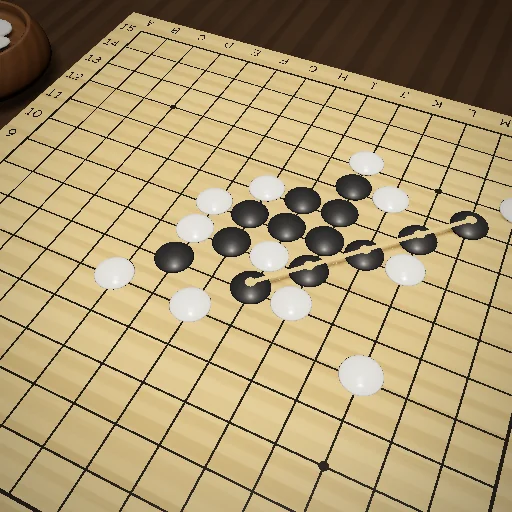
Five in a row on a board of fifteen lines: the first to put five stones in a line – across, down or diagonally – wins. Freestyle and standard gomoku, and renju, where Black, who moves first, may not make a double three, a double four or a line of six. Play the computer at five levels, from a beginner to a master that reads runs of fours to the end, play a friend, or watch the computer play itself.