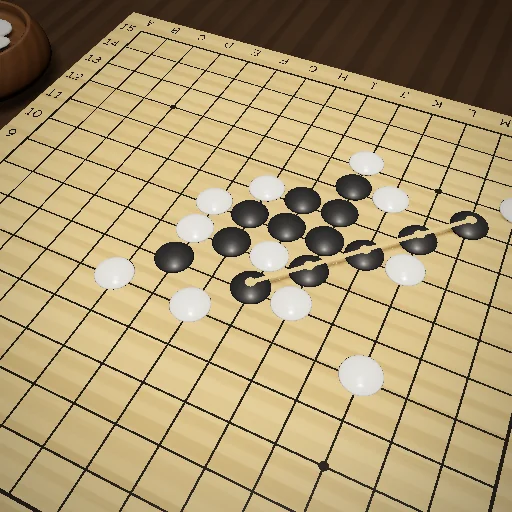
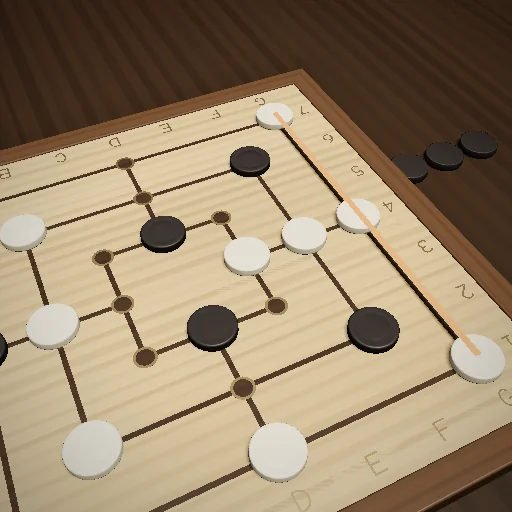
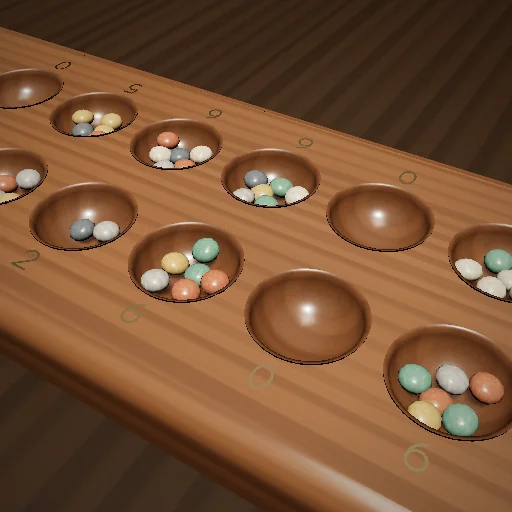
Games
Billiards
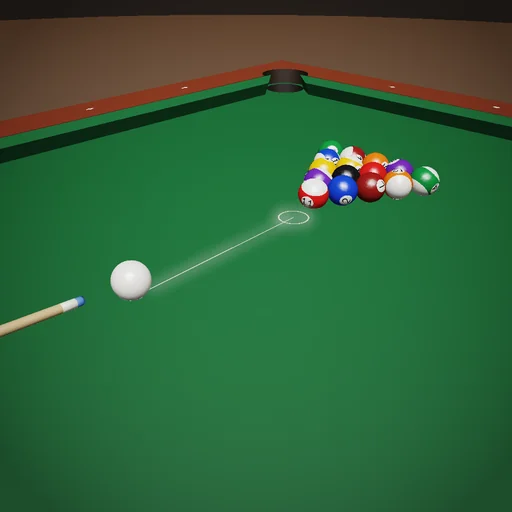
Pool and Russian billiards from 3D Billiards: eight-ball and nine-ball on a nine-foot pool table, and the free pyramid of Russian billiards on a twelve-foot table with pockets barely wider than the balls. The balls slide, roll and spin, throw each other off line and come off cushions struck above their middles in an exact event-driven simulation, and the aim lines show where they will go. Aim with the mouse, draw the cue back and let go. The computer plans its shots through the ghost ball, plays them out to see where the balls stop and plays safe when nothing will drop, at five levels. Play the computer or a friend, practise alone, or watch a demo game.
What happens
Eight-ball: break from behind the head string. After the break the first ball potted gives its shooter the solids (1–7) or the stripes (9–15); hit a ball of your group first, then pot a ball or send some ball to a cushion. With your group cleared, pot the eight in the pocket called (the aim line calls it unless you click another): the eight too early or on a foul loses. Nine-ball: always hit the lowest ball first; the nine potted by a fair stroke wins at any time. Free pyramid on the Russian table: after the break any ball may be struck at any other, every ball potted counts to the striker, the struck one too, and the first to eight wins; a foul gives one of your balls back to the table. A foul – the cue ball in a pocket, nothing hit, the wrong ball first, no cushion – passes the turn, in pool with the ball in hand anywhere. Practice: one player, no fouls, until the table is clear.
Try this
Move the mouse to aim; press on the table, draw back and let go to strike: the farther, the harder. Drag the cue ball when it is in hand; in the pyramid click a ball to strike with it, on the eight click a pocket to call it. The arrow keys turn the cue finely and set the power. Turn the table with the right mouse button, zoom with the wheel.