MakarovSuites
English
EnglishDeutschРусскийУкраїнськаFrançaisEspañolItalianoPolski
Contact & licences

Games

Mancala

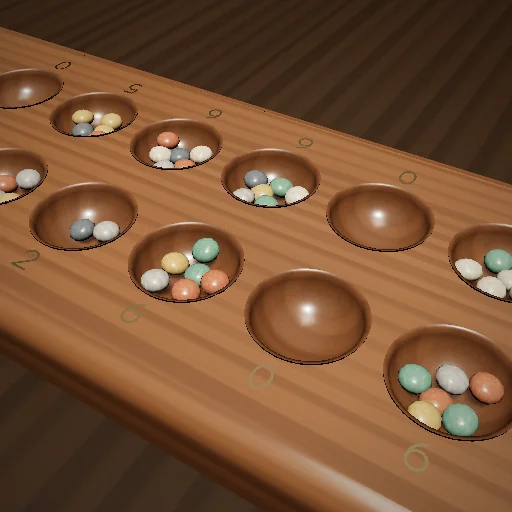
The sowing game of Africa and Asia: pick up the seeds of one of your pits and sow them one by one into the pits that follow, and capture by where the last seed falls. Kalah with its stores and extra turns, and oware, where twos and threes are taken and the opponent must be fed. Play the computer at five levels, play a friend, or watch the computer play itself.
Mancala — Actual application image
Actual application image

What happens

Kalah: each side owns the six pits in front of it and the store on its right. Pick up all the seeds of one of your pits and sow them one by one into the pits that follow, counterclockwise – into your own store, never into your opponent’s. If the last seed falls into your store, you move again; if it falls into an empty pit of yours and the pit across holds seeds, you take both. When one side’s pits are empty the game ends, and each side adds the seeds left in its pits to its store. Oware: the stores only keep what is taken, and when twelve seeds or more go round, the pit they came from is skipped. If the last seed makes two or three in an opponent’s pit, those seeds are taken, and so are twos and threes in the pits just before it on that side – but a move that would take every seed the opponent has takes nothing. A side with no seeds must be fed if any move can reach it. Oware ends when a side has taken more than half the seeds, when nobody can feed the other, or when the game goes round in circles; the seeds left go to the side they lie on. The computer searches with alpha-beta and a transposition table, counting an extra turn as a move of the same side.

Try this

Click one of your pits to sow its seeds; point at a pit to see where they will fall. Turn the table with the right mouse button, zoom with the wheel.
Related experiments

Back to catalogue
Xiangqi — Actual application image

Games

Xiangqi

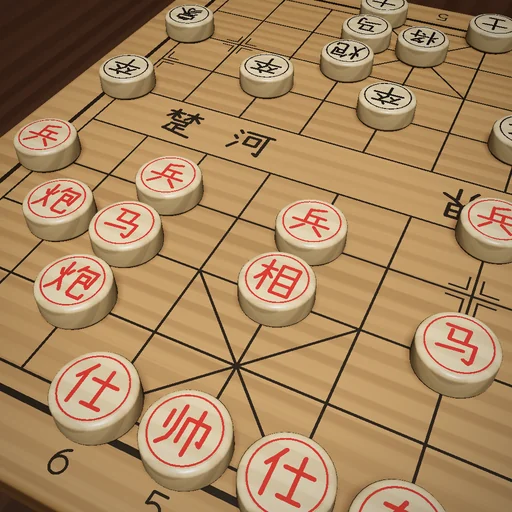
Xiangqi, Chinese chess, on an inked wooden board with the river and the two palaces, played with turned boxwood pieces whose names are cut into them in red and in black: the general and his advisors keep to the palace, the elephants to their side of the river, the horse is stopped at its leg, the cannon takes by jumping a screen, and the generals may not face each other; stalemate and perpetual check lose. Play the computer at five levels, from a beginner who leaves pieces hanging to a searcher that looks many moves deep, play a friend, or watch a demo game.

Snooker — Actual application image

Games

Snooker

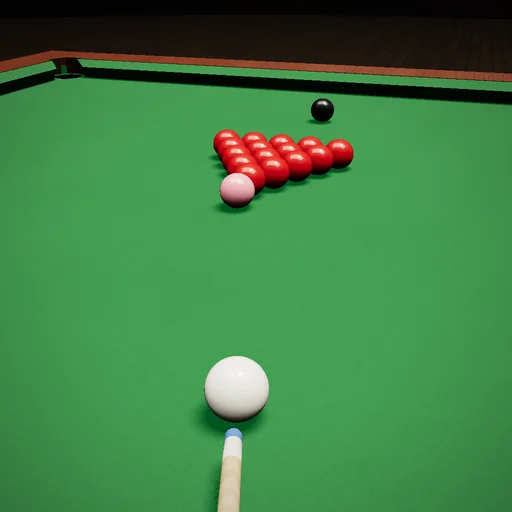
Snooker on a twelve-foot table: fifteen reds and the six colours, or a shorter frame with ten or six reds. A red and a colour in turn, the colours back on their spots while reds remain and then potted in order, fouls of four points or more, the cue ball in hand in the D, and the black spotted again when the frame ends level. The balls slide, roll, spin and throw each other off line in an exact simulation, and the aim lines show where they will go. Aim with the mouse, draw the cue back and let go. Play the computer at five levels - it builds breaks and plays safe when nothing will drop - play a friend, practise alone, or watch a demo frame.

Curling — Actual application image

Games

Curling

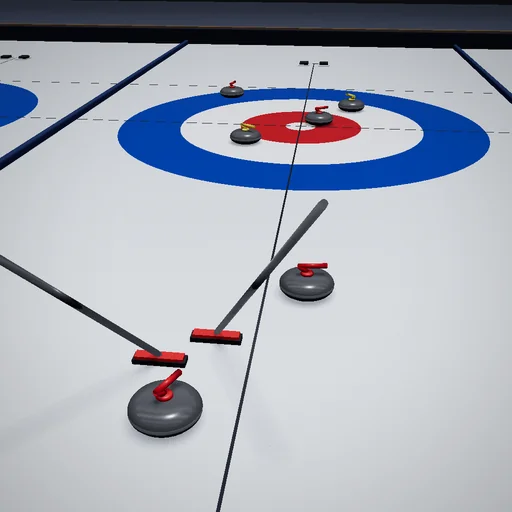
Curling on a full sheet of pebbled ice: eight granite stones a side in each end, the side without the hammer throwing first, the end counted by the stones nearest the button, and extra ends after a tie. The hog line, the back and side lines and the free guard zone of the first five stones are kept. A stone slides for half a minute, curls toward the way it turns - most as it slows - and the sweepers carry it farther and straighter while you hold Space. Place the skip's broom with the mouse, choose the weight and the turn, and throw. Play the computer at five levels - it guards, draws round, freezes and hits, and sweeps its own draws - play a friend, practise your draw weight alone, or watch a demo game.