MakarovSuites
English
EnglishDeutschРусскийУкраїнськаFrançaisEspañolItalianoPolski
Contact & licences

Games

Snooker

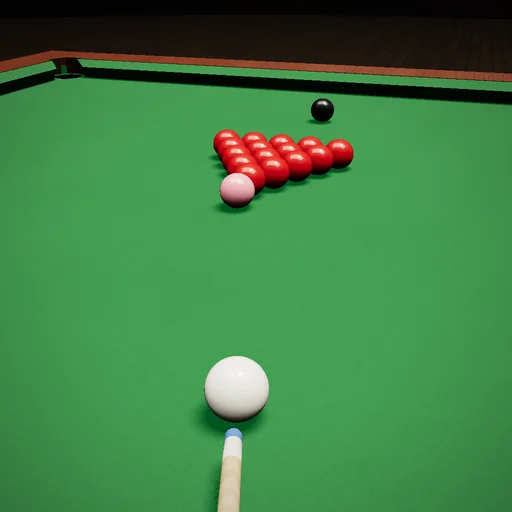
Snooker on a twelve-foot table: fifteen reds and the six colours, or a shorter frame with ten or six reds. A red and a colour in turn, the colours back on their spots while reds remain and then potted in order, fouls of four points or more, the cue ball in hand in the D, and the black spotted again when the frame ends level. The balls slide, roll, spin and throw each other off line in an exact simulation, and the aim lines show where they will go. Aim with the mouse, draw the cue back and let go. Play the computer at five levels - it builds breaks and plays safe when nothing will drop - play a friend, practise alone, or watch a demo frame.
Snooker — Actual application image
Actual application image

What happens

Snooker by the rules. With reds on the table the striker plays a red, and after potting one any colour, the colour he hits first being the one nominated; potted colours go back on their spots while reds remain, the colour after the last red too; then the colours are taken in order: yellow 2, green 3, brown 4, blue 5, pink 6, black 7. A foul - the cue ball in a pocket, no ball hit, a ball not on hit first or potted - gives the other side the value of the ball on or of the ball concerned, four at least, and a cue ball in a pocket comes back in hand, to be played from the D. When only the black is left, the first score or foul ends the frame; if the scores are then level, the black is spotted again and played from hand. A colour whose spot is taken goes on the highest free spot. Fifteen, ten or six reds. The balls are those of the billiards module: they slide, roll and spin in an exact simulation. The computer finds its pots through the ghost ball, plays them out for the next ball on, plays safe when nothing is likely to drop and breaks off as a safety; the weaker levels look at fewer shots and strike less accurately. Free balls and the miss rule are left out.

Try this

Aim with the mouse; press on the table, draw back and let go to strike. With the ball in hand, drag the cue ball within the D. The right mouse button turns the view, the wheel zooms.
Related experiments

Back to catalogue
Curling — Actual application image

Games

Curling

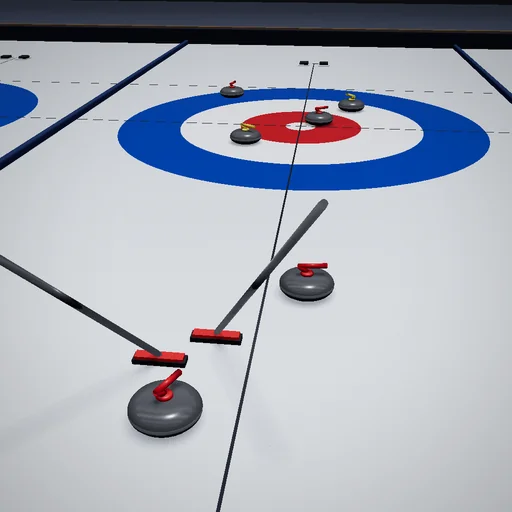
Curling on a full sheet of pebbled ice: eight granite stones a side in each end, the side without the hammer throwing first, the end counted by the stones nearest the button, and extra ends after a tie. The hog line, the back and side lines and the free guard zone of the first five stones are kept. A stone slides for half a minute, curls toward the way it turns - most as it slows - and the sweepers carry it farther and straighter while you hold Space. Place the skip's broom with the mouse, choose the weight and the turn, and throw. Play the computer at five levels - it guards, draws round, freezes and hits, and sweeps its own draws - play a friend, practise your draw weight alone, or watch a demo game.

Durak — Actual application image

Games

Durak

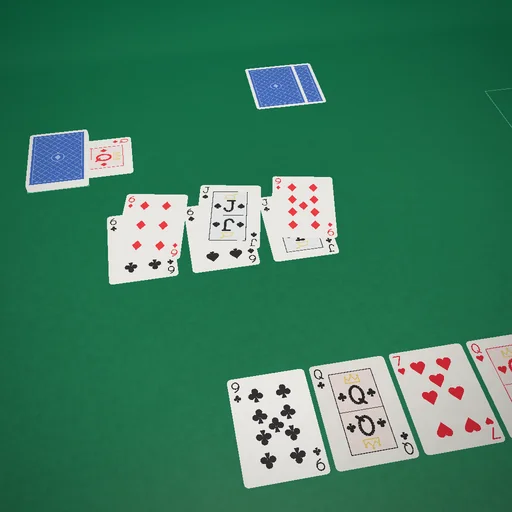
Durak with a deck of 36 cards, for two to four players: the attacker leads a card, the defender covers it with a higher card of the same suit or with a trump - or picks everything up - and the attackers throw in cards of the ranks on the table. The hands are filled from the deck after every bout, and whoever is left with cards at the end is the fool. Play the throw-in game or the passing game, where an attack can be handed on with a card of the same rank. The computer plays the other hands at five levels and sees only what a player sees; the strongest play the game out in their heads over many deals of the cards they have not seen. Or watch a demo game with open hands.

Solitaire — Actual application image

Games

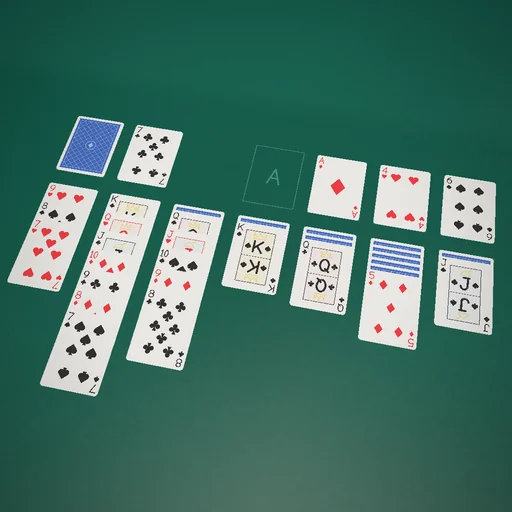
Solitaire

Three patience games on one table. Klondike: seven columns built down in alternating colours, a stock turned one or three cards at a time, and four foundations to build up by suit from the ace. Spider: two packs in ten columns, built down whatever the suit, though only cards of one suit move together; a run from king to ace leaves the table, and eight of them win - with one, two or four suits. FreeCell: every card in the open, four cells to park a card in, and nearly every deal can be won. Click a card and it goes where it can; if it has a choice, click the place. Take moves back, ask for a hint - in FreeCell it comes from a solver that plays the deal to the end - or watch the computer play.