Math
How much room a cell takes
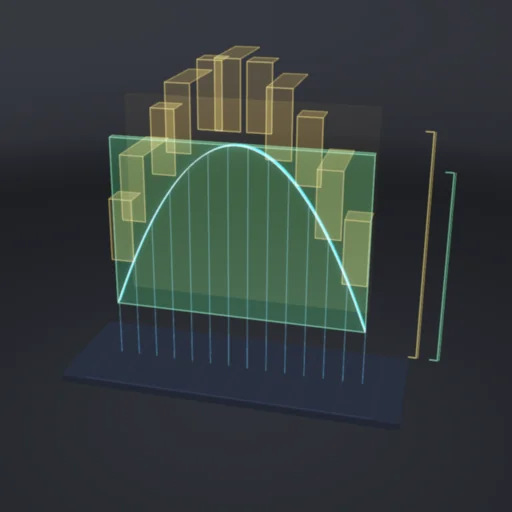
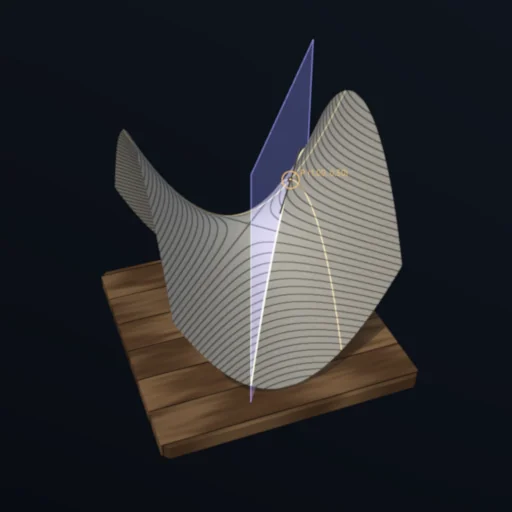
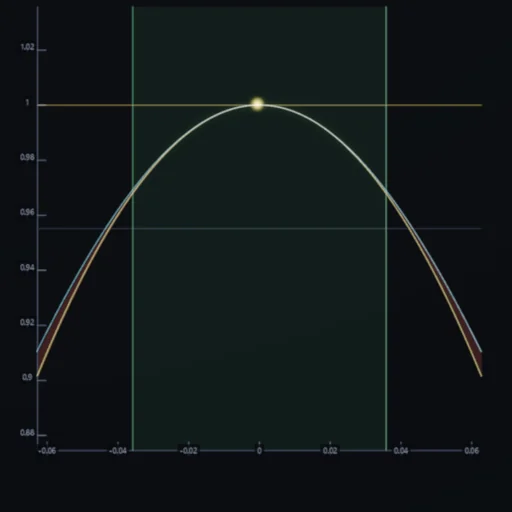
Change variables in an integral and a factor appears; everyone learns to write r dr dθ and few are shown where the r comes from. It is the determinant of the map's derivative - the ratio between a tiny cell's area and its image's, measured here on the polygons themselves. Three things that determinant is not: the sign is an orientation and not part of the factor, a vanishing determinant means an edge collapsed rather than cells got small, and the integral of |det J| equals the image's area only when the map covers it once. z → z² covers the unit disc twice and the total is out by exactly two.
What happens
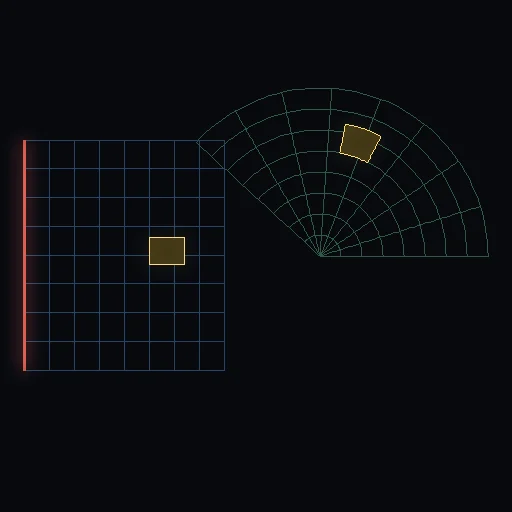
Change variables in a double integral and a factor appears - the r of polar coordinates. It is not a convention: it is the area of the little cell the map makes out of a unit cell, and this module measures it. A grid in the source plane is pushed through the map; each cell lands as a small quadrilateral whose area, divided by the cell's, converges to the Jacobian determinant - exactly for an affine map, to first order for the others. Where the map folds, the factor passes through zero and the cells flip over. Try the maps, shrink the cell, and compare the measured factor with det J on the panel.
Equations used in the module
Equations
∫∫ f dx dy = ∫∫ f(F(u,v)) |det J| du dv
J = [[∂x/∂u, ∂x/∂v], [∂y/∂u, ∂y/∂v]]
measured: signed area of the image of a cell / h² → det J
polar: det J = r;  a fold: det J = 0 along the crease