Physics / Astronomy
Galaxy (Barnes-Hut N-body)
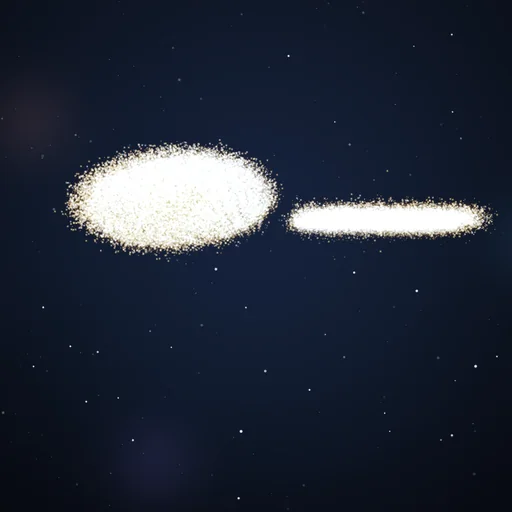
A spiral galaxy star by star: gravity alone winds up the arms.
Available for Windows
120 interactive modules in six rings connect planets, stars, galaxies and cosmology with observation and spaceflight. Follow an orbit, inspect a star’s changing behaviour, explore a black hole or take control of a machine working beyond Earth.
120 modules · Page 4 / 6
Physics / Astronomy
A spiral galaxy star by star: gravity alone winds up the arms.
Astronomy
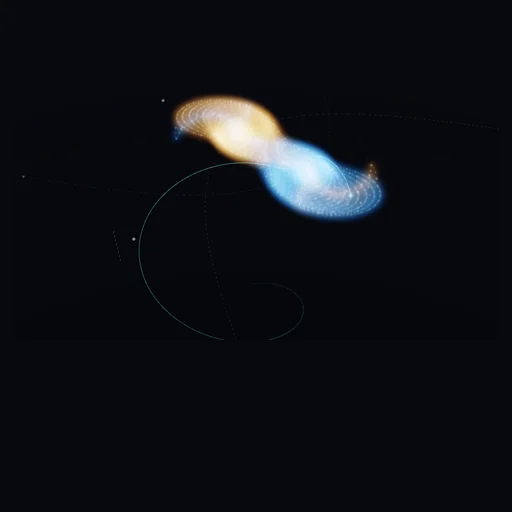
Explore a galaxy encounter: tilt the discs, follow a star, and compare opposite rotations. Tidal bridges and tails emerge from test-star trajectories. Optional dark halos and dynamical friction illustrate how the nuclei can coalesce.
Astronomy
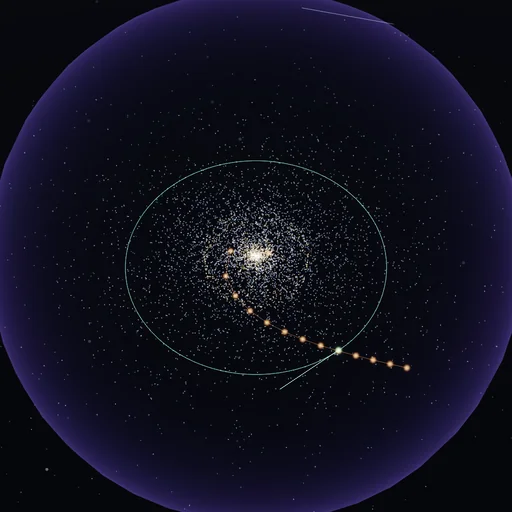
The curve that should fall and does not: dark matter as a measurement. A galaxy's stars orbit at the speed its mass dictates - a bulge, an exponential disk with Freeman's exact potential, a gas disk - and beyond a few scale lengths that speed must fall like a planet's. Measured curves stay flat. Add a halo, switch it off, compare with the dataset and read χ²; watch a spoke of stars wind into a spiral as the disk turns.
Astronomy
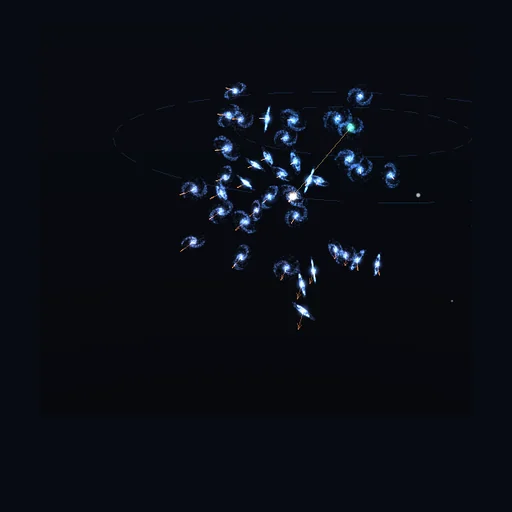
Explore a 3D galaxy survey, measure spectral shifts and build a Hubble diagram. Test peculiar velocities, distance errors and the choice of observer.
Astronomy
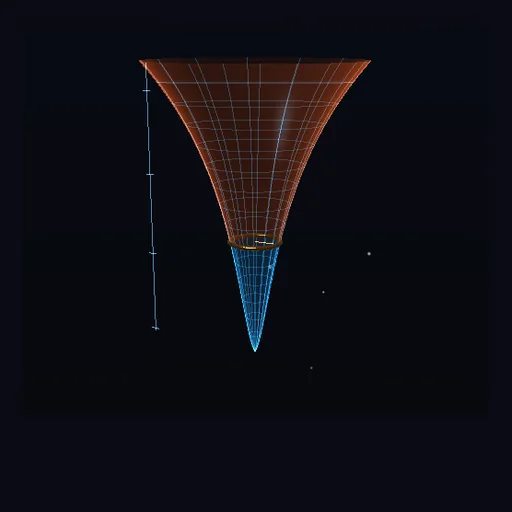
Travel through cosmic time, compare expansion histories, and discover how matter, radiation and vacuum shape expansion, collapse or a bounce.
Astronomy
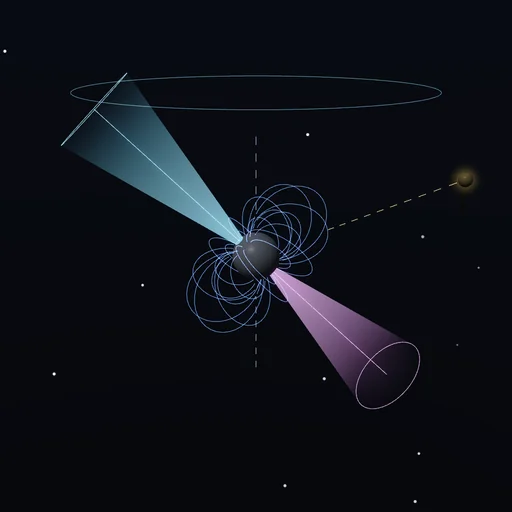
A neutron star with its radio beam tilted from its spin axis is a lighthouse, and whether you see it, how often and for how long is one line of spherical trigonometry: cos θ = cos α cos ζ + sin α sin ζ cos φ. The beam sweeps within ρ of you or it does not; the second pole may sweep past too - the interpulse - and most pulsars are never seen at all, because their beams miss the Earth. Pulse width, duty cycle and the beamed fraction of the sky are measured on the profile and the sky, not quoted.
Physics / Astronomy
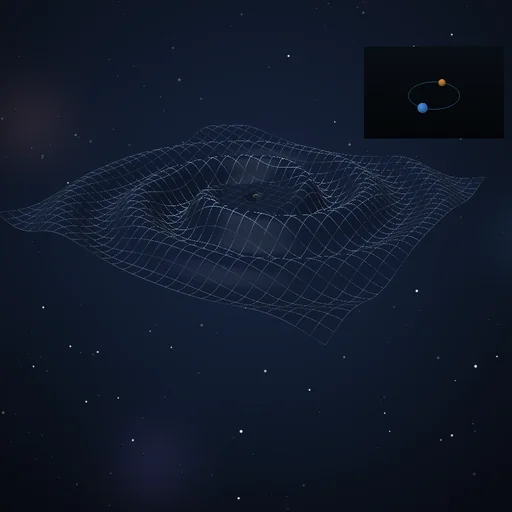
A compact binary spirals in and its quadrupole wave crosses the plane at retarded time: the two-armed spiral tightens as the orbit decays, and the detector trace chirps.
Astronomy
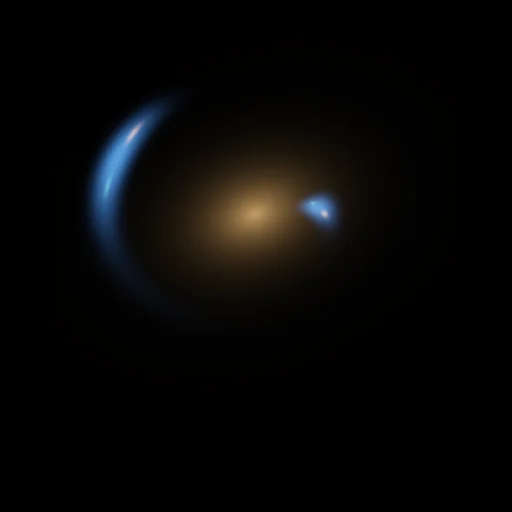
Move a galaxy across a caustic, inspect mirrored images and follow light paths in 3D. Compare a finite star with the ideal point-source limit.
Astronomy
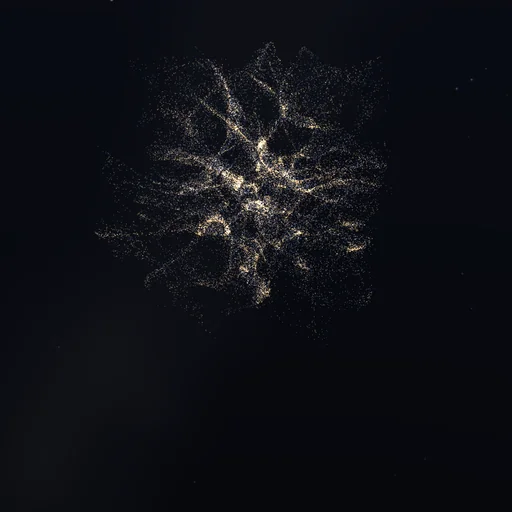
Grow a primordial displacement field. Watch sheets and filaments emerge as initially separated matter streams approach one another.
Astronomy
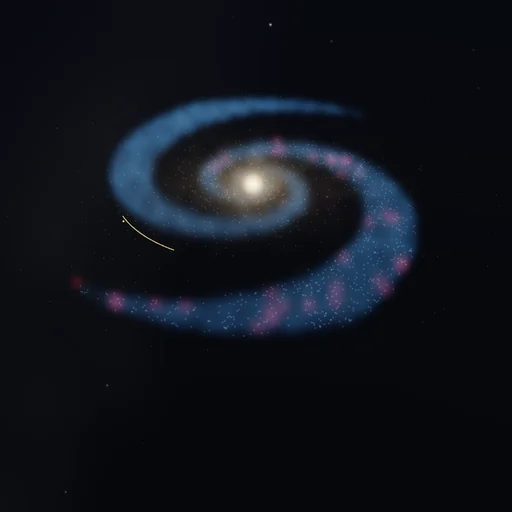
Follow a marked star through a rotating spiral pattern. Move the corotation radius and see where the star overtakes the arms.
Astronomy
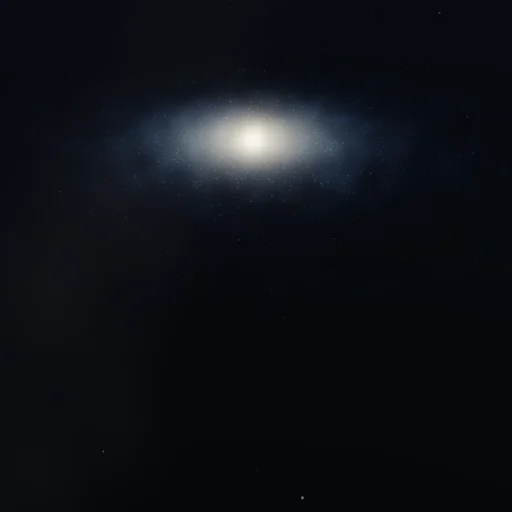
Change the balance of disk and bulge. View the resulting three-dimensional galaxy and compare the exponential disk’s enclosed light with a Sérsic bulge.
Astronomy
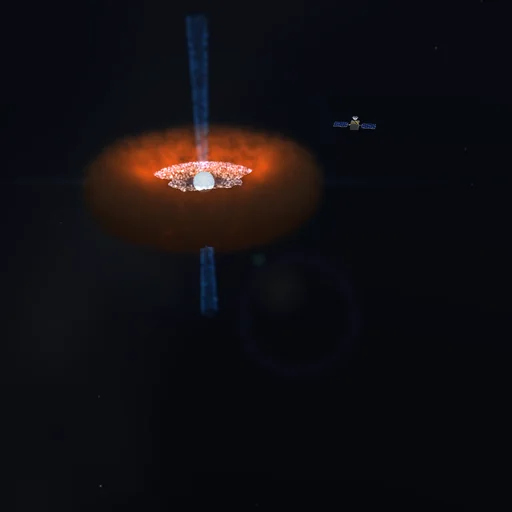
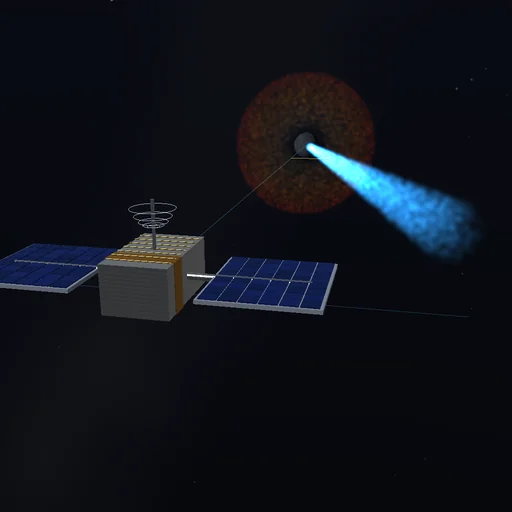
Open the viewing cone of a dusty torus. Compare an unobscured view of the central engine with a line of sight passing through the dust.
Astronomy
Aim a fast jet toward the observer. Compare its true speed with apparent motion and the brightening of the approaching side.
Astronomy
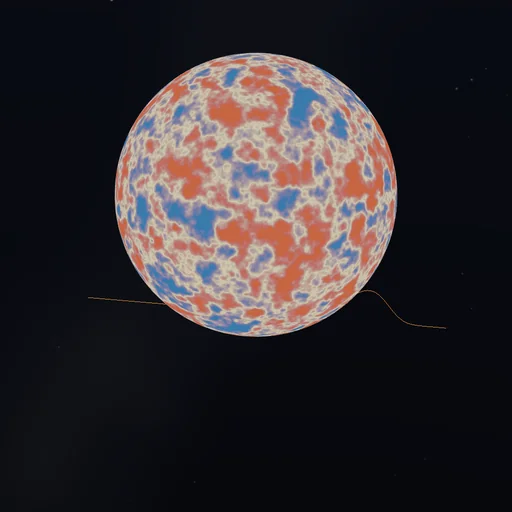
Stretch the early Universe’s thermal light. Change the redshift and the angular texture scale to separate the mean temperature from tiny fluctuations.
Astronomy
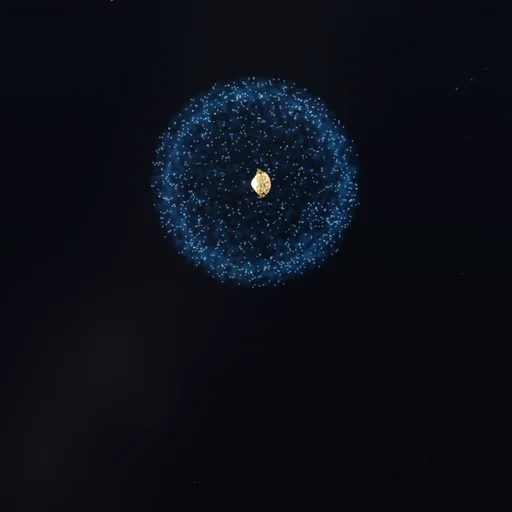
Follow an expanding acoustic shell around an initial overdensity. Change the sound horizon and inspect the preferred separation left in the galaxy-pair signal.
Astronomy
Move a galaxy to higher redshift. Compare comoving, luminosity and angular-diameter distance, and see why more distant galaxies can look larger.
Astronomy
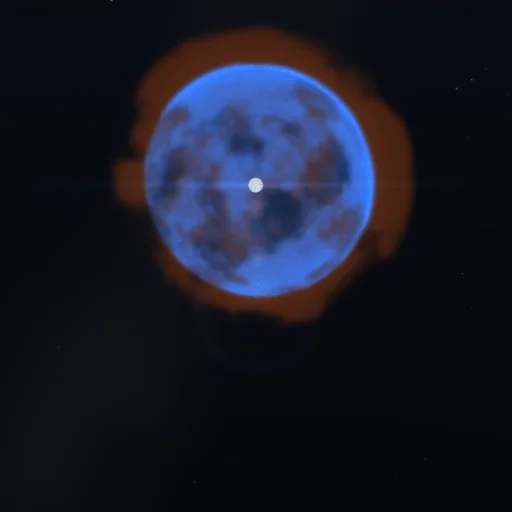
Switch on an ionizing source and follow the growing H II region. Increase gas density and see recombination limit the size of the ionized bubble.
Astronomy
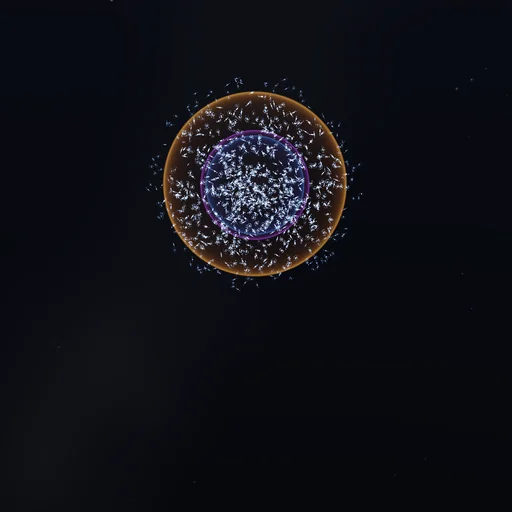
Advance the scale factor and compare the Hubble sphere, particle horizon and event horizon. They answer three different questions about light.
Astronomy
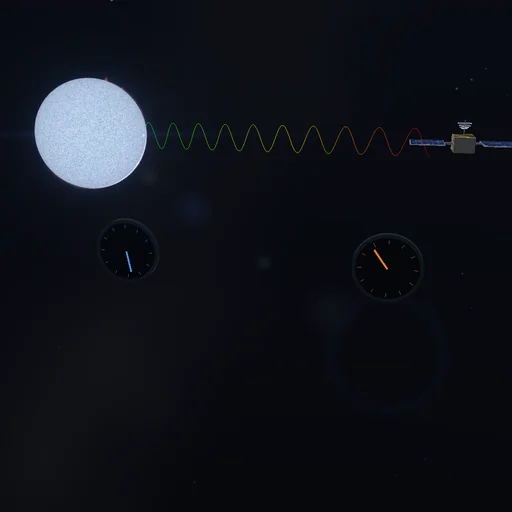
Send identical light pulses from a compact star. Increase compactness and compare the emitter’s clock with a distant observer’s clock.
Astronomy
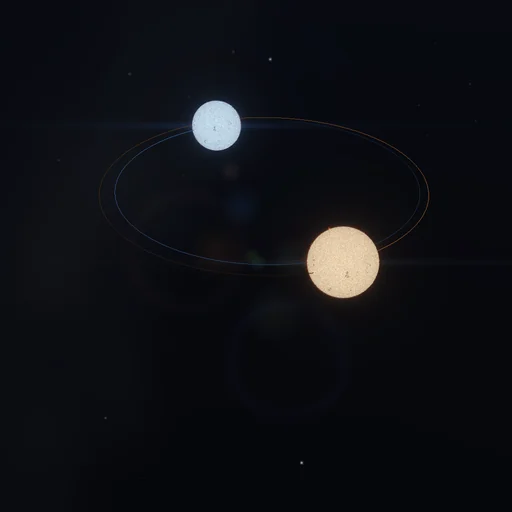
Approach the final contact of two compact stars. Compare gravitational-wave frequency and inspiral time as their masses change.
Some modules belong to more than one Suite. Shared experiments have one description here.