Astronomy
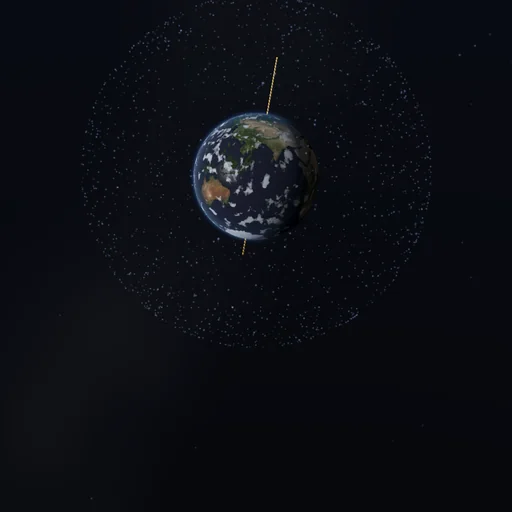
Earth's wandering pole
Scrub through 25,772 years. Follow the axis around the ecliptic pole and see why the pole star changes.
Available for Windows
120 interactive modules in six rings connect planets, stars, galaxies and cosmology with observation and spaceflight. Follow an orbit, inspect a star’s changing behaviour, explore a black hole or take control of a machine working beyond Earth.
120 modules · Page 5 / 6
Astronomy
Scrub through 25,772 years. Follow the axis around the ecliptic pole and see why the pole star changes.
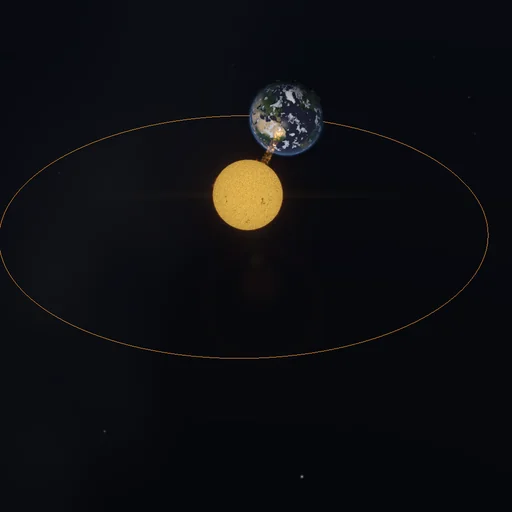
Astronomy / Earth
Compare eccentricity, tilt and precession with summer sunlight at a selected latitude. Move through 400,000 years.
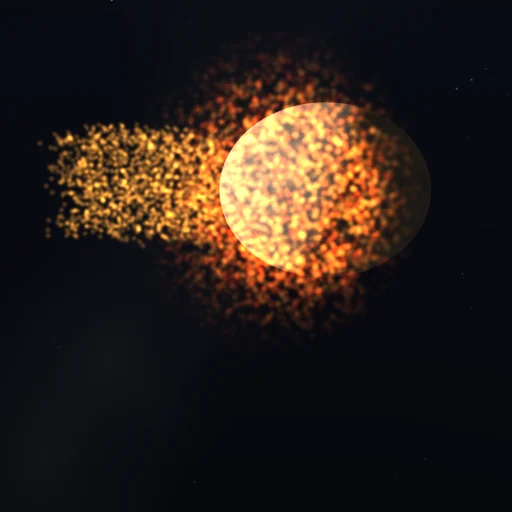
Astronomy
Reverse the spin-axis tilt to reverse the diurnal Yarkovsky drift. Change thermal inertia to move the afternoon hot spot.
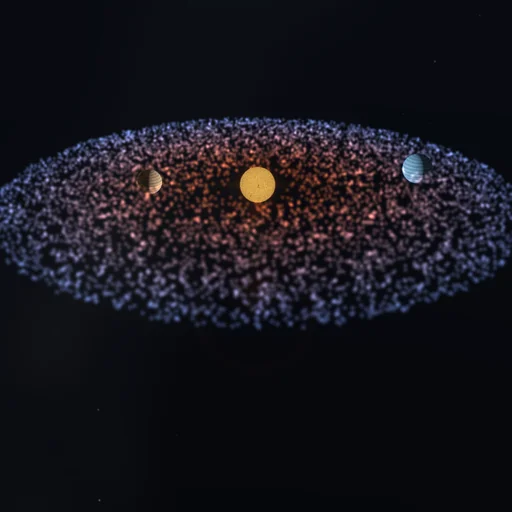
Astronomy
Compare slow and fast convergent migration. Watch an imposed 2:1 resonance retain the period ratio as the pair moves through the disk.
Astronomy
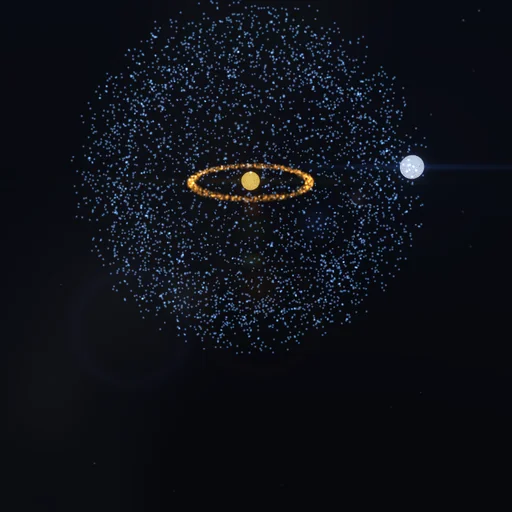
Move a stellar flyby closer and count comet orbits whose new perihelia enter the giant-planet region. Red tracers identify those orbits.
Astronomy
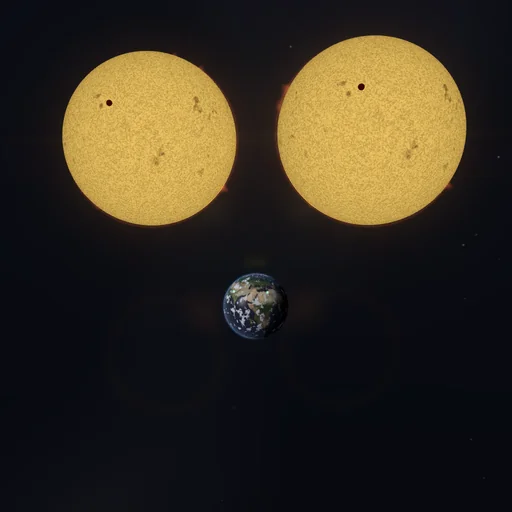
Compare the same Venus transit from two observing sites. Their displaced tracks reveal solar parallax and the scale of the Solar System.
Astronomy
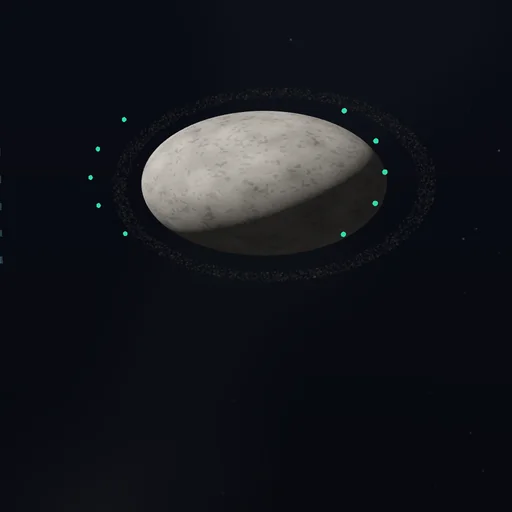
Watch a star disappear behind an asteroid. Change the observing track and combine multiple chords to infer the object's size and shape.
Astronomy
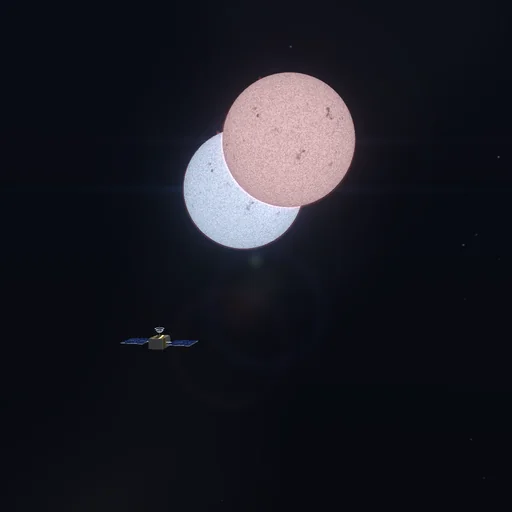
Tilt a binary orbit until eclipses appear. Unequal eclipse depths reveal different surface brightnesses; their widths constrain stellar radii.
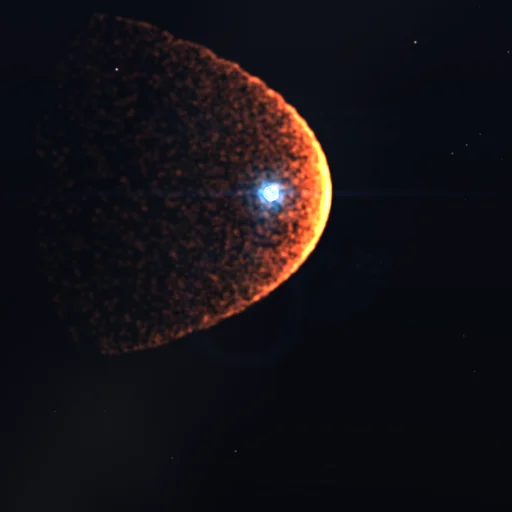
Astronomy
Balance an outward stellar wind against an incoming interstellar flow. Change density or speed and watch the stand-off distance respond.
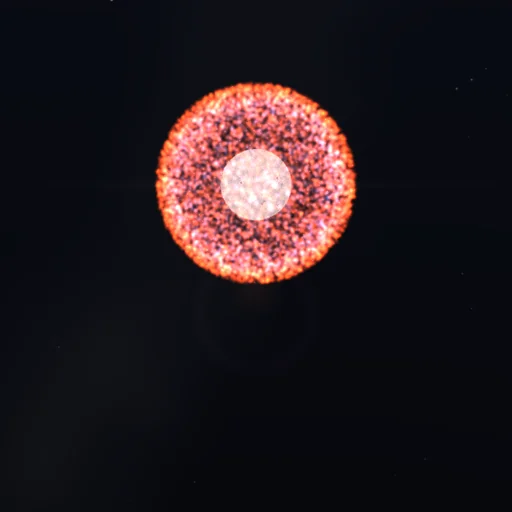
Astronomy
Follow an expanding Type Ia remnant through its first hundred days. Compare nickel mass, diffusion time and apparent brightness at different distances.
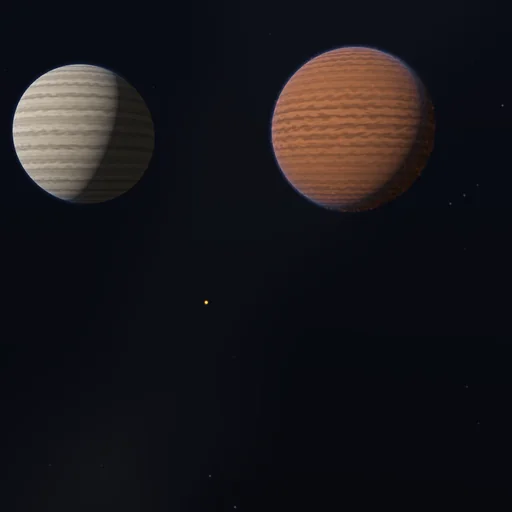
Astronomy
Increase the mass while keeping a Jupiter-sized object in view. Compare cooling brown dwarfs with objects capable of sustained hydrogen fusion.
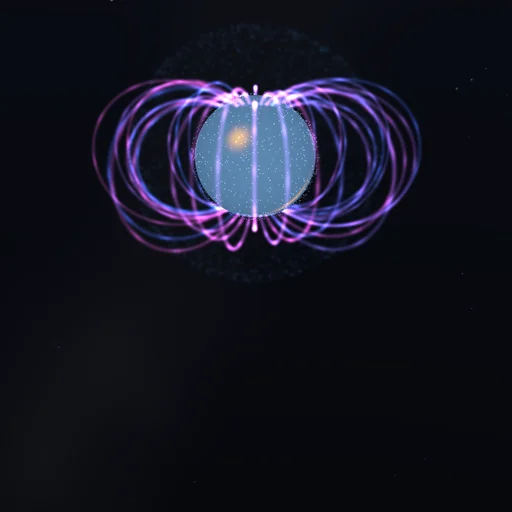
Astronomy
Release a fraction of an immense magnetic-energy reservoir. Follow the initial spike and the fading tail, modulated by the star's rotation.
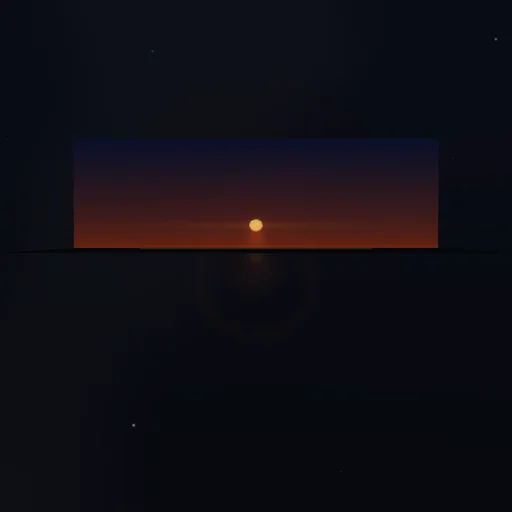
Astronomy
Lower the Sun toward the horizon. Compare its geometric and refracted positions, flattening and the effect of atmospheric turbulence.
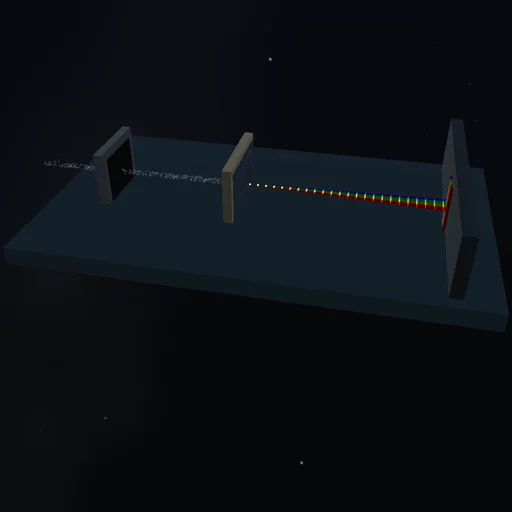
Astronomy
Send light through a slit and diffraction grating onto a detector. Change groove density, illuminated width and radial velocity to separate resolution from Doppler shift.
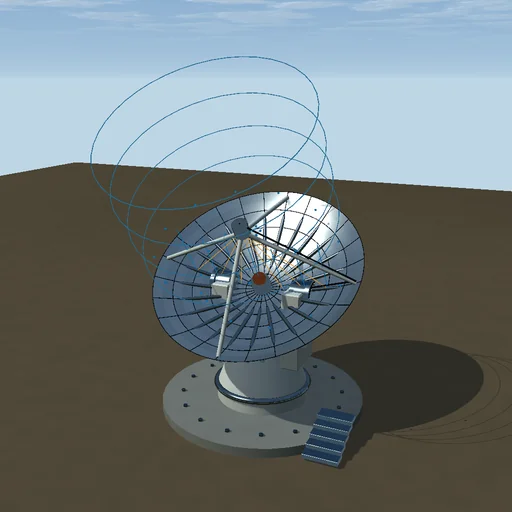
Physics / Astronomy
Inspect a primary-focus parabolic antenna and scan a point source through its main beam and sidelobes.
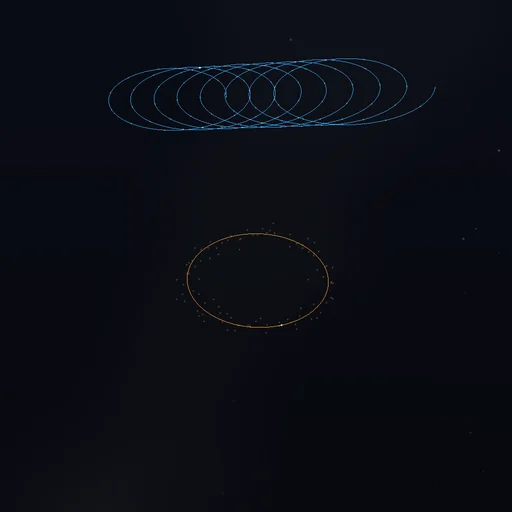
Astronomy
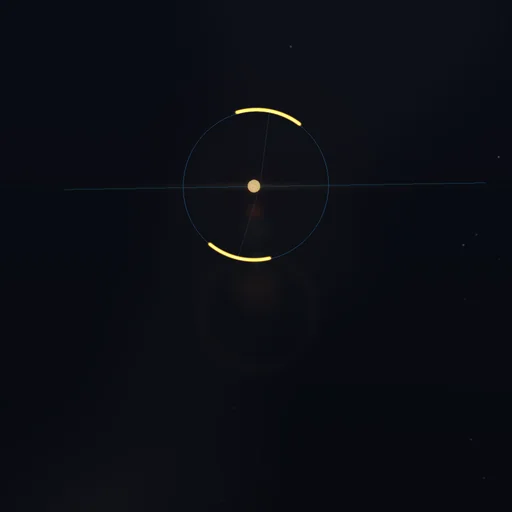
Separate proper motion, annual parallax and the smaller reflex orbit caused by a planet. Compare the wobble with the chosen measurement noise.
Astronomy
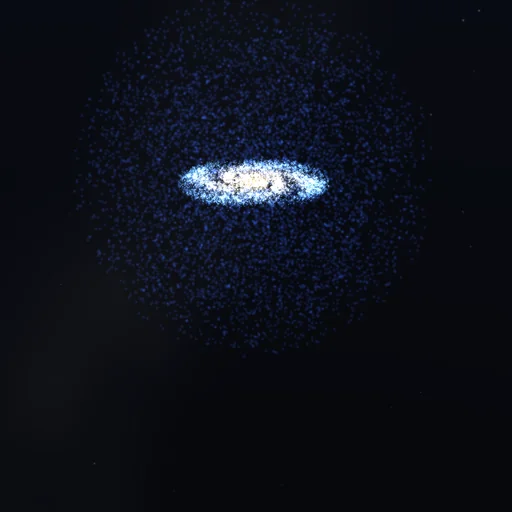
Move a background star behind a foreground lens. Add a planet and compare the magnification with the familiar single-lens light curve.
Astronomy
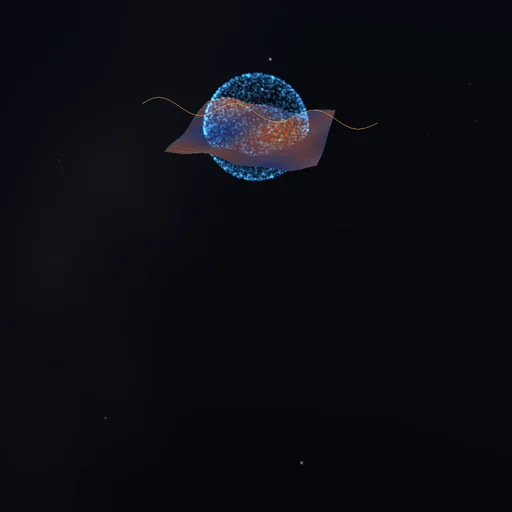
Build a Navarro–Frenk–White halo. Probe its enclosed mass, circular speed and light deflection at different galactic radii.
Astronomy
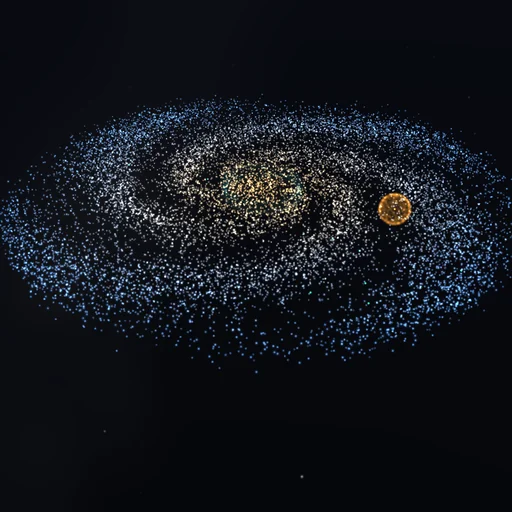
Increase the number of e-folds. Compare exponential expansion with a shrinking comoving Hubble radius and follow a perturbation as it crosses that scale.
Astronomy
Change the assumptions in the Drake equation. Explore how communicative lifetimes and uncertain biological fractions change the expected number of contemporaries.
Some modules belong to more than one Suite. Shared experiments have one description here.