Physics / Astronomy
N-body problem
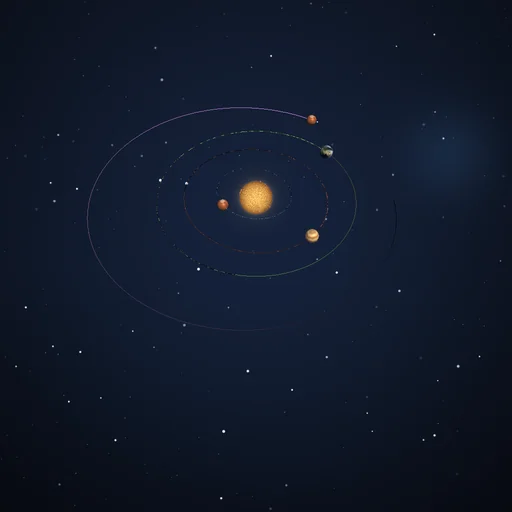
Gravitating many-body systems: from the Solar System to choreographies.
Available for Windows
120 interactive modules in six rings connect planets, stars, galaxies and cosmology with observation and spaceflight. Follow an orbit, inspect a star’s changing behaviour, explore a black hole or take control of a machine working beyond Earth.
120 modules · Page 2 / 6
Physics / Astronomy
Gravitating many-body systems: from the Solar System to choreographies.
Astronomy
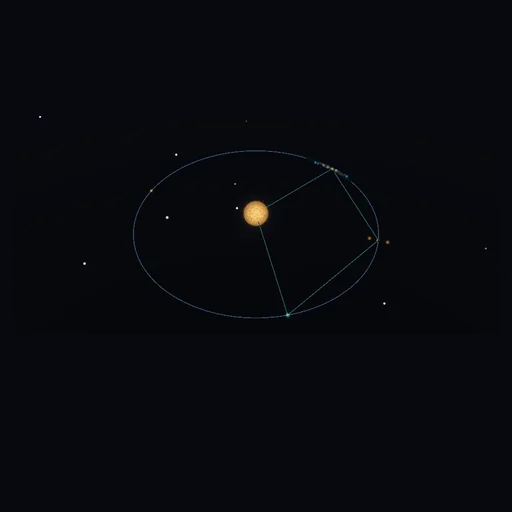
Explore Trojan orbits and unstable equilibria, open Jacobi necks and compare spatial trajectories in rotating and inertial frames.
Astronomy
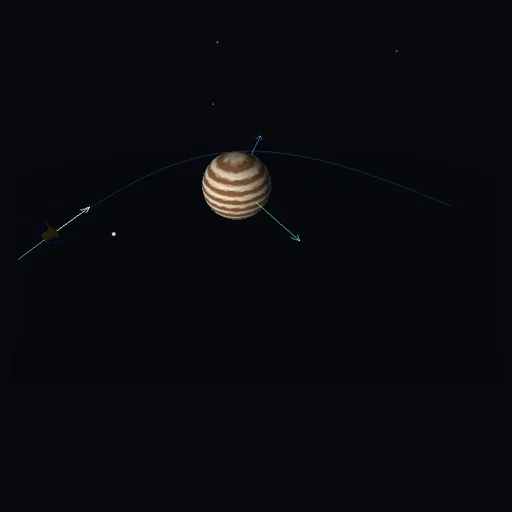
One flyby in two reference frames, and the chains missions build from them: Voyager 2 and Cassini on the catalogue's orbits, each flyby's turn, periapsis and the manoeuvres it leaves.
Astronomy / Earth
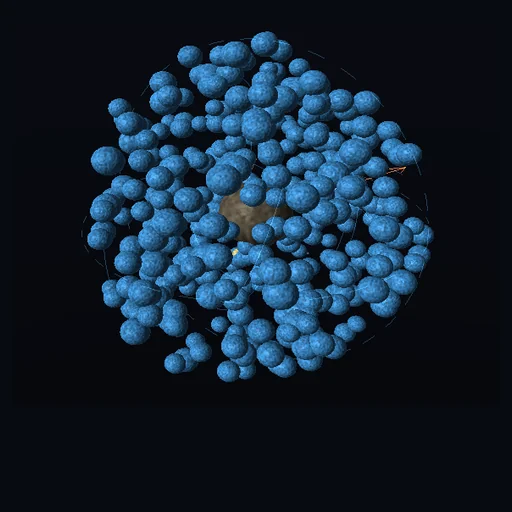
Explore tidal stretching in 3D: compare a satellite tracer cloud with an isolated control, inspect differential gravity, and distinguish a close passage from ideal Roche estimates.
Astronomy
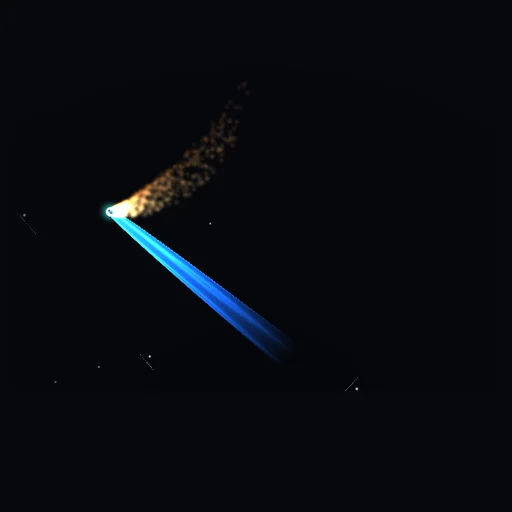
Explore two comet tails: select dust size and age, compare radiation pressure and solar wind, and rotate the three-dimensional cloud.
Astronomy
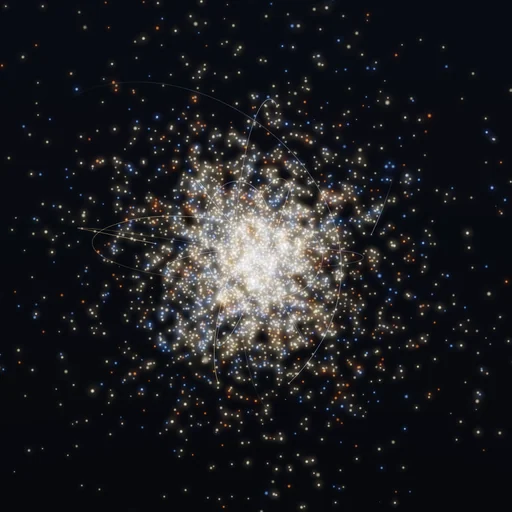
A softened N-body cluster with up to 32768 mutually attracting stars. Follow real trajectories and compare mass segregation with CPU, CUDA, OpenCL or Vulkan calculations.
Astronomy
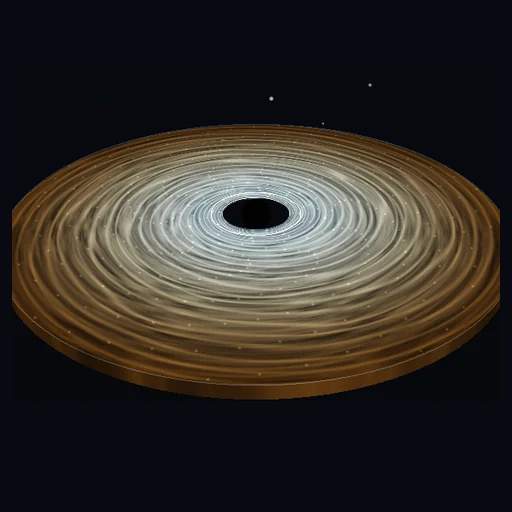
Explore a luminous 3D accretion disc: select an annulus, isolate its spectrum and compare inward mass flow with outward angular-momentum transport.
Astronomy / Earth
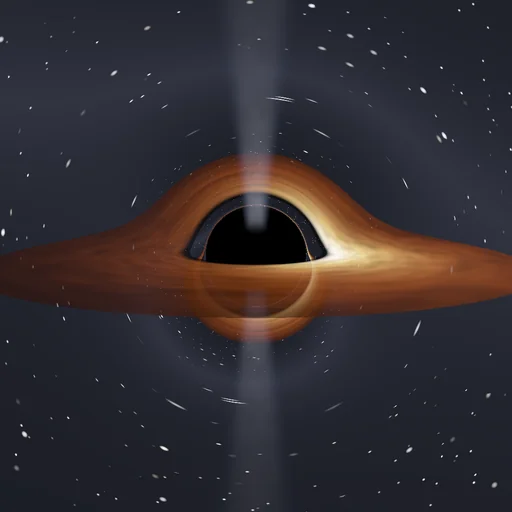
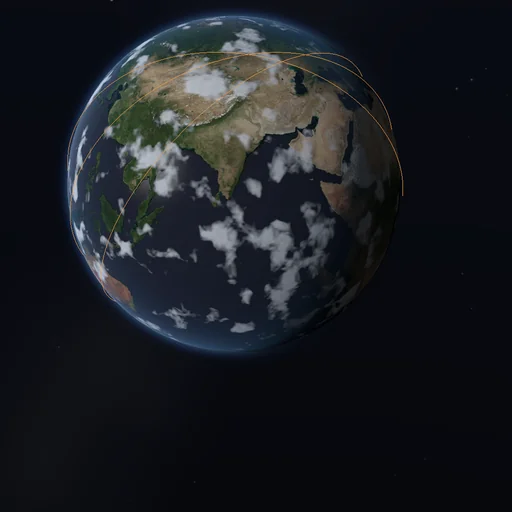
Pick a real satellite or build your own: altitude, inclination, eccentricity and perigee. Follow its path over the rotating Earth and on the flat map, and find the orbits that repeat, hang over the north, or keep pace with the Sun.
Astronomy
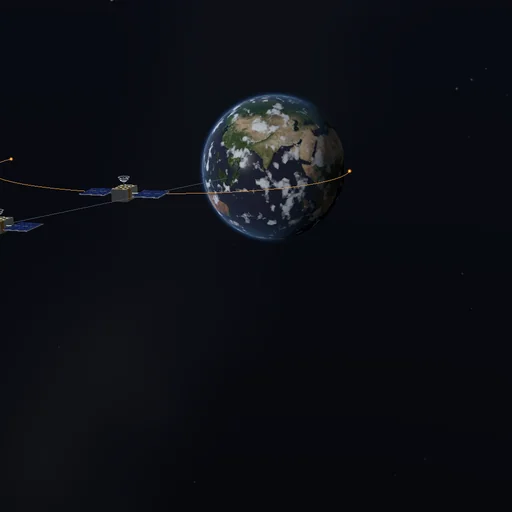
Raise an Earth orbit, or fly the same two burns to the Moon, Venus, Mars or Jupiter: the phasing, the launch window, the burn from the parking orbit and the capture at the other end, and the bi-elliptic alternative.
Astronomy
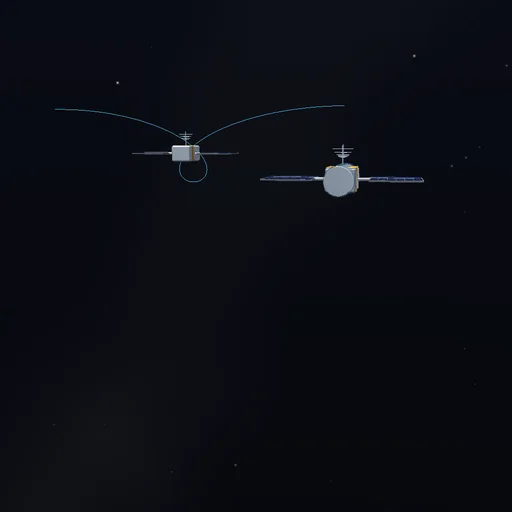
Give a nearby spacecraft a radial offset and an along-track impulse. Watch the curved relative path and find a closed formation orbit.
Astronomy
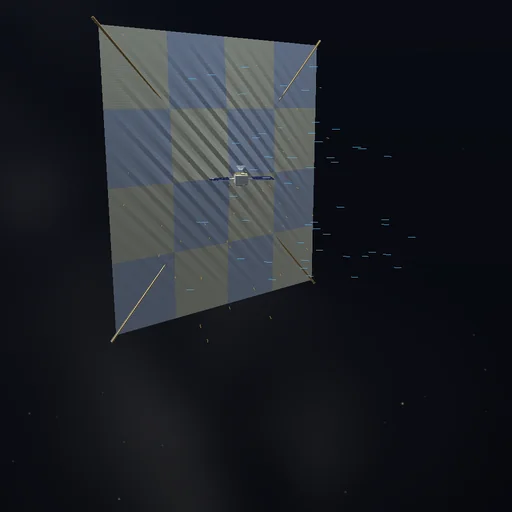
Tilt a reflecting sail. Resolve photon pressure into radial and tangential thrust and find the angle that gives the strongest sideways push.
Astronomy
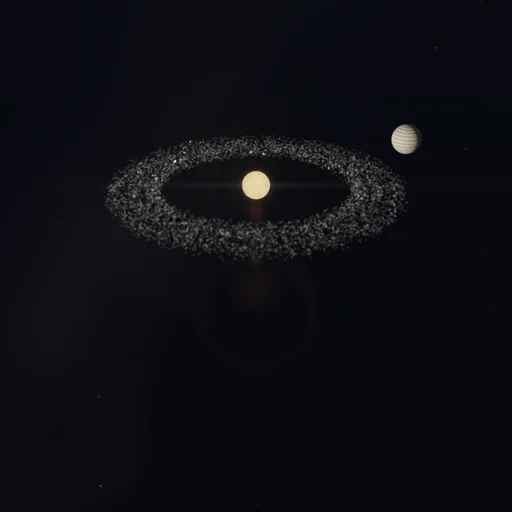
Thousands of asteroids integrated under an eccentric Jupiter: the resonances pump their eccentricities until the orbits cross Mars or Jupiter, and the gaps open by themselves. Make Jupiter heavier to watch it happen within the run.
Astronomy
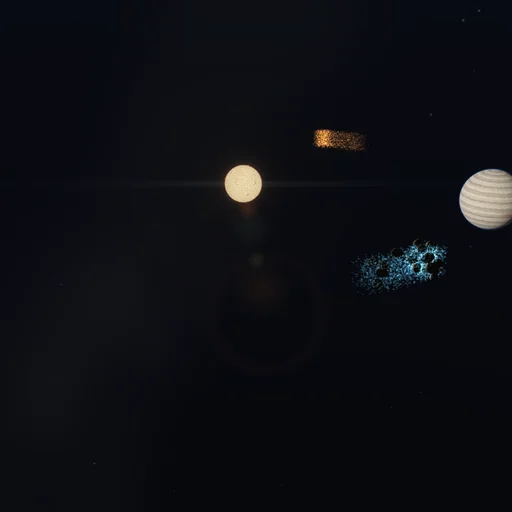
Swarms integrated about the triangular points in the rotating frame: tadpoles at small amplitude, horseshoes past the critical one, dispersal once the planet exceeds Routh’s limit.
Astronomy
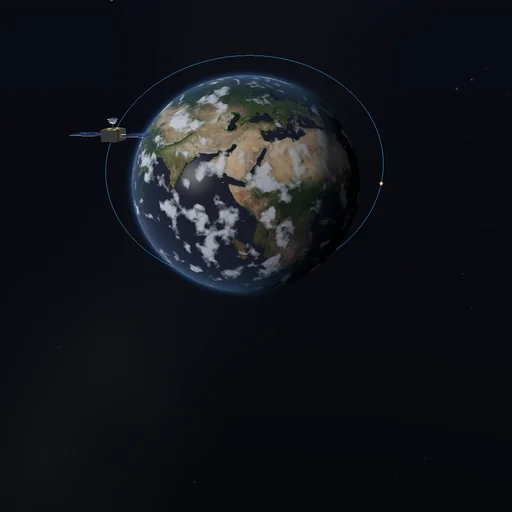
Tilt an Earth orbit. Watch its orbital plane precess and compare the node drift with the special polar case.
Astronomy
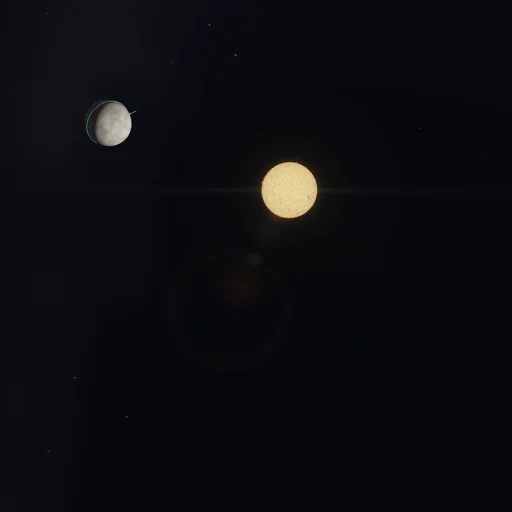
Track a surface meridian over two eccentric orbits. Change the spin ratio and see why Mercury presents alternating faces at successive perihelia.
Astronomy
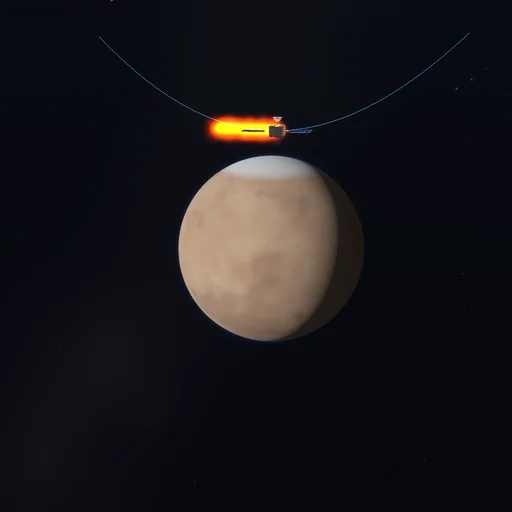
Lower a spacecraft’s periapsis into a thin atmosphere. Compare drag energy loss and peak heating along an idealized grazing pass.
Astronomy
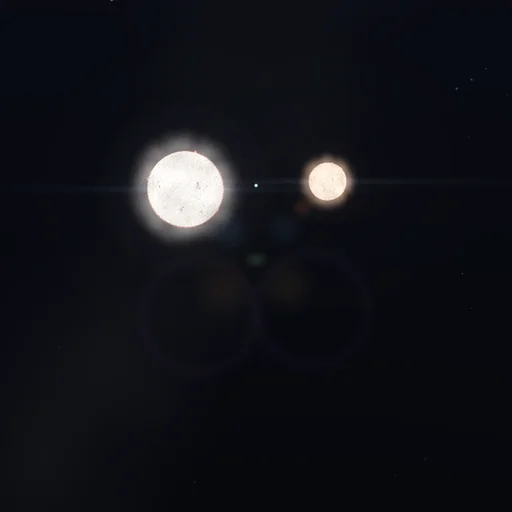
Change the mass ratio. Both stars orbit their common centre of mass; compare their speeds and see the brighter star’s reflex motion.
Astronomy
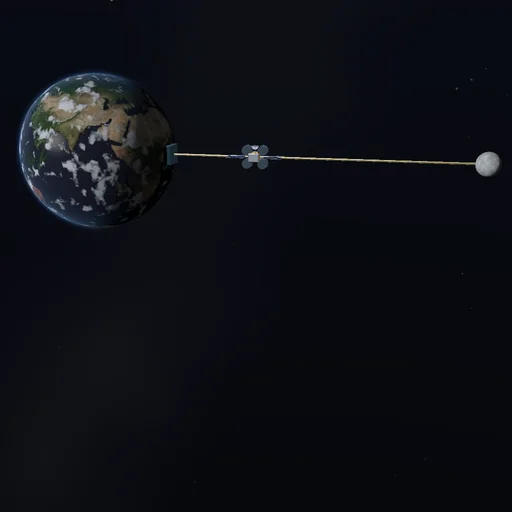
Follow a climber from the equator past geostationary altitude. Compare inward gravity and outward centrifugal acceleration along the cable.
Astronomy
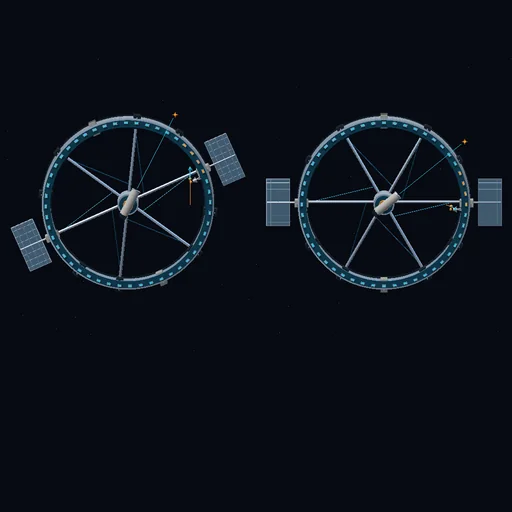
Explore a rotating observatory in two simultaneous reference frames. Release objects, throw a ball, collide cargo and swing a pendulum. Keep the telescope pointed at a distant star.
Some modules belong to more than one Suite. Shared experiments have one description here.