160 interactive modules bring geometry, topology, fractals, calculus, algebra, probability and algorithms into view. Rotate a surface, change a construction or follow an algorithm one step at a time.
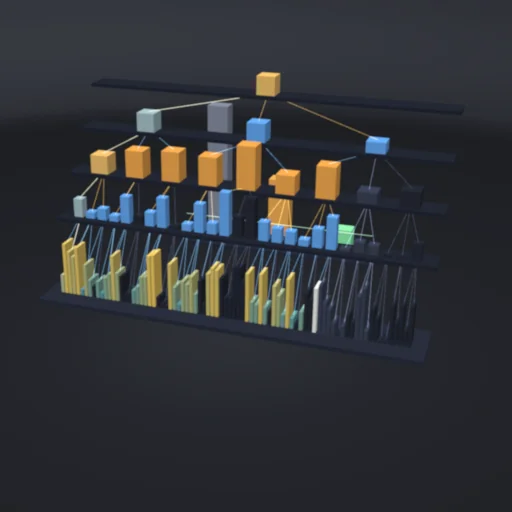
A game tree where every block is as tall as its value: a MAX node stands as high as its tallest child, a MIN node as low as its lowest. Minimax looks at every leaf; alpha-beta skips what cannot change the answer, and how much it skips depends on the order of the moves.
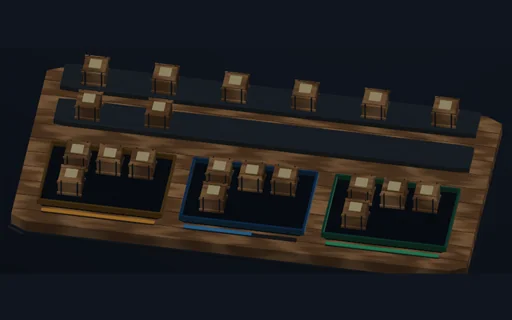
Choose numbered cargo under a mass limit. Compare your selection with greed and the exact solution, open a table cell and trace the optimal set backwards.
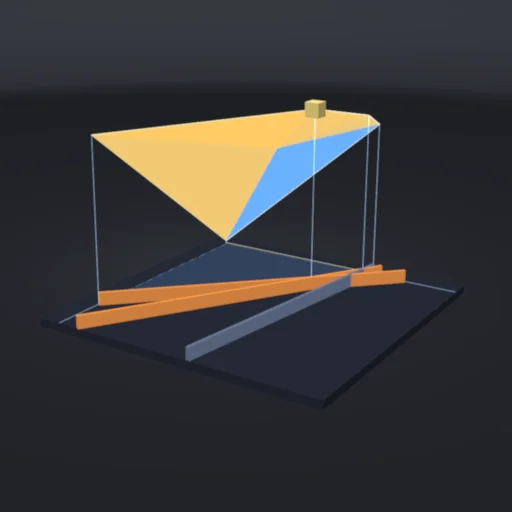
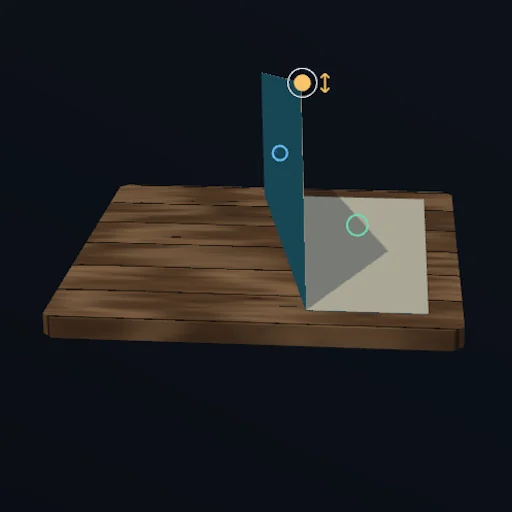
The feasible region lies on the table and a plate hangs over it at the height of the objective. The objective is linear, so the plate is flat and tilted, and the best point is literally its highest corner. The simplex climbs the edges to it.
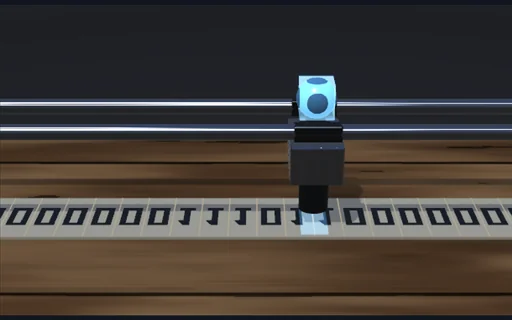
A paper tape between two reels, a metal head with a state lamp, and a table of rules. Every step plays as read, write, move, next state; the journal below holds the whole run, and an edited rule keeps the old run as a ghost. The records are found by enumerating every machine, not quoted.
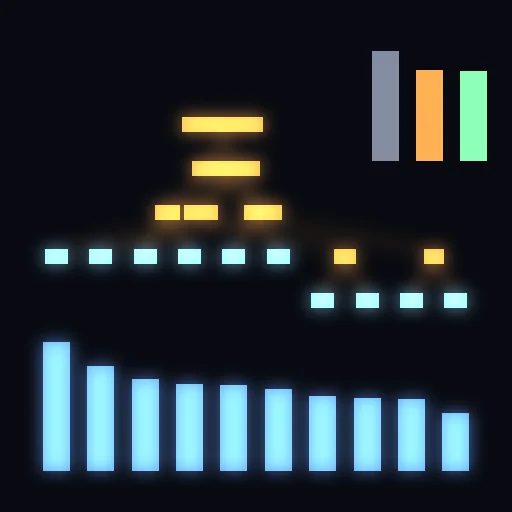
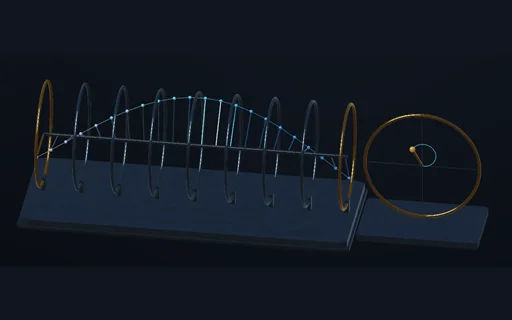
Compare a peak with its neighbour. Then measure: a peak suggests a denominator, not a guaranteed factor. Ideal CPU simulation, 12 qubits; no noise or physical device. N=21 uses Q=128 < N²: reduced precision. Coprime bases only; otherwise gcd(a,N) already finds a factor.
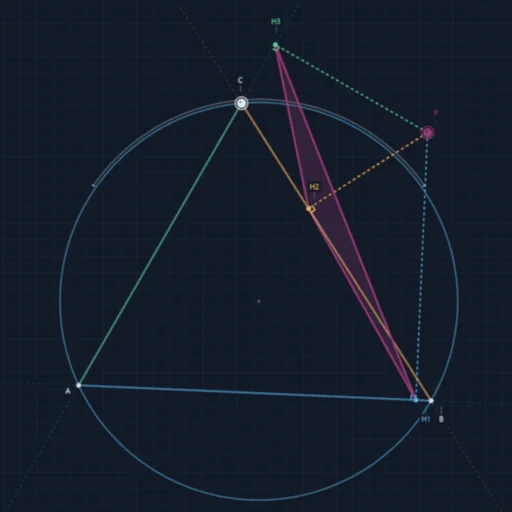
Collapse a coloured pedal triangle into the Simson line. Then move P around a fixed triangle and reveal the Steiner deltoid behind the growing family of lines.
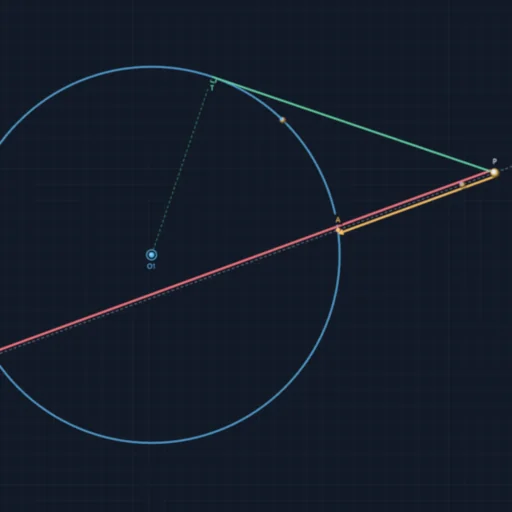
Carry a point into a circle and watch the directed product of a secant's two segments change sign; turn the secant and the product stays. Then find the points of equal power for two circles, and the radical centre of three.
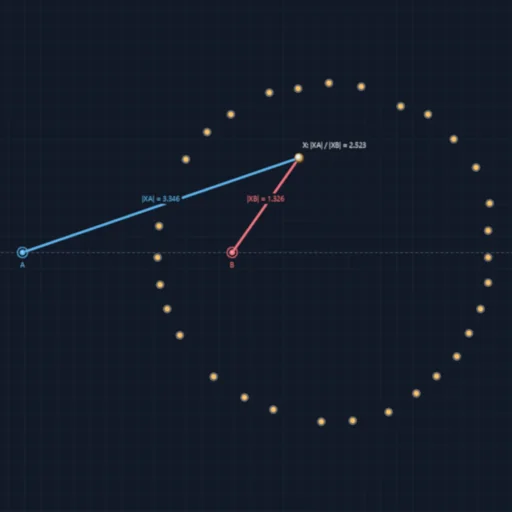
Carry a probe with two measuring tapes to A and B and leave a mark wherever |XA| : |XB| = k; reveal the circle the marks lie on, then carry k slowly through 1 and watch the circles open into the perpendicular bisector.
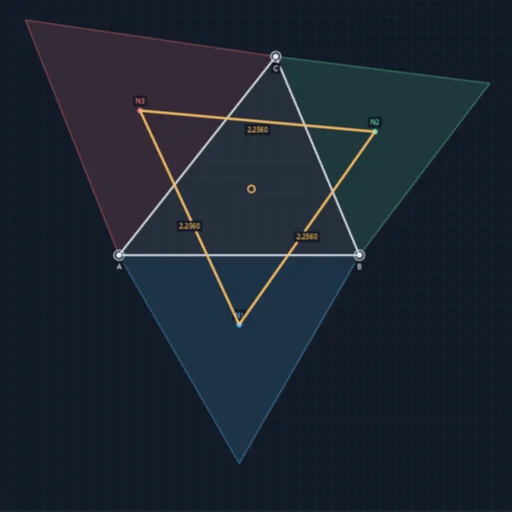
Erect an equilateral tile on each side of any triangle, mark the three centres and join them: an equilateral triangle, whatever the shape - then build the tiles inward, as a separate experiment, and compare the areas.
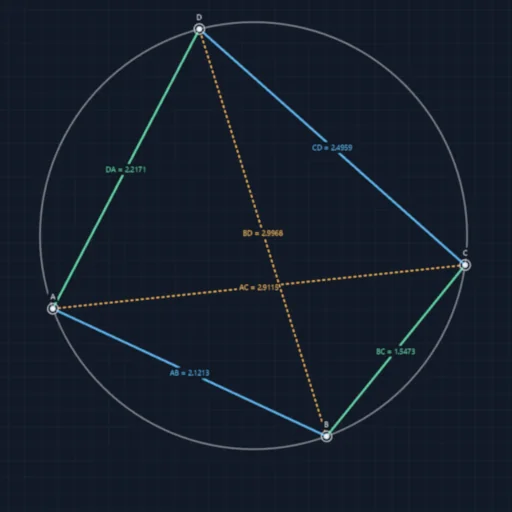
A quadrilateral in a circle and its three products as rectangles at one scale: AB·CD and BC·DA laid end to end match AC·BD exactly while D stays on the circle. Unpin D and move it inside - the equality goes and an inequality stays.
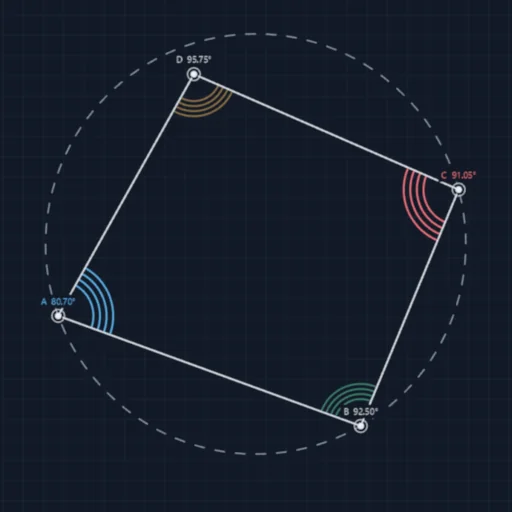
Two different tests, two experiments: move D until the opposite angles add to 180° and a circle passes through all four vertices; then build a quadrilateral whose opposite sides have equal sums and a circle touches all four sides. Break each on purpose, and decide which circle is possible.
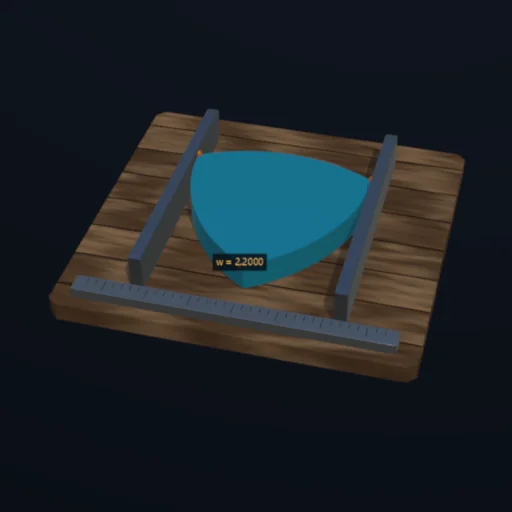
Turn the parallel calipers around a Reuleaux triangle, circle and ellipse. The first two keep their width; the ellipse does not. The displayed perimeter uses a fine polygonal approximation.
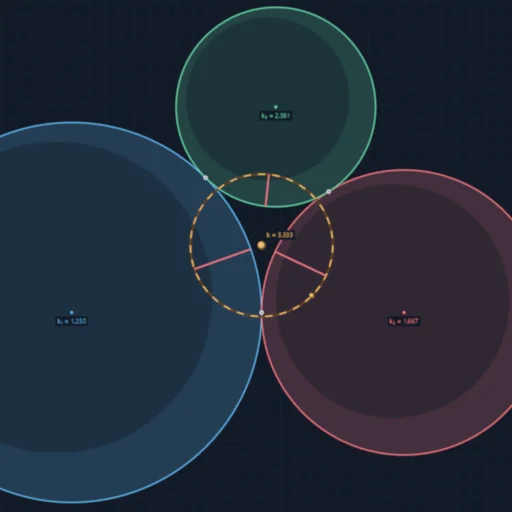
Fit a fourth disc between three touching discs until it touches all of them, with the narrowest gap magnified; compare its curvature with Descartes' relation, then find the second solution - an enclosing circle, a line or an outside circle - and grow the Apollonian packing.
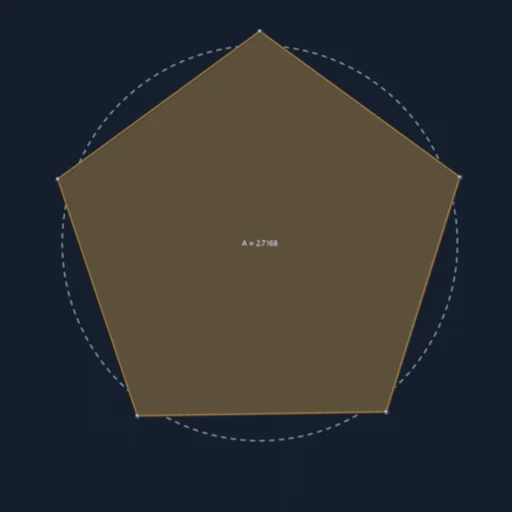
One cord of fixed length on pins: add sides and watch the enclosed area grow toward the circle's while a ruler shows the cord is still the same length; then predict which of two shapes from the same cord holds more, and check.
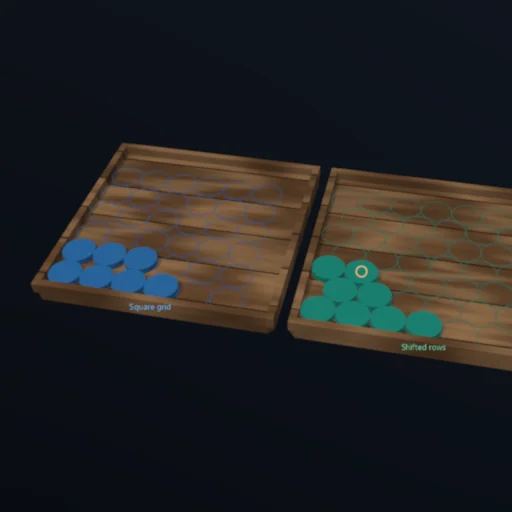
Compare square and staggered lattices in finite squares. Counts include only discs entirely inside the boundary. The infinite-lattice density is a reference, not a claim of optimal finite packing.
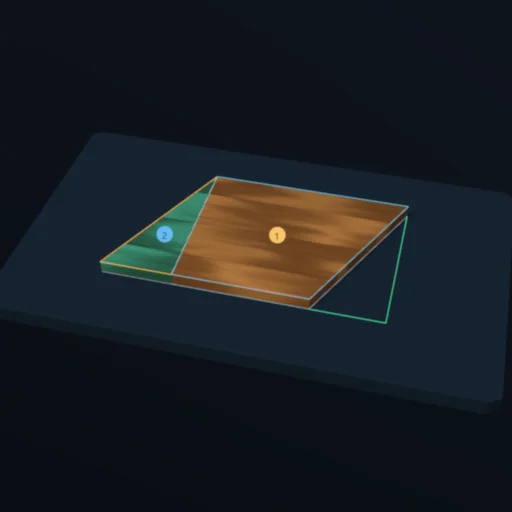
Drag piece 2 onto its target on the right. Both pieces can be moved in the scene or in the exact top view. A₁ + A₂ = b·h, b = 2. Bevels and flight height are decorative. Overlap, unfilled target and outside area are calculated from the exact polygons; equal total area alone does not prove coverage.
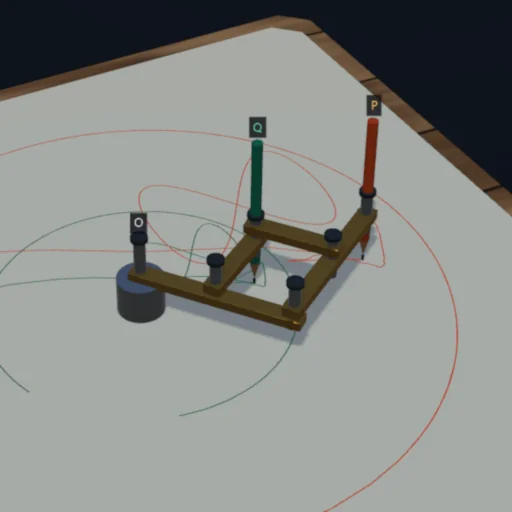
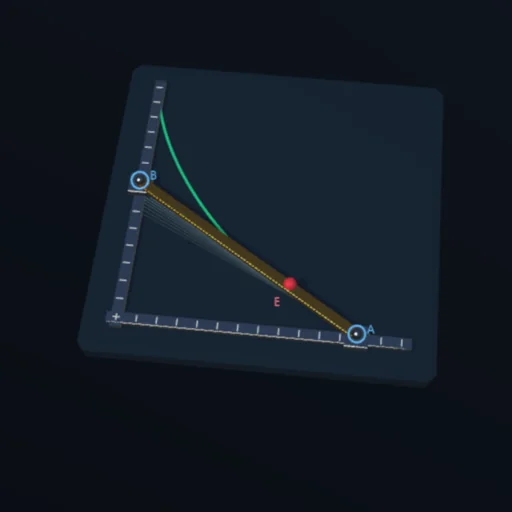
Compare a sliding ladder with the family of tangents to a parabola. The contact point traces an astroid in the first mode; focus and directrix distances agree in the second.
Explore the first three fold axioms: through two points, point onto point, and line onto line. The crease is a reflection axis. This module does not implement angle trisection.
Some modules belong to more than one Suite. Shared experiments have one description here.