160 interactive modules bring geometry, topology, fractals, calculus, algebra, probability and algorithms into view. Rotate a surface, change a construction or follow an algorithm one step at a time.
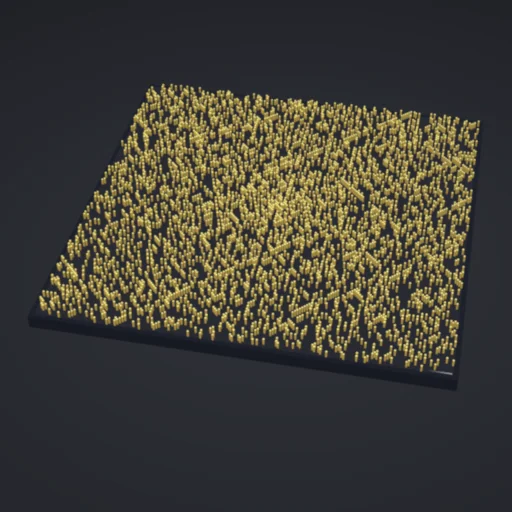
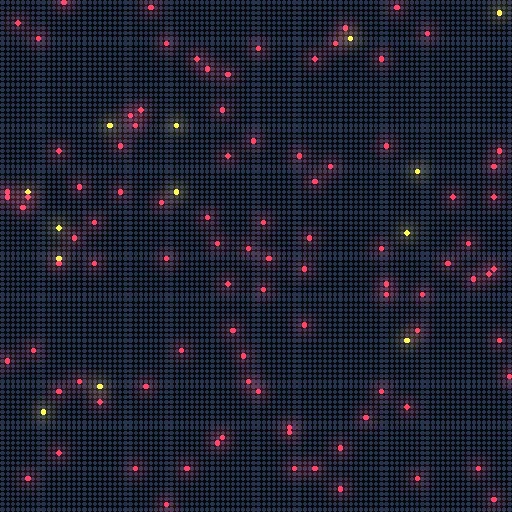
The numbers laid on a square spiral, the primes lit: diagonals appear that should not be there, four times the density of the square, and with 41 at the centre Euler's n² + n + 41 runs down one of them; the Sacks spiral, and π(N) against N/ln N as the spiral grows.
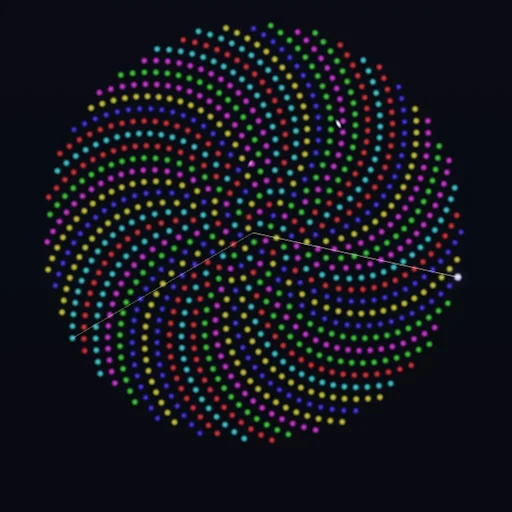
Vogel's sunflower grown seed by seed, r = √n and θ = n·α: sweep the angle by dragging across the disc and the spirals unwind, collapse onto rays, and lock in at the golden angle 137.508°, where the closest pair is 1.602 at any size and the families are Fibonacci numbers - the packing measured live, a task on the angle, and the chart of packing against angle.
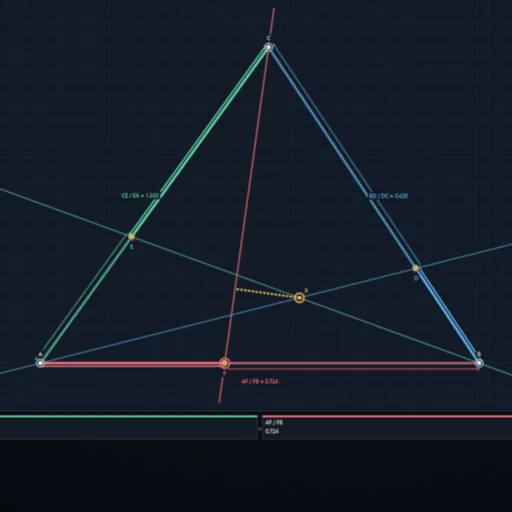
Click the paper to predict a centre. Reveal one line at a time, then drag the brass vertex pins. Try the obtuse preset: which centres leave the triangle?
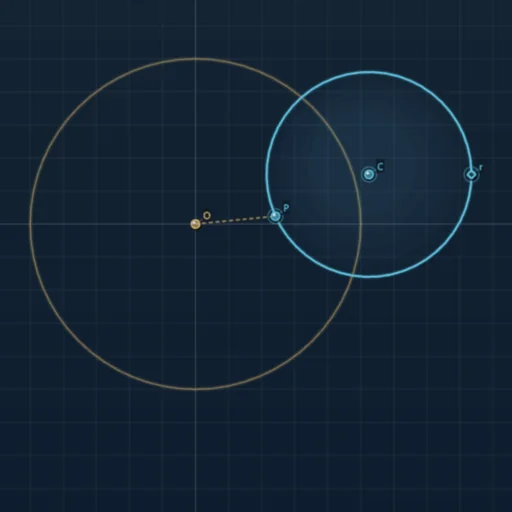
Drag C to move the circle, the diamond r to resize it, or P along its rim. Take the circle through O and compare its image. The brass ring has R = 1; points on it stay fixed. Adjust ρ until the last circle touches the first after one turn. The same numbered circles correspond across the two views. Start lets the chain slide; a closed chain stays closed.
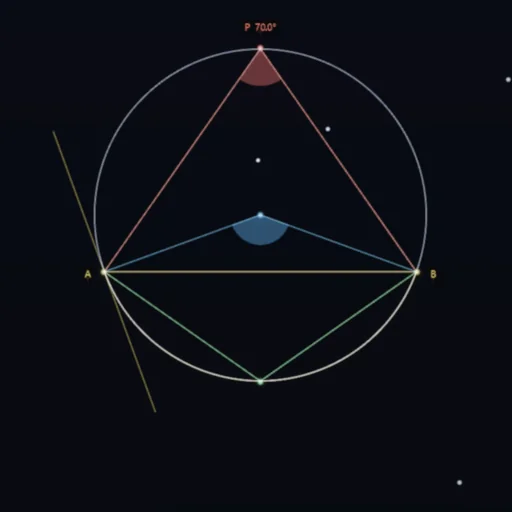
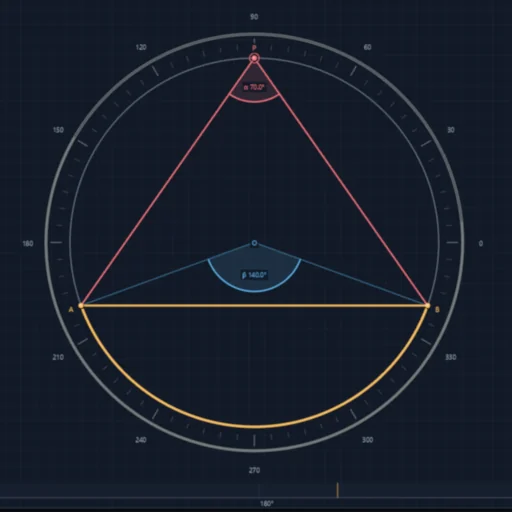
Keep AB fixed. Predict whether the angle will change, then move P and check. The highlighted arc never contains P. Reveal four steps using diameter PD and equal radii. The same construction works by adding or subtracting the small angles; try both cases.
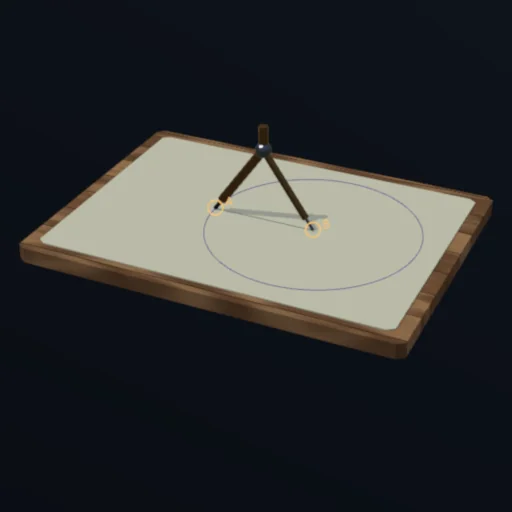
Choose the compass: click its center, then a point on the circle. For the straightedge, choose two points. Draw performs your move; the demonstration shows the requested move. Pause freezes either animation.
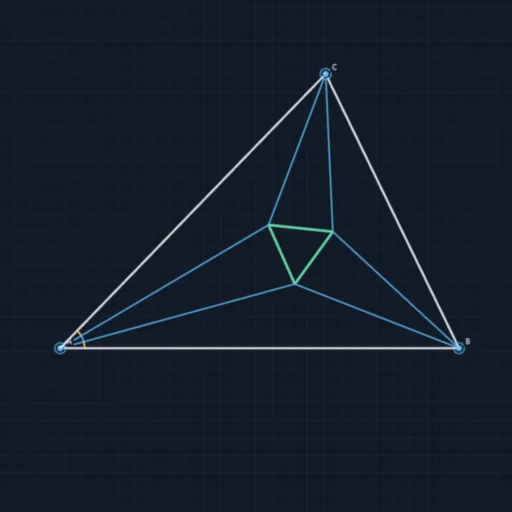
Trisect every angle of any triangle: the trisectors next to each side meet in three points, and those three points always make an equilateral triangle - measured live as three equal sides and three 60° angles, on a lopsided triangle as on a square one; turn the cuts away from thirds with a slider and it stops being true at once, and the task is to find the third by hand.
Ten thousand people, a disease and a test: the test sweeps the population and marks the positives, then everyone moves into a 2×2 table of sick or healthy against positive or negative. Guess what share of the positives is really sick, then see the tray - for a rare disease the false ones outnumber the true ten to one. Bayes' rule with this sheet's numbers, the factor you move lit up, the positives retested, and a task that shows specificity, not sensitivity, is the lever.
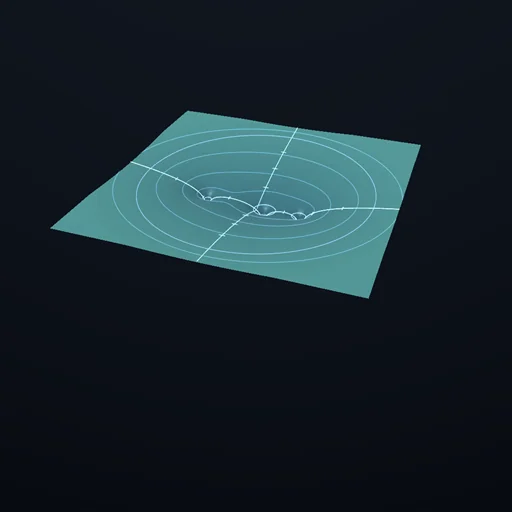
The roots of a polynomial on the complex plane, running as one coefficient sweeps: the cubic's two roots meet at the discriminant and leave the real axis as a pair, six roots turn on a circle, and Wilkinson's ten roots are thrown into the plane by two parts in a million on one coefficient - the closest pair, the real count and Cauchy's bound measured live, and a task on the collision.
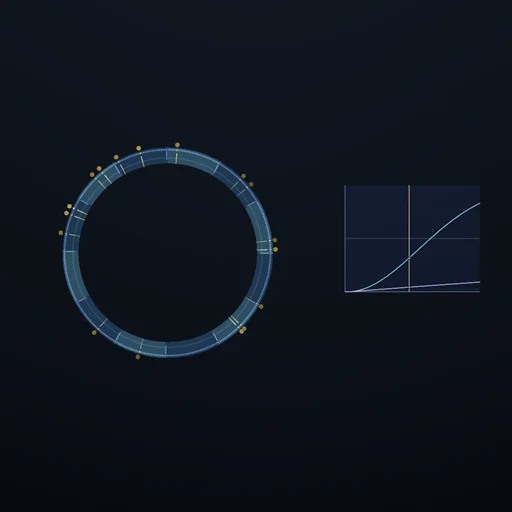
People arrive on a ring of days until two share one: in a year of 365 that is the 23rd person, not the 183rd, on Mars the 32nd, in 65 536 hash buckets the 302nd - runs against the exact curve, the days swept by dragging from a year to 2³², the square-root rule read live, and a task on the Martian room.
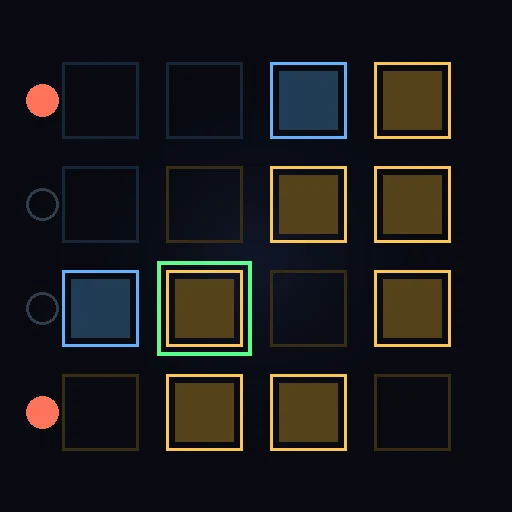
Sixteen bits in a square, eleven of them a message: click one and the four check lamps spell out its address, and the block puts itself right. Two errors are caught but not repairable; three, and the block lies with confidence. Every claim is exhaustive - all 32 768 single errors located, all 245 760 double errors caught, every triple mis-corrected.
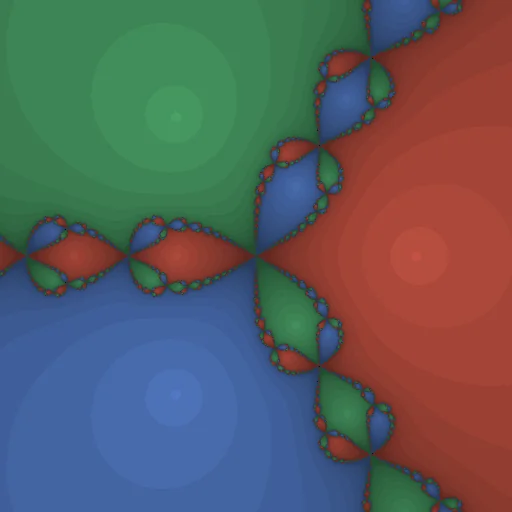
Colour every starting point by the root Newton's method reaches: with two roots the boundary is a straight line, as Cayley proved in 1879, and with three it is a fractal that all three basins share. Drag a root and watch the areas move - a root pulled outward takes LESS of the window, not more.
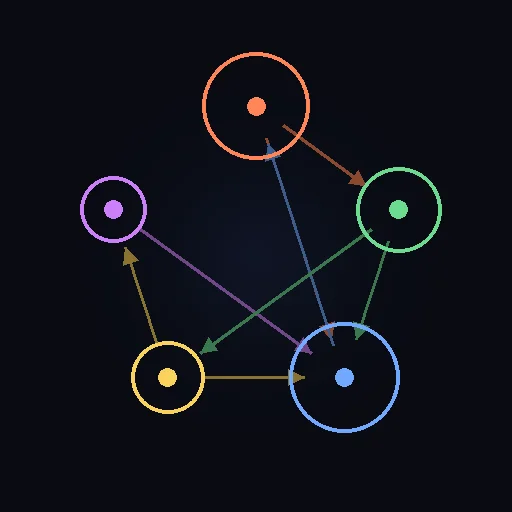
Follow probability mass through a directed graph and compare power iteration with a crowd of random walkers. Teleportation can make PageRank converge to a unique distribution. Compare a periodic cycle with a graph whose unpatched dangling nodes leak mass.
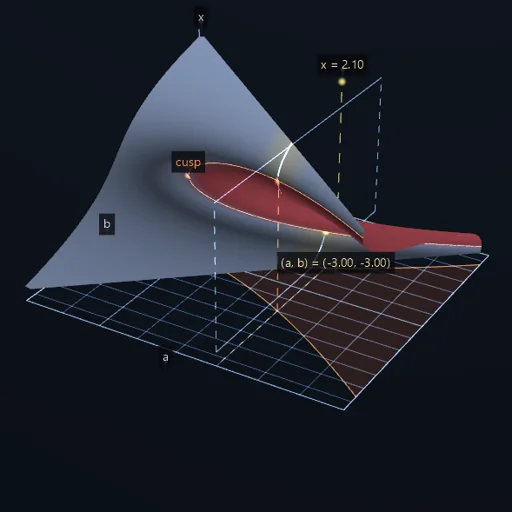
Drag one knob and the state slides until its branch runs out, then snaps - and dragging back does not undo it. Turn the second knob above the cusp and the snap vanishes entirely: the hysteresis loop is not small there, it is exactly zero. Loop width 4·(−a/3)^(3/2), jump height 3·√(−a/3), both checkable against the picture.
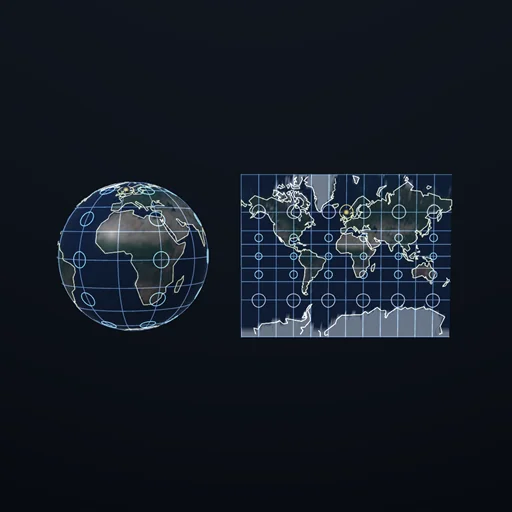
Small circles drawn on the globe, and the same circles on the map: Tissot's indicatrix, which is the whole measurement. Mercator keeps every circle round and swells them past thirty times; Lambert keeps the areas and squashes the shapes; nothing keeps both, and that is Gauss. Greenland is fourteen times smaller than Africa and Mercator draws it 10.47 times too big.
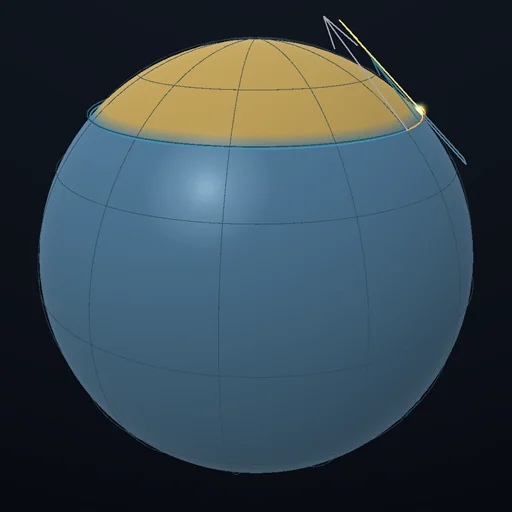
Carry an arrow around a loop without ever turning it, and it comes back turned. The angle is the curvature the loop enclosed - Gauss–Bonnet - and it is why a Foucault pendulum knows its latitude. Circles of latitude, geodesic triangles, a plane and a saddle, each with its closed form beside the measured turn.
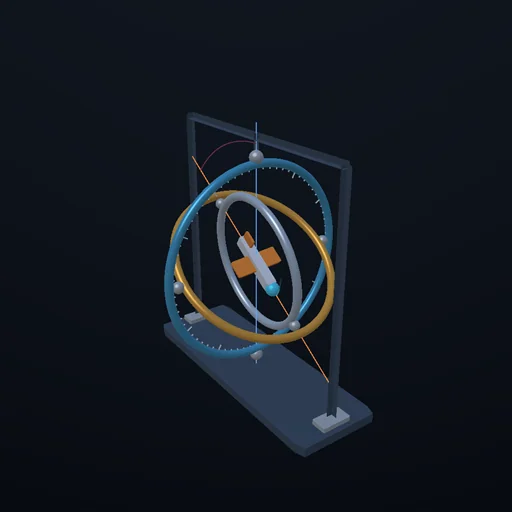
Three nested rings hold a platform: yaw, pitch, roll. Tip the middle ring to 90 degrees and the outer and inner rings line up - two rings, one axis, a degree of freedom gone. The readings flip by half a turn while the platform barely moves; the quaternion for the same motion never notices. Apollo flew with three rings and a red zone on the ball.
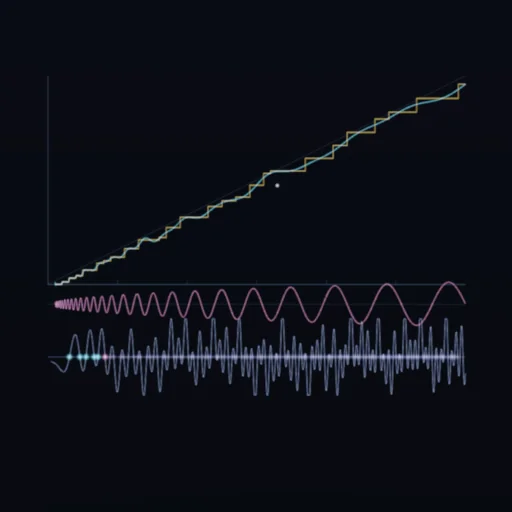
Riemann's explicit formula: the prime staircase is a sum of waves, one per zero of the zeta function. Add the zeros one at a time and watch a straight line ripple into the primes, each step at a prime power and ln p tall. The critical line underneath, the first 120 zeros as data, the residual against the sieve measured per zero.
Some modules belong to more than one Suite. Shared experiments have one description here.