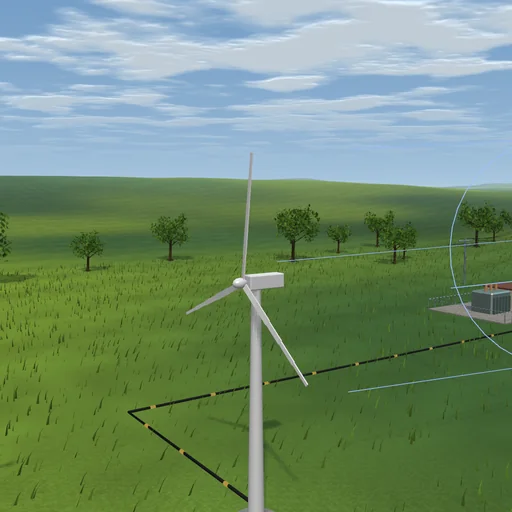
Three turbines stand in a row in the wind, and each one behind sits in the wake of those in front. Move them apart or aside, turn the wind, and let the front turbine yaw its wake away or pitch its blades to leave more wind for the others: see what the farm gives together.
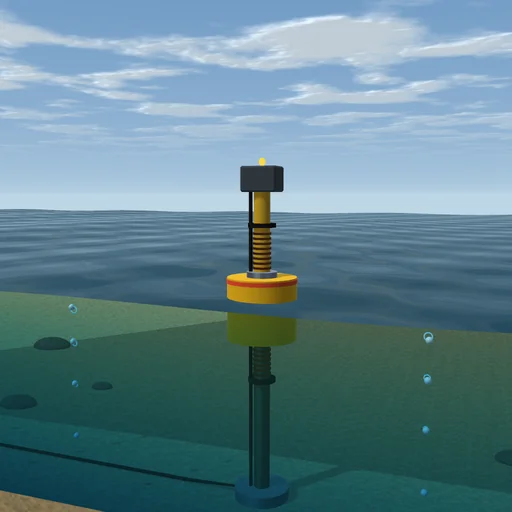
A float heaves on a pile in the waves and its linear generator brakes it. Tune the generator’s damping and the float’s mass to the waves and watch the mean power rise to the limit a heaving float can take, then send an irregular sea.
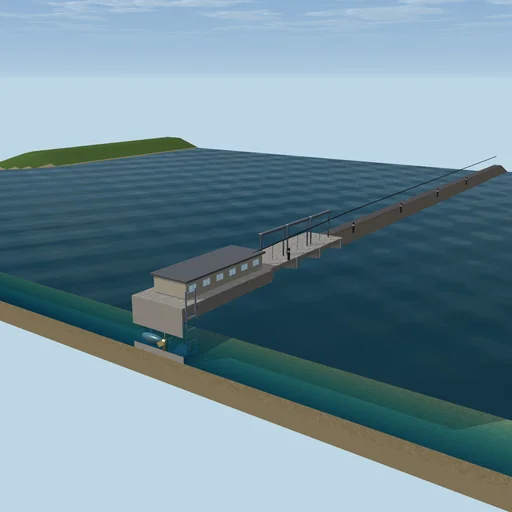
Hold the tide back behind the lagoon’s wall, then let it through the turbines. Generate on the ebb or both ways, choose the head to start at, or work the sluices and the turbines yourself, and compare the energy each tide gives.
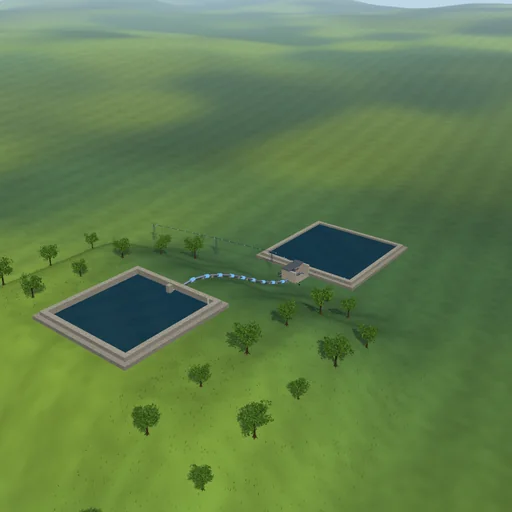
Pump water up the mountain at night and run it back through the turbine by day. Watch the levels and the head, and find what the round trip returns: the penstock’s friction and the machines’ efficiencies take their share both ways, more at a larger flow.
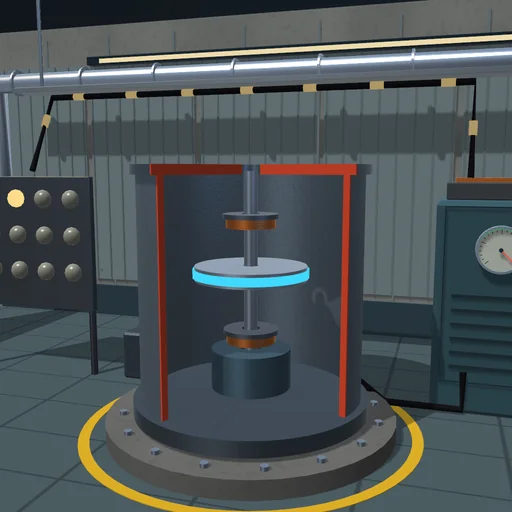
Cover a load’s power pulses that the grid connection alone cannot: the flywheel gives energy as it slows and takes it back as it speeds up. Compare the rotors, let the vessel fill with air and watch it coast down.
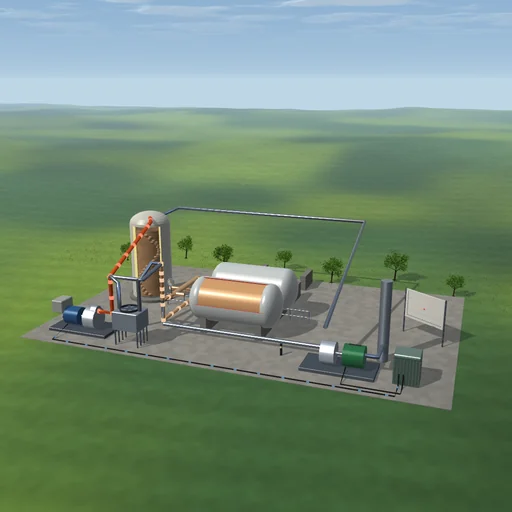
Charge the vessels with a compressor and run the air back out through an expander. Throw the heat of compression away in a cooler, keep it in a rock store or leave it in the air, hold the charge for hours, and compare what each cycle returns.
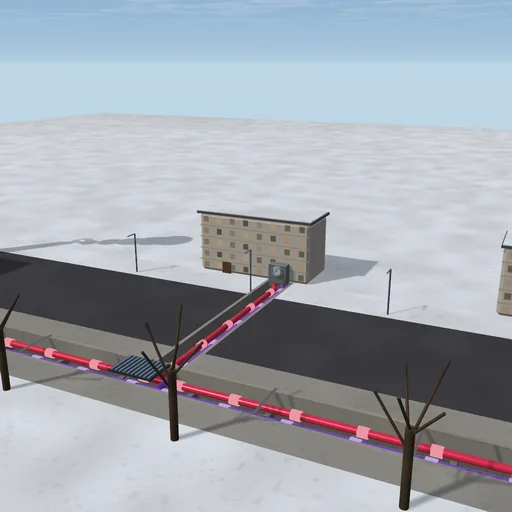
Heat three blocks of flats from one boiler through the street’s mains. The far block gets the least water and the coolest; throttle the near block, raise the supply temperature or let thermostats balance the network, and watch what the pipes lose on a frosty day.
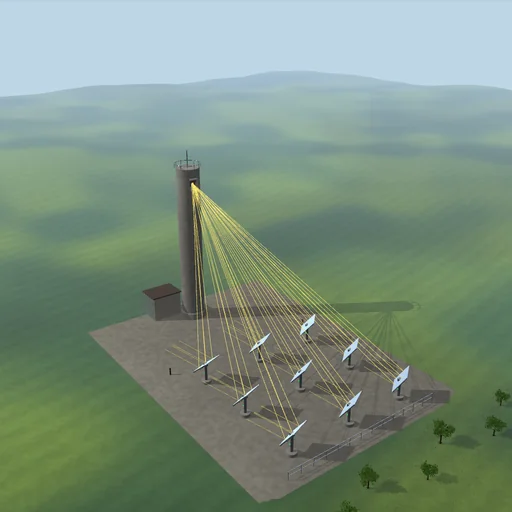
Nine mirrors follow the sun across the sky and send its light onto the receiver at the top of the tower. Watch the receiver heat to a glow, spread the aim or shrink the receiver to see how much spills, send a cloud across the field and compare the seasons.
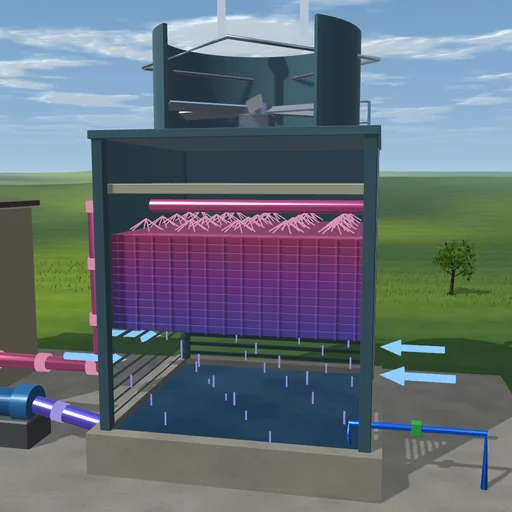
Cool a plant’s condenser water by letting it rain through the fill against the air the fan draws up. Change the heat load, the fan and the weather: the water never gets colder than the air’s wet bulb, and on a cold, humid day a plume of fog rises from the stack.
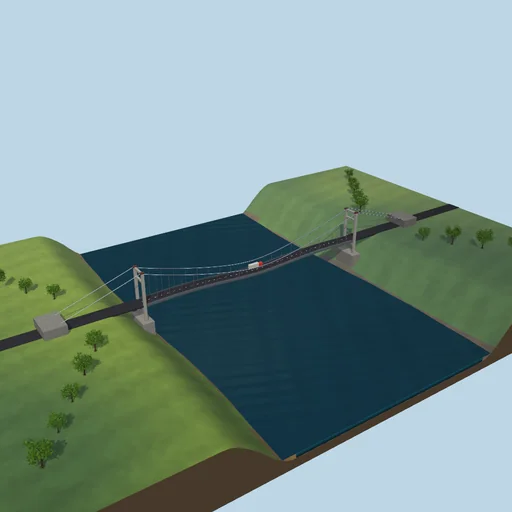
Park a lorry on the deck or drive it across, and watch the deck bend and the cables move, forty times enlarged. Read the hangers’ colours: which pull harder, which slacken. Cut a hanger, shorten the cables or lighten the deck, and see the bridge sway after a fast crossing.
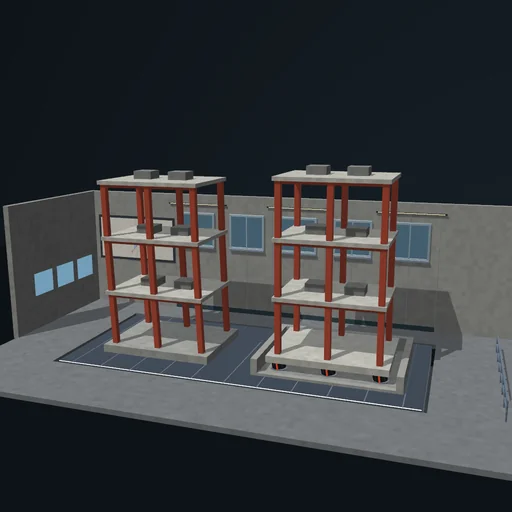
Shake two identical buildings on one table: one stands on its foundation, the other on lead-rubber bearings. Compare how hard their roofs are thrown, change the bearings' period and damping, and send a long pulse that drives the base into its moat.
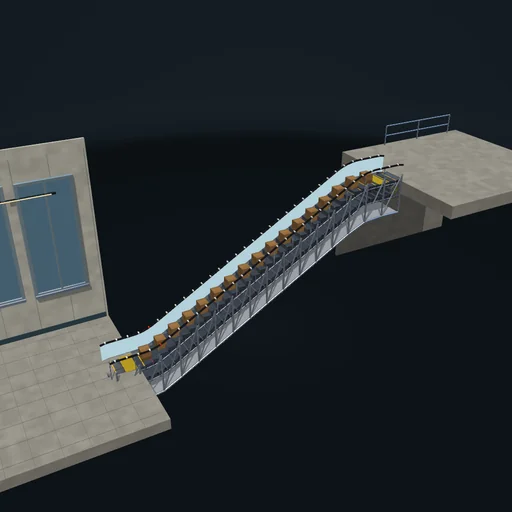
Follow the steps round the whole hidden loop: level up the incline, turning over the sprockets, upside down on the way back. Load the steps, run up or down, slacken the handrail or change its ratio, and stop the loaded band to see how far it slides.
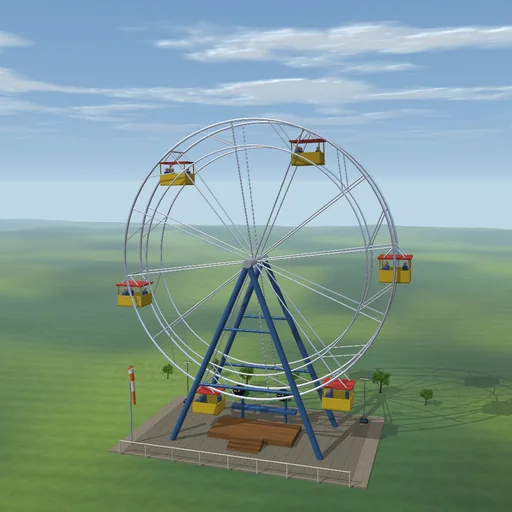
Seat the riders, start the wheel and turn it once round. Load one side, weaken the drive, let the wind blow or stop it hard, and watch the gondolas swing on their pins while the drive works against the uneven weight.
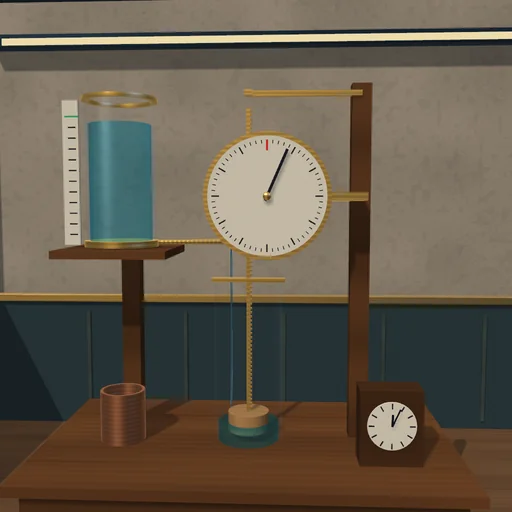
Let water run out of a vessel through a small hole and measure time by the float rising in the receiver. Compare a cylinder, a cone and the profiled vessel, keep the head constant with an overflow tank, and calibrate the scale to see the clock read true.
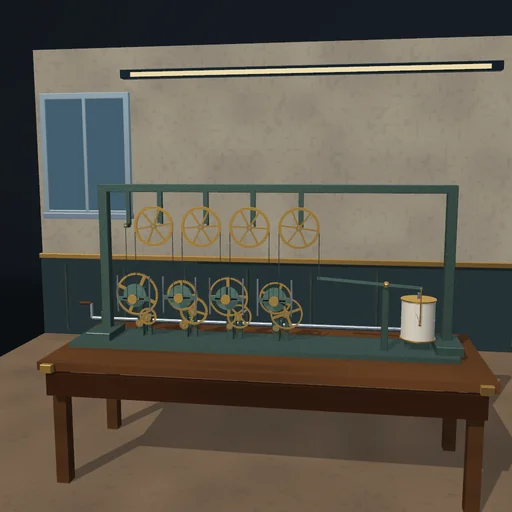
Set the amplitudes and phases of four tidal constituents on the cranks of a Kelvin-style machine and watch one wire add their motions into the tide curve on the paper drum. Compare slotted yokes with plain cranks, push an amplitude past the slide's stroke, and run the machine for a year to see its gear trains drift from the true speeds.
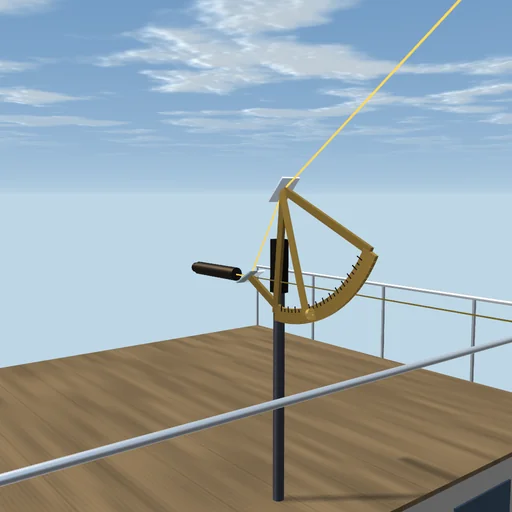
Take a sight from a rolling ship: move the index arm and its drum until the star or the Sun's lower limb touches the sea horizon, then reduce the reading for index error, dip and refraction. Swing the arc to find the lowest point of the image's path, and see what a tilted frame and an uncorrected sight cost.
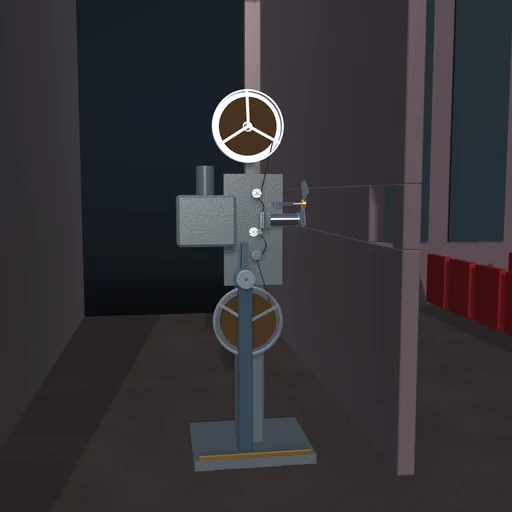
Watch a 35 mm projector's intermittent movement in slow motion: the Geneva cross pulls each frame into the gate and holds it still while the shutter opens. Turn the shutter out of phase and the picture smears, change the frame rate, and thread the loops too short to see them snap taut and tear.
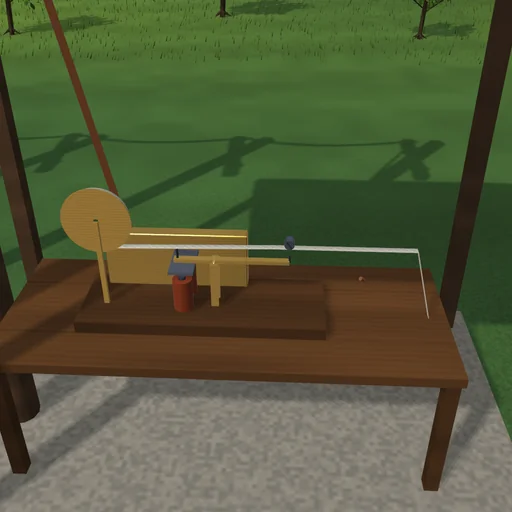
Send Morse code down a telegraph line and watch it arrive: the line charges section by section, the register's armature is pulled across its gap and the stylus presses dots and dashes into the paper tape. Lengthen the line, lay it as a cable, change the spring and the sending speed, and see when the marks smear and when they stop.
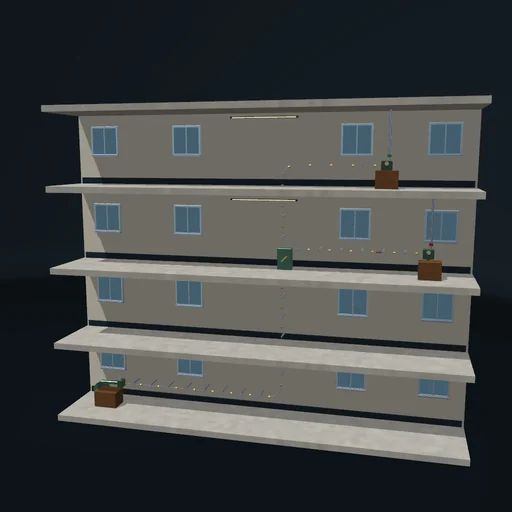
Send a capsule through the pneumatic tube of an office building: the blower's air pushes it along the floor, up the riser and through the diverter to station B or C. Change the capsule's mass and the blower's pressure, drill a hole in the riser, and switch off the air cushion to hear it strike the end.
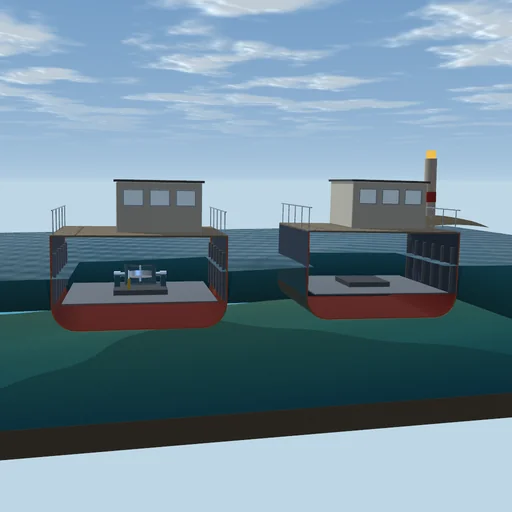
Two hulls roll in the same beam sea; one carries a spinning flywheel in a gimbal. Let it precess against the roll, set its brake and its speed, and compare the rolls; then send a heavy sea and drive the gimbal into its stops.
Some modules belong to more than one Suite. Shared experiments have one description here.